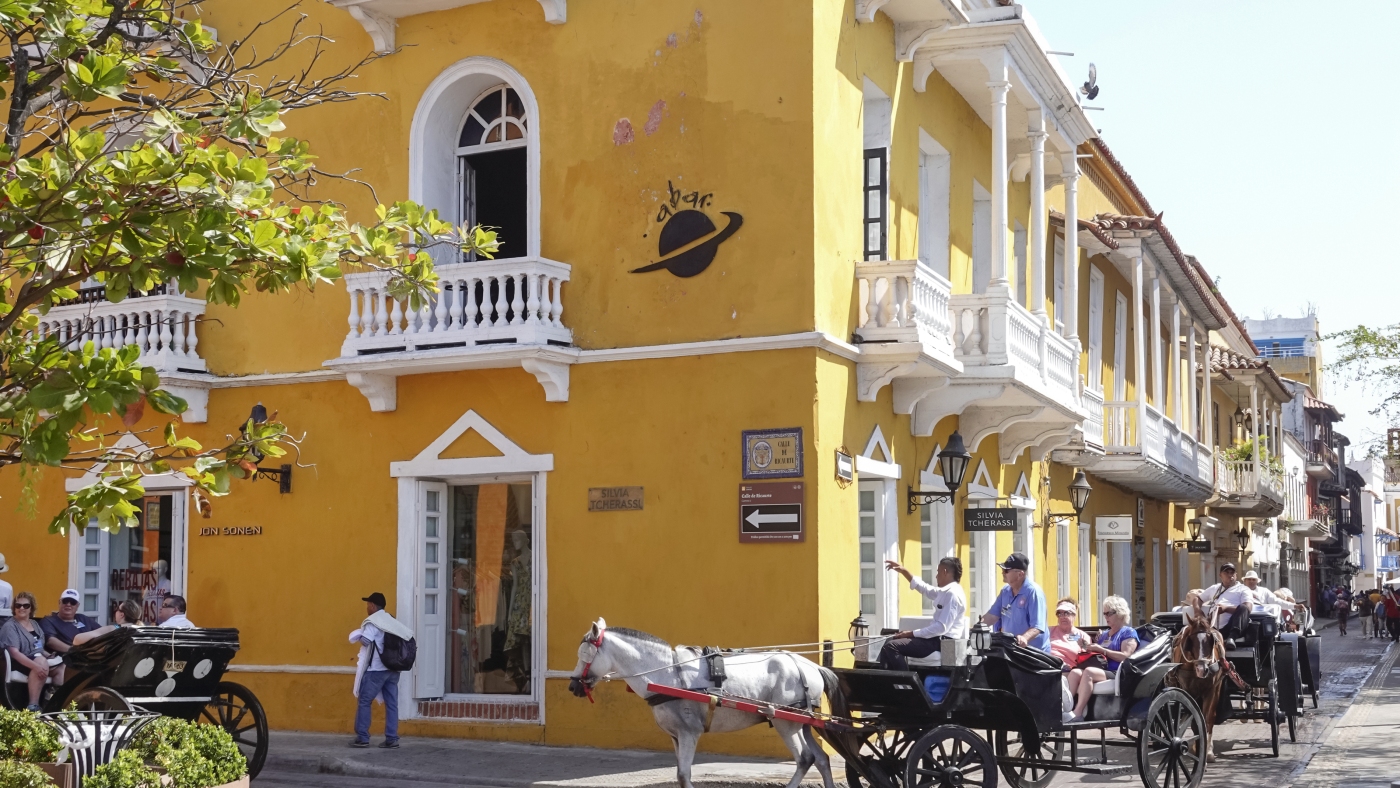
Cartagena's iconic horse carriages give way to electric buggies
Cartagena's iconic horse carriages give way to electric buggies In Cartagena's Old City, horse-drawn buggies still clip-clop over colonial streets - but not for much longer. Jeffrey Greenberg/Universal Images Group via Getty Images hide caption toggle caption CARTAGENA, Colombia - Cartagena sits on Colombia's Caribbean coast and for decades it has been one of the country's most beloved destinations. Its historic center is encircled by thick stone walls, built by the Spaniards to fend off pirates. Inside, narrow streets wind past sun-drenched plazas and colonial mansions, a cityscape straight out of a movie. The city is also famous for the horse-drawn buggies that carry tourists through its streets; their large-spoked wheels clattering over the pavement, and their open tops perfect for snapshots of Cartagena's charm. But soon the romantic buggies will be outlawed by the city government. Which wants to replace them with electric vehicles due to concerns over animal welfare. The move has angered horse cart owners and traditionalists, pitting them against animal rights activists and local officials who say there should be no place for horse carts in a city that wants to portray itself as a global destination. "It's very sad," says Cristian Munoz, one of Cartagena's traditional horse cart drivers. "We are part of this city's heritage, like the walls that surround it." Cristian Munoz has been driving horse buggies for the past two decades. He says the electric carts will do away with part of the city's heritage. Manuel Rueda/For NPR News hide caption toggle caption Tourists in the UNESCO World Heritage Site say that the horse carts are a fun way to get around in Cartagena's sweltering heat. And many appreciate the way in which drivers tell the colonial city's history. But animal rights activists have long argued that these joy rides are terrible for the horses pulling the carriages, because cars on the city's roads stress out the horses. And the pavement injures horses' knees, and hurts their legs. Fanny Pachon, a local animal rights activist, says that on several occasions, horses have collapsed from exhaustion. "Horses are pack animals, and they're designed to carry things," she admits. "But they're meant to be in rural areas, not in the middle of a city with paved roads." Alejandro Riaño, a popular comedian from Bogota, has been lobbying Cartagena ́s government to replace the horse carts for the past four years. In 2021, he raised more than 25,000 dollars on a crowd funding site, to build an electric vehicle that resembles a traditional horse buggy, but runs with battery power. The prototype was tested on the city's streets two years ago. "We have shown there is the technology now to do things differently" he said. After years of protests, the city is finally siding with Riaño and the animal rights activists. On December 29, traditional horse-drawn buggies will be banned, and replaced by a fleet of 62 electric carriages imported from China, under a joint venture between Cartagena's city government and Corpoturismo, an agency that...
Preview: ~500 words
Continue reading at Npr
Read Full Article