I'm watching brain surgery to see if Alzheimer's can ever be cured
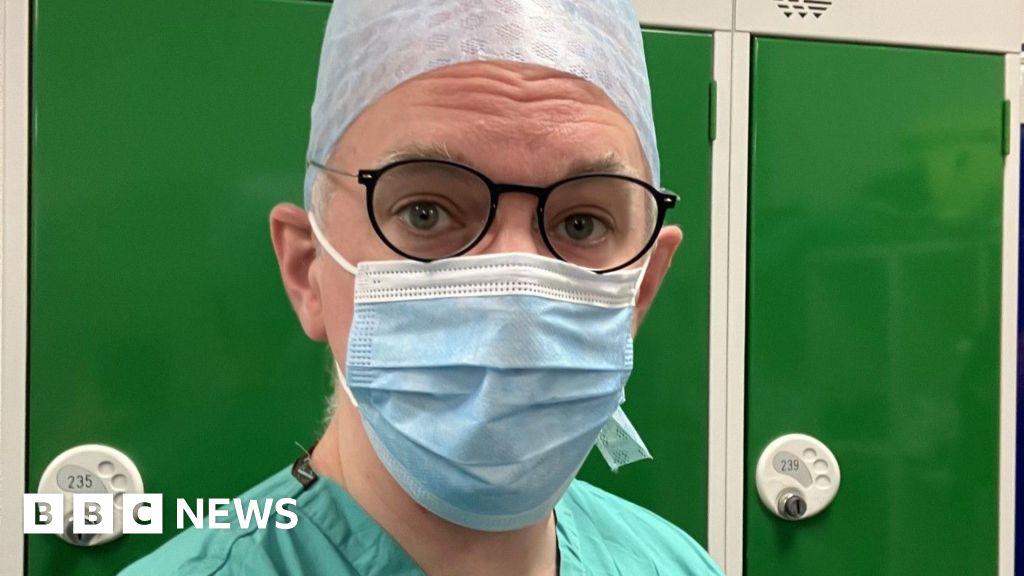
I'm watching brain surgery to see if Alzheimer's can ever be cured Is curing Alzheimer's disease an impossible challenge or can we get there? James Gallagher, health and science correspondent To find out I've been invited to watch brain surgery at the cutting edge of dementia research. I'm wearing scrubs at the back of an operating theatre at Edinburgh Royal Infirmary. The intense focus of the dozen people in the room radiates an aura of calm despite the cacophony of medical machinery beeping and pumping away. The patient is sedated and covered up on the operating table. On the large screens above I can see the MRI scan of his brain. It is impossible to miss the large, bright white mass of a tumour. The cancer had started in his colon before spreading deep inside his brain. "It's not on the surface of the brain so we need to make a hole in the cortex," Prof Paul Brennan, professor of neurosurgery tells me, "as small as possible, but large enough that we can get down towards the tumour". The cortex is the outer layer of the brain involved in language, memory, and thought. The inner parts of the brain are softer, but the cortex has to be cut through. Prof Brennan uses a surgical drill to remove a flap of skull. The exposed brain is pink, flushed with blood, and gently pulsing to the beat of the heart. Standing next to me is Dr Claire Durrant, an Alzheimer's researcher at the University of Edinburgh. She's holding a container of ice-cold, artificial cerebrospinal fluid, which mimics the liquid that bathes the brain and spinal cord. In most brain surgeries the removed section of cortex is medical waste and would be binned. But Edinburgh is one of only a handful of centres around the world where it is collected, with permission, for dementia research. When the moment comes, it is quick. Prof Brennan places a section of brain - about the size of my thumb nail - into the jar to sustain it. Then, with a quick thank you, we're getting changed and travelling across the city to the university. In the back of the car it strikes me how, just minutes ago, this piece of brain was still a part of a man's thoughts and fears of the surgery he was about to face. "I'm always aware - every time - what we're getting is a precious gift on what is probably the worst day of that person's life," Dr Durrant tells me. Her lab is one of the few to work on living adult brain tissue to try to understand dementia and other diseases. "By developing these techniques we hope we're going to move forward to a world free of many different, horrible neurological diseases," she says. Around one million people in the UK have some form of dementia, with Alzheimer's being the most common. But can it ever be cured? That was the question set by the inventor Sir...
Preview: ~500 words
Continue reading at Co
Read Full Article