What are India’s diplomatic headwinds in 2026?: Explained
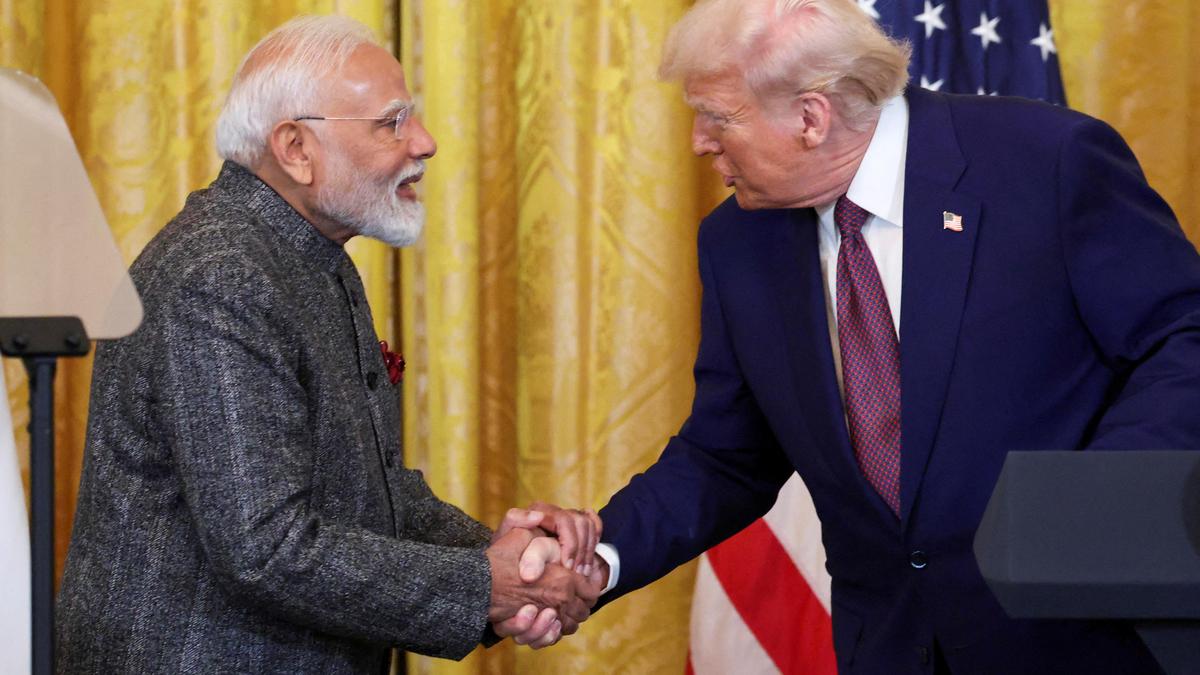
The story so far: In many ways, the spirit of 2025 for Indian foreign policy was “shock and surprise”, as the Narendra Modi government encountered several unexpected international challenges from a number of directions. At the end of a bruising year, what were the global stories that most impacted India, and what are the challenges and opportunities for South Block in 2026? Which were the biggest global stories for India this year? There’s no doubt that the most significant foreign policy story of the year came from Washington, where Donald Trump was sworn in as President for his second term in January. Mr. Trump’s policies have rocked the multilateral economic system with his “Liberation Day” tariffs which destabilised the world order. With his altered policies on Russia and China, once clubbed as the biggest threats to America, Mr. Trump rattled America’s closest alliances in Europe and the Indo-Pacific. He also took global discourse to a new low with his high-handed treatment of world leaders, even as he has commanded obsequiousness from them in his quest for the Nobel Prize for “resolving eight wars”. While the U.S. election had the biggest impact, the rise of ultra-right politicians from European Parliament elections to Japan and Chile augured a growing conservative and xenophobic trend. Meanwhile, oil prices have dropped due to a glut in production by OPEC countries, indicating some worrying trends for the renewable energy push to combat climate change. Global growth is projected to slow from 3.3% in 2024 to 3.2% in 2025 and 3.1% in 2026. The Russian war in Ukraine continued for a fourth year, but for the first time, India had to face severe economic consequences for buying Russian oil, with EU and U.K. sanctions on Indian-Russian joint venture Nayara Energy, and U.S. sanctions on Russian oil majors. The Israeli strikes on Gaza continued , with over 70,000, including 20,000 children, killed, but an American-backed ceasefire deal at the end of the year held out some hope. India’s plans for the India-Middle East Economic Corridor, however, are at a standstill, and the Modi government’s refusal to criticise Israel for strikes on Iran in June led to awkward moments at the Shanghai Cooperation Organisation (SCO) and BRICS grouping, where Iran is a member. Closer home, turmoil in the region continued, with a conflict with Pakistan, Gen-Z protests in Nepal toppling the government, and mob violence in Bangladesh turning anti-India after the killing of a right-wing leader, putting a question mark over the efficacy of India’s “Neighbourhood First” policy. What made the Trump challenge most difficult? The U.S.’s altered worldview was felt acutely in South Block, where the Ministry of External Affairs (MEA) is headquartered, as the anticipation that Mr. Trump would run a pro-India foreign policy was cut short by his actions. Mr. Trump first slapped the highest 25% tariffs and 25% surcharge on India for buying Russian oil. His crackdown on immigration, H-1B visas, student visas and the deportation of Indian illegals , led to criticism of the...
Preview: ~500 words
Continue reading at Thehindu
Read Full Article