The Creative Intuition Of Frank Gehry
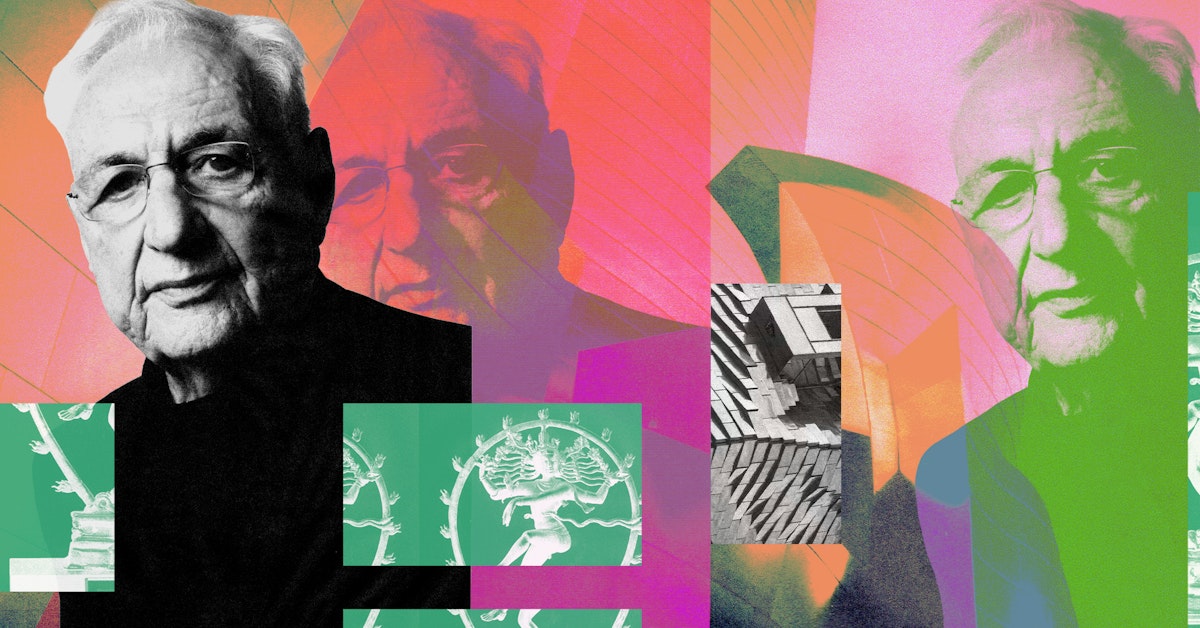
Nathan Gardels is the editor-in-chief of Noema Magazine. He is also the co-founder of and a senior adviser to the Berggruen Institute. Before Frank Gehry, there were boxes, pyramids, domes and an occasional ziggurat. Not many can claim to have created an entirely new form, as the architect did with his famous Guggenheim Museum Bilbao in Spain and the Walt Disney Concert Hall in Los Angeles. Gehry, who died earlier this month at age 96, was such a truly original mind that Apple included his visage along with that of Albert Einstein and John Lennon in its famous “Think Different” ad campaign in 1997. Like others who think differently and come from outside the insider establishment, he rebelled against the custodians of proper and hallowed ways. This was most evident in his early days through the deconstruction of his own staid Dutch colonial-style home in Santa Monica, whose façade he disrupted with jutting angles of glass, corrugated metal, plywood and chain-link fence. It was not pretty. But, as fellow architect Thom Mayne has commented , the use of inexpensive everyday materials in a city where properties easily go for $20 million was a critical statement about the house as a status symbol. Mayne thought the house was “very aggressive politically ... using chain link is saying fuck you to marble.” Living in Los Angeles, I crossed paths with Gehry several times over the years, including in some formal conversations for New Perspectives Quarterly, the journal I edited. We met for lunch once in the late 1990s to discuss the formidable roadblocks to getting the Disney Hall built. Gehry drew one of his famous scribbled sketches on a restaurant napkin and told me his original idea was to sheath the building in stone, not metal, which created construction impediments. He railed against the aesthetic judgment of some members of the board overseeing the design, who were threatening to block funding. He seemed so convinced the project would never see the light of day that I threw away what would now be an immensely valuable sketch! I last saw the famed architect for a video interview at his studio in L.A. in 2018 to discuss how the backlash against globalization was affecting cities, which Gehry happily saw as chaotic “collisions of thought like democracy.” The most intellectually memorable conversation, though, was in 2014, when we drilled down on his creative vision and where it comes from: Nathan Gardels: You once commented on your fascination with a dancing Shiva sculpture that belonged to the Norton Simon Museum. And you seem to have tried to capture this “frozen motion,” as you put it, in your buildings in Bilbao and at the Disney Hall in Los Angeles. Interestingly, your attempts to capture this “frozen motion” in architecture correspond to the scientific pursuits of Ilya Prigogine, the chaos theory physicist who won the Nobel Prize in 1977. “If the clock was the symbol of classical science,” Prigogine has said, “sculpture is more the symbol for today....
Preview: ~500 words
Continue reading at Feedle
Read Full Article