Capitalism by Sven Beckert review – an extraordinary history of the economic system that controls our lives
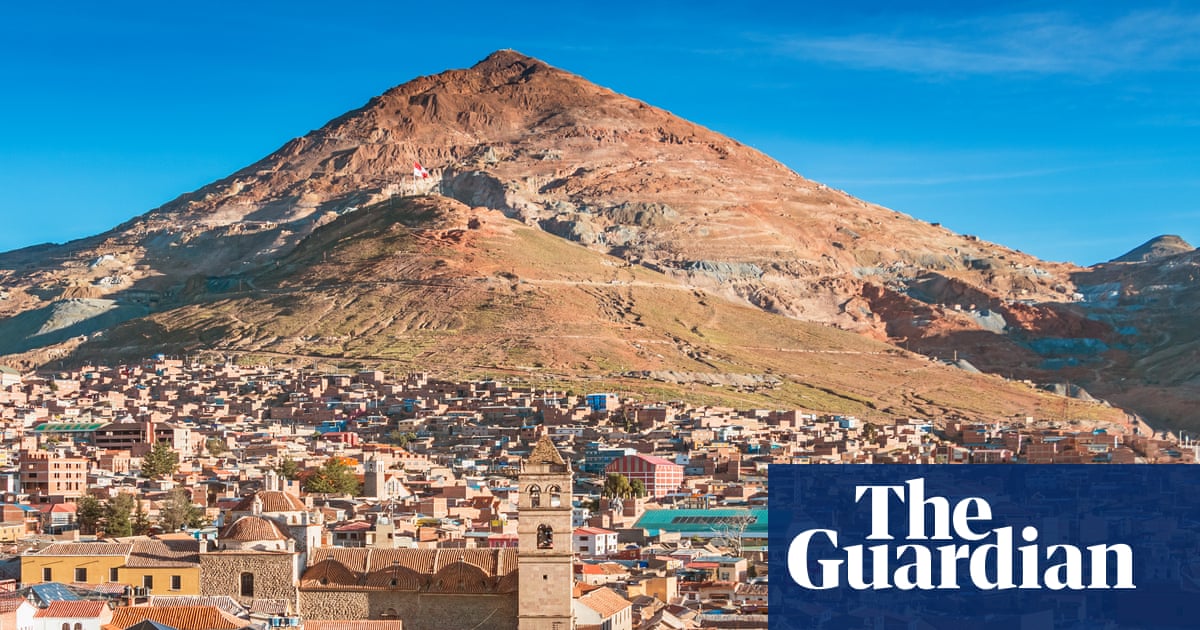
I n the early 17th century, the Peruvian city of Potosí billed itself as the “treasure of the world” and “envy of kings”. Sprouting at the foot of the Cerro Rico, South America’s most populous settlement produced 60% of the world’s silver, which not only enabled Spain to wage its wars and service its debts, but also accelerated the economic development of India and China. The city’s wealthy elites could enjoy crystal from Venice and diamonds from Ceylon while one in four of its mostly indigenous miners perished. Cerro Rico became known as “the mountain that eats men”. Potosí and the Cerro Rico, Bolivia.Photograph: benedek/Getty Images/iStockphoto The story of Potosí, in what is now southern Bolivia, contains the core elements of Sven Beckert’s mammoth history of capitalism: extravagant wealth, immense suffering, complex international networks, a world transformed. The Eurocentric version of capitalism’s history holds that it grew out of democracy, free markets, Enlightenment values and the Protestant work ethic. Beckert, a Harvard history professor and author of 2015’s prize-winning Empire of Cotton, assembles a much more expansive narrative, spanning the entire globe and close to a millennium. Like its subject, the book has a “tendency to grow, flow, and permeate all areas of activity”. Fredric Jameson famously said that it was easier to imagine the end of the world than the end of capitalism. At times during these 1,100 pages, I found it easier to imagine the end of the world than the end of Capitalism. “No religion, no ideology, no philosophy, has ever been as all-encompassing as the economic logic of capitalism,” Beckert claims, defining it as “the ceaseless accumulation of privately controlled capital”. Accounting for it therefore feels like explaining water to fish. Adam Smith, “the hero of capitalism’s triumphant self-remembrance”, attributed it to benign self-interest. Beckert, however, calls it a revolution, centuries in the making, which depended on things that Smith downplayed: “power, violence, the state”. Far from natural or inevitable, it has always been “unstable and contested”, proceeding by jolts. The word “capitalism” originated in France in the 1840s, around the same time as its antagonists “socialism”, “communism” and “anarchism”, but the system was much older. “Capitalism is a process,” Beckert writes, “not a discrete historical event with a beginning and an end”. He begins tracking the process in the port of Aden in 1150. This vibrant trade hub between Asia and the Middle East, in what is now Yemen, was one of several “islands of capital” which formed a “capitalist archipelago”. Inventing new trades like accountancy and insurance, its “strikingly modern” residents were in the vanguard of a global insurgency. But their accumulation of profit for its own sake was regarded with suspicion by rulers, religions and ordinary people alike. They enjoyed wealth without power or prestige: “capitalists without capitalism”. What they needed was the state’s collaboration. This developed during the “Great Connecting” between 1450 and 1650, when the discovery of the Americas (named after a slave-owning merchant) finally enabled European traders to challenge Asia...
Preview: ~500 words
Continue reading at Murmel
Read Full Article