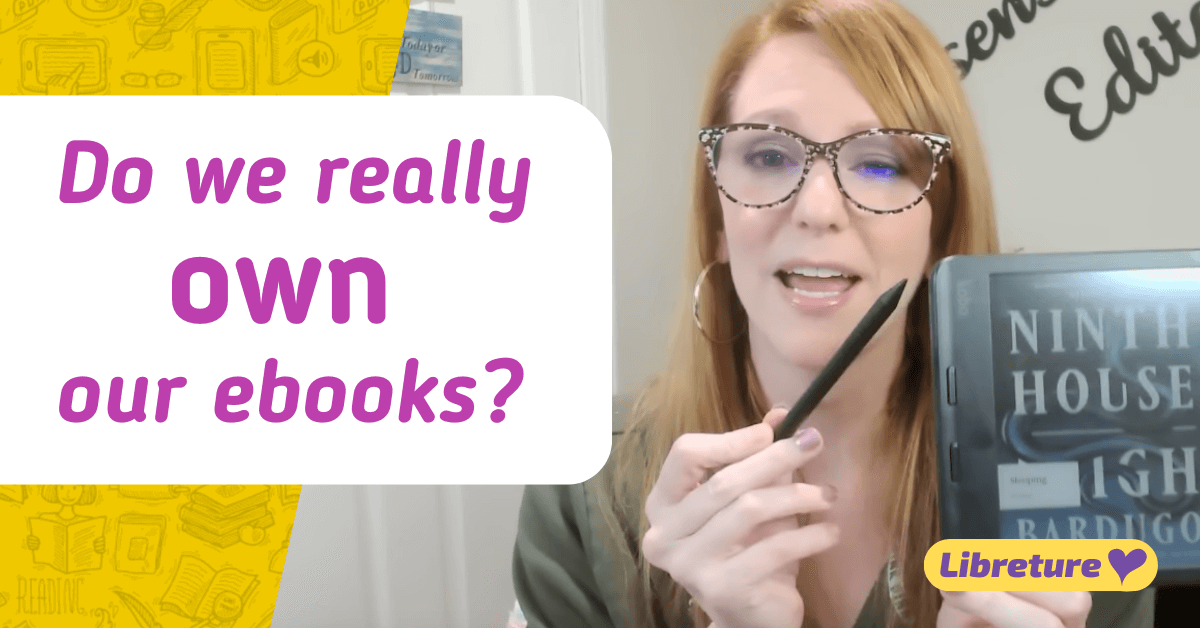
Do we really own our ebooks?
Who Really Owns Your E-Books? Switching from Kindle to Kobo is a great introduction to the wider ebook world. Kristin shares her own experience of deciding to switch to a Kobo ereader, and what she discovered when she explored ebooks outside “the Amazon walled garden”. DRM As Kristin starts to move her ebooks from her Kindle to her Kobo, she discovers a number of hoops she has to jump through. The first being something called DRM. DRM or Digital Rights Management is a technology used by many large publishers and bookshops like Amazon and Kobo to limit how you can read the ebooks you’ve bought. DRM effectively locks ebooks to only work on specific devices, brands of devices, through specific software, and usually only for the individual or account that purchased them. “These are yours, right? No.” Ereaders like the Kindle and Kobo have this technology built in, so that when you buy DRM’d ebooks from the vendor’s own bookshop, those books will simply be available and ready to read on your connected ereader. You don’t notice the lock that’s been placed on them. The issues arise when you want to leave that ebook vendor’s ‘ecosystem’ and move to a different manufacturer’s ereader. You can’t simply copy & paste the ebook files from one ereader to another. DRM also rears its head when you simply want to download DRM’d ebooks you’ve bought to your computer or phone, to read with whatever software you prefer. “You can’t just download it on your computer and read...” Kristin found that she couldn’t simply move her ebook files from one device to another. She couldn’t download her books from the Amazon account she bought them through. And when she did eventually manage to access the book files themselves, that was only the beginning of the journey to getting them on her lovely new Kobo. Ownership What Kristen highlights is the idea of ownership, and the reasonable expectation that you own the products you pay for. “But if you buy something, you should own it, right?” And just as Kirsten said, to be clear, what we’re talking about is paying for actual products such as books, not a subscription to a lending or streaming service where you pay an amount to knowingly access books with clear limitations. This issue is about clicking a button that clearly states that you’re buying something, and then discovering that the retailer can either limit your use of that product after sale, or even take that product back, by deleting it from your ereader. “Why have we all gotten so accustomed to companies telling us whether or not we can access things that we have bought?” Kristen describes the process she went through to finally remove DRM from the books she owns, and eventually start enjoying them on her Kobo. It involves third-party software, plug-ins for that software, and a number of tutorials, only to properly access ebooks you’ve already bought and paid for. And the kicker: “I bought this...
Preview: ~500 words
Continue reading at Libreture
Read Full Article