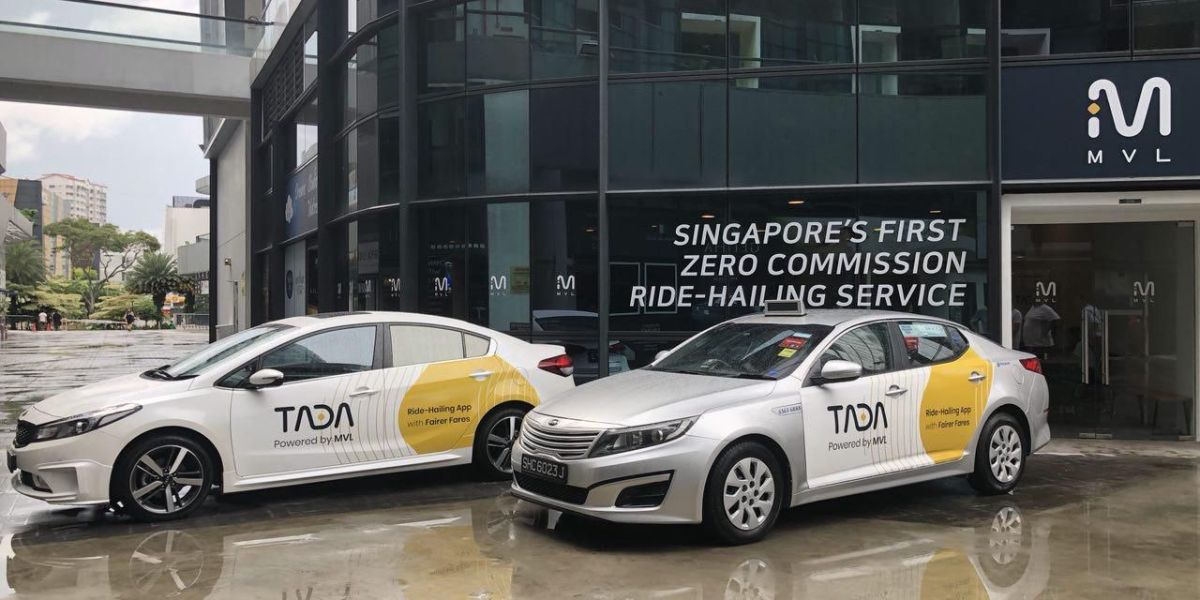
The world’s leading blockchain-based taxi app is setting its sights on New York City
In June 2026, the world’s leading Web3 taxi app will be launched in the Big Apple . This ride-hailing app-called TADA-uses blockchain technology to connect drivers and riders via smart contracts. Its use of decentralized tech enables greater transparency, fairer earnings for drivers, and cost savings for riders, co-founder Kay Woo told Fortune in a Dec. 24 interview. “We don’t work as an intermediary. We are becoming the software for both [drivers and riders] and while they’re using our network, they just need to simply pay a small fee,” Woo says. TADA was founded in Singapore in 2018 by two South Korean tech entrepreneurs: Kay Woo and Jay Han. The ride-hailing app is best known for its “zero commission model”, which charges drivers a flat software fee (of around 78 to 92 cents) rather than a cut of their earnings. The platform has a significant and growing share in Singapore’s crowded ride-hailing market, constituting 11.1% of market share in 2022, according to data platform Measurable AI. As of October 2024, TADA brought in a record $19.8 million in revenue, up from $15.7 million in 2023 . Since its launch, TADA has expanded to various markets in Asia, including Cambodia and Vietnam in 2019, and Thailand and Hong Kong in 2024. Within the U.S., the company is currently trialing its tech in Denver, and plans to launch officially in NYC in June. The origin story TADA’s entry to NYC marks a full-circle moment for Woo, who had first begun his entrepreneurship journey in the city. In 2012, alongside a friend, Woo created a social gathering application with the goal of bringing people together-but the app flopped. “I couldn’t sell the product. I come from an engineering and finance background, and my co-founder was an engineer. We were just a bunch of nerds,” Woo says. After a few failures, they decided to create a product that would generate revenue from the get-go, and a ride-hailing app came to mind. In 2014, Woo and Han moved back to Asia, and set out to digitalise the cross-border mobility services between the bustling cities of Hong Kong and Shenzhen. According to Woo, although Uber and DiDi were popular in the region, ride-hailing apps didn’t yet offer cross-border transport services. Instead, car rental companies and drivers managed reservations with pen and paper-and Woo saw a gap in the market. After a successful test run in Hong Kong and mainland China, TADA’s founders officially launched their ride-hailing business in Singapore , choosing the city-state as it is densely populated and has “superb infrastructure support.” “Among Southeast Asian countries, Singapore is super important to showcase all other neighboring countries in Southeast Asia,” Woo says. “We got lucky in picking the right place, but also the right time.” Aside from revenue from its platform fees, TADA has several other revenue streams. Besides generating a profit from the broader Web3 platform by its parent company, MVL, TADA sells anonymized vehicle and driving data-with consent-to ecosystem partners, and offers MVL tokens...
Preview: ~500 words
Continue reading at Fortune
Read Full Article