The Piercing Cold Of Christmas
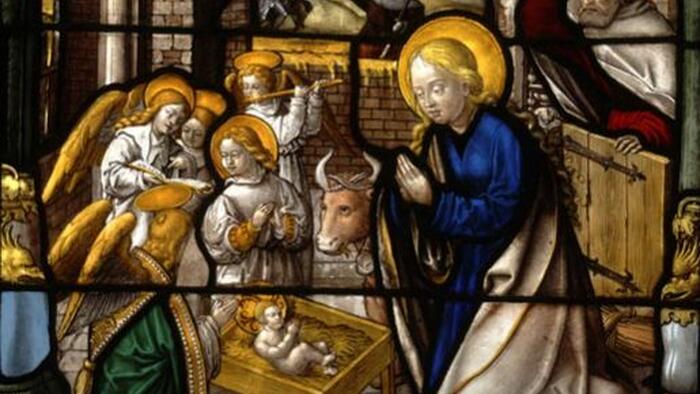
The Piercing Cold Of Christmas Authored by Andrew Fowler via RealClearReligion , Christmas evokes a warmth during the winter: bright lights, roaring fires, and good cheer with loved ones . However, as St. Andrew’s Novena distinctly emphasizes, the “piercing cold” conditions of the first Christmas starkly contrast with the holiday season’s comforts , beckoning us to not only recognize Christ’s humility, but to care for the poor, forgotten, and the suffering. The novena - spanning from the apostle’s feast day (November 30) to Christmas Eve - is prayed fifteen times a day. And while its roots are nebulous, most likely originating from Ireland, it humbly presents the harsh realities the Holy Family endured “at midnight, in Bethlehem” that further reveal God’s infinite love. By subverting the typical grandeur of royal births, instead embracing the “piercing” elements in a stable, Christ, in this singular instance, revolutionized the course of history and humanity’s relationship with each other. In so doing, God honors the poor and marginalized’s inherent dignity in perpetuity. Indeed, salvation is not reserved for merely the powerful, but also those who are deemed lowly. As Christ would teach during his earthly ministry, “The last shall be first, and the first shall be last.” Certainly, one can reflect why “ the Word became flesh ” more than 2,000 years ago and not at any other point in time. However, in the centuries since, critics argue Christians purloined pagan myths and holidays, particularly Christmas; and there is a general consensus Jesus’s birth did not coincide with December 25. To be sure, the Gospels do not specify a date - but this does not negate Christmas Day’s historicity. Jesus’s birth is no myth. He was born in time - living, suffering, dying, and rising on the third day in ancient Israel. And much like the “piercing cold” of Christmas, He was pierced with a lance on Calvary. In the wake of his resurrection, the seismic event in history, his disciples continue to proclaim this reality. Indeed, Christ’s death - much like His birth - subverted prior conceptions of class, race, wealth, and power . In the ancient world, the very idea of Jesus’s divinity, after dying via crucifixion, was considered “scandalous, obscene, grotesque” because, as Tom Holland notes in Dominion: How the Christian Revolution Remade the World, divinity was reserved for the “greatest of the great - for victors, and heroes, and kings.” If one believes in the Resurrection, then one must reconcile with his birth’s wonderfully contradictory nature: that poverty and eternal glory occupied the manger, as it did on the cross on Good Friday. This is precisely why the St. Andrew’s Novena’s call to reflect on his birth’s environment is imperative - because of its physicality. The Holy Family was poor ; they uprooted from Nazareth to Bethlehem to comply with a Roman census; the Blessed Mother endured labor pains; they unsuccessfully searched for proper lodgings; and, while amongst animals, the wind struck them in the darkest hours. But precisely in...
Preview: ~500 words
Continue reading at Zerohedge
Read Full Article