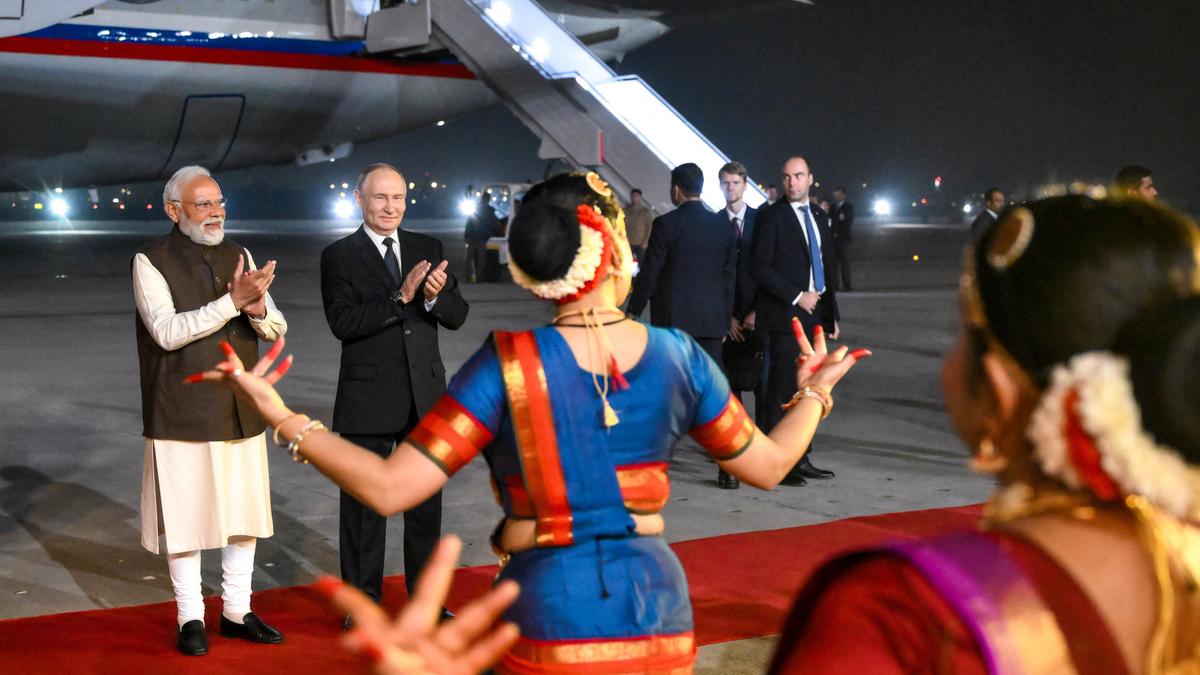
A year of dissipating promises for Indian foreign policy
The year 2025 began as one of considerable promise for Indian foreign policy. After 2024, a year that was dominated by national elections and political recalibration, Prime Minister Narendra Modi was expected to resume active diplomacy, with a full calendar of bilateral visits and multilateral engagements. Relations with the United States were expected to be reset under the second term of the Trump administration, continuing from Donald Trump’s first term. Long-running Bilateral Trade Agreement (BTA) negotiations with partners such as the United States, the United Kingdom, Australia, New Zealand and the European Union (EU) seemed imminent, with commitments to complete them by the end of the year. Across the geopolitical divide, a new engagement appeared to be taking shape with China after years of a stand-off along the Line of Actual Control (LAC), especially after Mr. Modi’s visit to China. Economic ties with Russia were also at a high point: India’s oil imports from Russia had surged to $52 billion, with U.S. and EU sanctions pressure having eased. Regionally, the government attempted to repair frayed relationships by reaching out to the Yunus administration in Bangladesh with a visit, in December 2024, by the Foreign Secretary, Vikram Misri, sending External Affairs Minister S. Jaishankar to Pakistan (October 2024), engaging the Taliban leadership in Dubai (January 2025), and preparing for regional visits from Nepal, Sri Lanka, and others. Five years after the Balakot strikes and the reorganisation of Jammu and Kashmir, New Delhi was also projecting confidence in its security posture and its deterrent capacity for terrorism from Pakistan. However, many of those expectations for 2025 dissipated by the end of the year. India’s foreign policy planners found themselves wrestling with profound challenges across four interconnected domains: economic security, energy security, global strategic stability and regional security. Economic and energy security Instead of resetting India-U.S. ties, 2025 proved to be the most difficult year of this century. Actions by the Trump administration on tariffs, immigration and sanctions pushed trust levels back by decades. Washington’s decision to levy a steep 25% reciprocal tariff on Indian goods hit key labour-intensive sectors such as apparel, gems and jewellery, and seafood. This followed from the Trump first term, where India’s Generalized System of Preferences (GSP) trade privileges were withdrawn. To compound matters, the U.S. introduced a 25% surcharge on Indian imports of Russian oil, effectively making India the most heavily tariffed trading partner. Even if a forthcoming BTA softens the blow, the losses in contracts mean that factory-line closures and the retrenchment of workers remain. Immigration restrictions, particularly on H-1B visas, further undermined remittances, a key pillar of India’s foreign exchange inflows. Of all the trade deals on the anvil, India signed FTAs with the U.K., Oman and New Zealand. But the big prizes that leaders had committed to signing in 2025, with the U.S. and the EU, are still pending. Ties with China and Russia remained tenuous despite the iconic photo-moment of Mr. Modi-President Xi-President Putin holding hands at the Shanghai Cooperation Organisation Summit (September...
Preview: ~500 words
Continue reading at Thehindu
Read Full Article