This 56-year conflict still pauses for Christmas
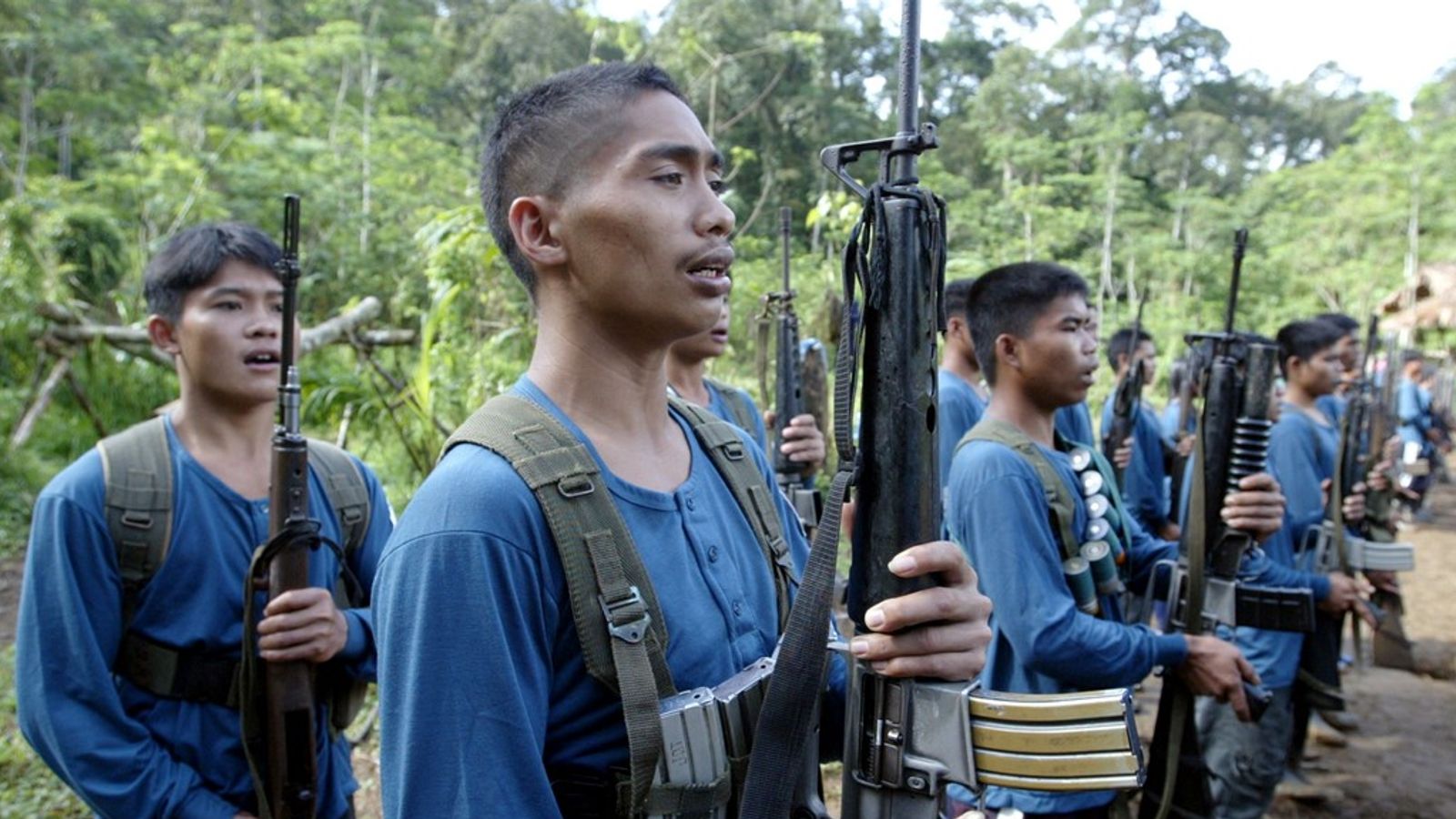
This 56-year conflict still pauses for Christmas There are now more conflicts than at any point since the Second World War. But a glimpse of peace appears each year in what is widely considered the world's longest-running communist insurgency. Image:Members of the Filipino New People's Army show their weapons. Pic: Reuters Image:Filipino insurgents of the New People's Army showing captured weapons. Pic: Reuters Image:Reenactment of the Christmas Truce at the 100th anniversary in Belgium. Pic: PA Image:Ukrainian soldiers celebrate Orthodox Christmas in 2023. Pic: Reuters Thursday 25 December 2025 02:56, UK At Christmas, the world can seem a little more humane than usual - even in wartime. One such glimpse of peace appears each year in what is widely considered the world's longest-running communist insurgency. Fought in the Philippines, the guerrilla conflict between the Maoist New People's Army (NPA) and the government is set to enter its 57th year in 2026 and has claimed some 60,000 lives. But once a year, the fighting tends to pause as both sides down their arms for Christmas. The tradition has been observed in many years since at least 1986, a rare moment of restraint in a world that is now more violent than at any point since the Second World War. According to the Peace Research Institute Oslo (PRIO), the number of conflicts involving states reached its highest level since 1946 at the end of last year. In all, 61 conflicts were active in 2024 - nearly twice as many as 20 years ago. Last year was also the fourth-most violent since the end of the Cold War, surpassed only by the three preceding years in terms of battle deaths. The spread of Islamic State franchises since 2014, along with the heavy toll of wars in Ukraine and Gaza, were among the main drivers of these spikes, said Siri Aas Rustad, a researcher at PRIO. Conflicts now tended to last longer than in the past, she added, while peacekeeping operations and peace processes had declined. The peace order is fraying Experts see a discouraging broader trend behind this shift: the moribund state of the Western-grounded liberal order and multilateral institutions like the UN. That order, grounded in ideas of universal human rights and democracy, encouraged dispute resolution through non-violent means, said Oliver Richmond, a leading peace researcher at the University of Manchester. But the US-led western allies failed to establish a genuinely fair global system and often prioritised their own interests, inviting challenges, he said. Read more: How Trump has supercharged the new world dis-order War, peace and nature: Pictures that defined 2025 Emerging powers such as China, Turkey, Russia and Gulf states had styled themselves as peacemakers but were pursuing their own systems of domination, Mr Richmond argued. Conflicts from Ukraine to Sudan now grind on as outside actors tolerate - or enable - violence in pursuit of a "victor's peace", he added. Small pauses can have larger meanings Against this bleak backdrop, Christmas ceasefires in the Philippines offer a glimpse of...
Preview: ~500 words
Continue reading at Sky
Read Full Article