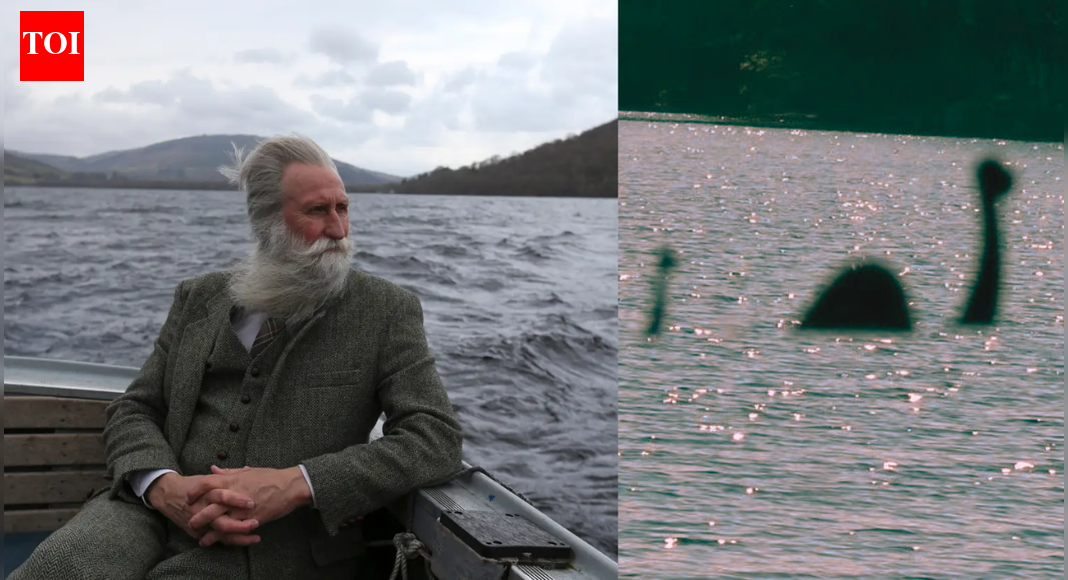
After 52 years hunting , top expert delivers final verdict on the Loch Ness Monster
For more than half a century, Adrian Shine has been synonymous with the modern hunt for the Loch Ness Monster. He arrived on the shores of the loch in the early 1970s as a trained naturalist, drawn not by folklore alone but by the possibility that something large and unknown might genuinely inhabit Scotland’s most famous body of water. Now 76, and after 52 years of systematic searching, Shine says the evidence has led him to a sobering conclusion: the monster that sustained generations of belief was almost certainly never there. How to make South Indian Red Garlic Chutney at home A life spent searching Shine began investigating Nessie reports in 1973 and later founded the Loch Ness Project, which sought to apply rigorous scientific methods to a mystery long dominated by anecdotes and grainy photographs. His most ambitious effort came in 1987, when he led Operation Deepscan, a full-length sonar sweep of the loch involving 24 boats and equipment worth around £1 million. According to the Press and Journal, the expedition was unprecedented in scale for an inland body of water. It also produced no evidence of any large, unknown animal. Over time, Shine says, the absence of credible data became harder to ignore. He recalls one moment that crystallised his doubts: believing he had finally seen the creature’s tell-tale humps, only to realise the shapes were nothing more than a rock formation viewed from the wrong angle. That experience prompted him to re-examine hundreds of reported sightings with a more sceptical eye. Illusions on the water Today, Shine argues that most classic Nessie encounters can be explained by well-understood natural phenomena. “The sightings are caused by ship wakes,” he told The Sun. “Here, they develop this multi-humped form and that’s what people often see.” Loch Ness is connected to the Caledonian Canal, meaning boat traffic regularly produces long, evenly spaced wave patterns that, at a distance, resemble something surfacing and diving. Claims of a long neck rising from the water fare no better under scrutiny. Shine says these are often misidentifications of birds gathered on a calm surface, their shapes merging visually into a single vertical form. He also points to environmental constraints: the loch’s cold temperatures would make it inhospitable to a reptile-like creature, and its limited fish stocks could not sustain a large predator over decades. When scepticism set in Shine traces his shift from hopeful investigator to sceptic back to the mid-1970s, when the Loch Ness Project was visited by a professional conjurer who specialised in analysing visual illusions in art and photography. Reviewing the most famous images, including the so-called Surgeon’s Photograph from 1934, the magician demonstrated how each could be fabricated or misinterpreted. “They were all fakes,” Shine said. “He showed us the explanations.” From that point on, he says, belief gave way to caution. No regrets, and no bitterness Despite his final verdict, Shine rejects the idea that his life’s work was wasted. He speaks warmly of decades spent studying the loch,...
Preview: ~500 words
Continue reading at Indiatimes
Read Full Article