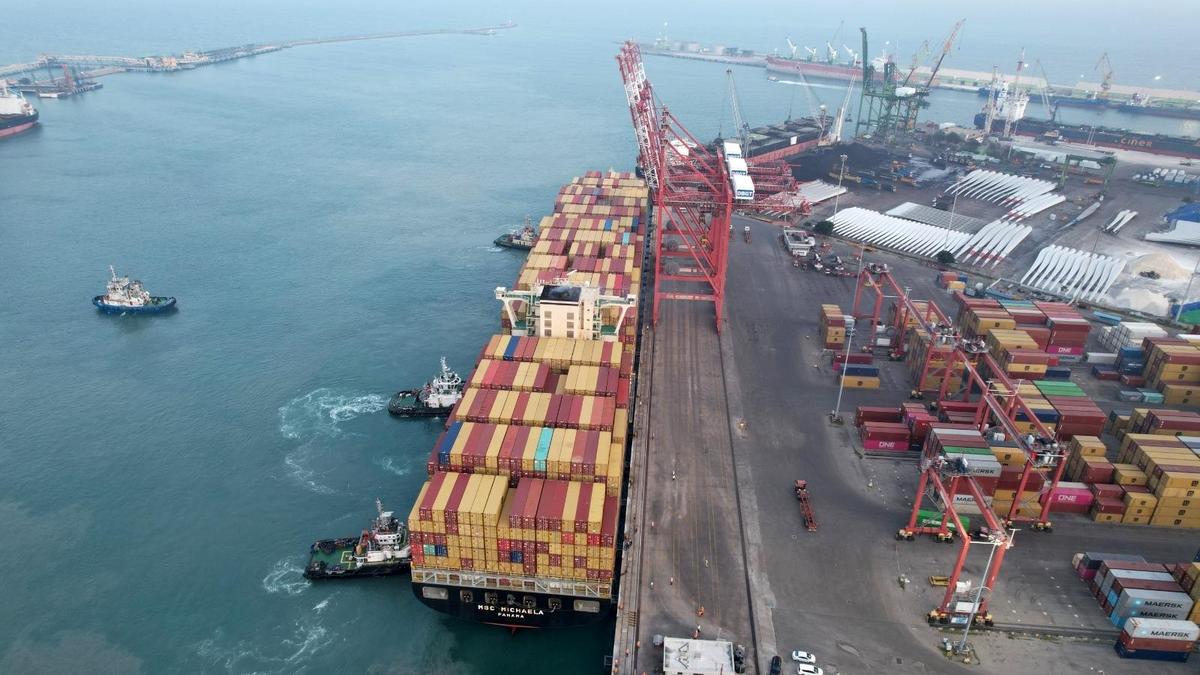
What is the Bureau of Port Security and its role?
The story so far: The Centre has constituted the Bureau of Port Security (BoPS) as a statutory body under Section 13 of the newly established Merchant Shipping Act 2025. Modeled on the Bureau of Civil Aviation Security, it will function under the Ministry of Ports, Shipping & Waterways and will be responsible for regulatory oversight functions relating to the security of ships and port facilities. Why was BoPS created? Currently, coastal security responsibilities are shared among multiple agencies such as the Coast Guard, Central Industrial Security Force (CISF), State maritime police, and the Navy. This leads to challenges in coordination and communication, and also leads to possible security gaps. The BoPS will be a single statutory body for regulatory oversight and coordination. The BoPS will also address security concerns such as maritime terrorism, smuggling of arms, drug trafficking, human trafficking and other illicit trafficking, poaching, illegal migration via waterways, piracy, and cybersecurity threats. It is expected to include a dedicated division to protect port IT infrastructure from digital threats, with a special focus on cybersecurity, and the collection and exchange of security-related information. The BoPS will monitor, counter, and deter such intrusions and coordinate with national cybersecurity agencies. As a statutory body under the Merchant Shipping Act, the BoPS will have the legal authority to enforce compliance with international standards such as the International Ship and Port Facility Security (ISPS) Code. Under the BoPS, the CISF is designated as a recognised Security Organisation to prepare standardised plans, conduct security assessments, and train private agencies across all major and non-major ports. Security measures are to be implemented in a graded manner. What is India’s maritime growth so far? According to the Ministry of Shipping, Ports and Waterways, the last decade has been transformative in terms of Maritime surge. Cargo growth increased from 974 million tonnes (MMT) in 2014 to 1,594 MMT in 2025. Port capacity has expanded by 57%, enhancing efficiency and volume. Ship turnaround time has reduced by half, to 48 hours, aligning with global standards. Coastal shipping volumes rose 118%, reflecting stronger domestic connectivity, while cargo movement through inland waterways surged eightfold from 18.1 MMT in 2014 to 145.5 MMT by 2025, unlocking new logistic corridors. Nine Indian ports featured in the World Bank’s Container Port Performance Index, signalling rising international recognition. As of 2025, India has 12 major ports and 217 non-major ports, of which 66 are cargo ports, while the rest are primarily fishing ports. The 12 major ports are under the Union list and are administered exclusively by the Union government. Located across nine major States and 3 Union Territories with a coastline. The major ports handle 53% of maritime cargo traffic. Two non-major ports - Mundra and Sikka - are privately owned and handle 19% of cargo traffic, while the remaining 64 non-major ports account for 25% of traffic. In 2021, India launched its strategy for Maritime India Vision 2030 to ensure a safe, sustainable, and secure maritime future. It identifies action plans such as...
Preview: ~500 words
Continue reading at Thehindu
Read Full Article