How Romantasy Explains Pluribus
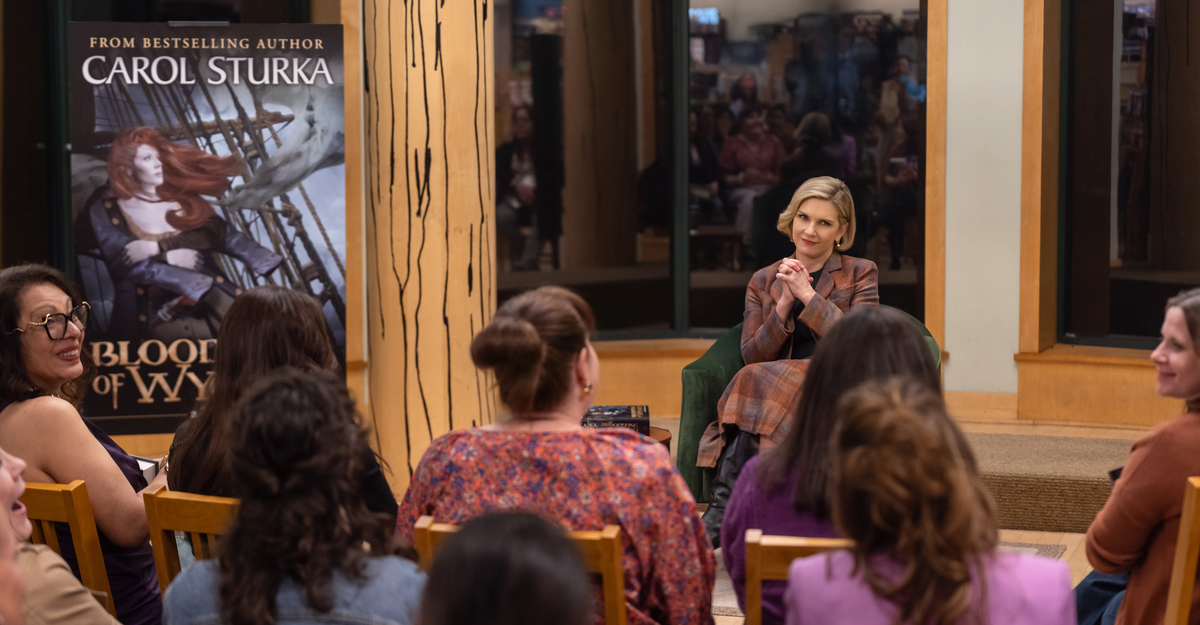
This article contains spoilers through episode 8 of Pluribus . On Vince Gilligan’s postapocalyptic drama series, Pluribus , Carol Sturka (played by Rhea Seehorn) is one of 13 people immune to an alien virus that has absorbed every other living person’s personality into a collective consciousness, erasing their individuality. But before Carol, the show’s protagonist, becomes an unlikely survivor, she’s already a victim of a different kind of zombie attack. The first time we meet Carol, she’s in a Dallas Barnes & Noble reading from Bloodsongs of Wycaro , the fourth book in her wildly popular Wycaro series, which follows the adventures of the sand pirate Lucasia and the rogue who has captured her heart. The members of her audience technically aren’t the living dead, but they all want a piece of the author. Carol, in turn, is barely able to mask her disdain even as she enjoys the spoils of their adoration. She may be a successful writer, but she makes, in her words, “mindless crap” stuffed with phrases like amaranthine sands and sinewy forearms . But Pluribus isn’t just poking fun at a popular genre of writing. Rather, as Carol battles to remain free from the mind-melded Others (the name eventually given to the world’s afflicted humans), Pluribus uses her occupation to illustrate the importance of critical thinking—about making your own decisions instead of giving over to the convenience of the hive mind. Romantasy was the fastest-growing literary genre in the world this year. As a category written primarily by and for women, it’s also one that receives a lot of derision: for the cookie-cutter plots, the same-y writing, the repeated ideas. (The genre has been plagued by scandals in which authors have been caught using AI prompts in their work.) Romantasy is easy to mock, and Pluribus does it well. We see, during her reading, how Carol’s prose is as purple as the sand seas upon which her heroine’s ship sails, underneath the twin moons that hang low and full over the horizon. And yet as Carol reads about Lucasia’s love of “proud, haughty” Raban, the ladies in the bookstore swoon—then clamor for selfies. Carol’s readers love the Wycaro books, and shouldn’t readers get what they love? It’s a popular argument these days. In Pluribus , the actor Miriam Shor is typecast once again (see also Younger and American Fiction ) as a fancy publishing lady; this time she’s Carol’s manager and romantic partner, Helen. When Carol gripes about writing books for a “bunch of dummies,” Helen wisely reminds her that pleasing one’s audience is not nothing: “You make even one person happy, maybe that’s not art. But it’s something.” Carol initially intended for the Wycaro series to be an epic love story between two women, but ended up turning Raban into a man to maximize appeal. That explains at least some of the bitterness she feels: She’s sacrificed her artistic vision for some vague idea about what the crowd desires. But later, when the Others attempt...
Preview: ~500 words
Continue reading at Theatlantic
Read Full Article