Twenty Years Into Fracking, Pennsylvania Has Yet to Reckon With Its Radioactive Waste - Inside Climate News
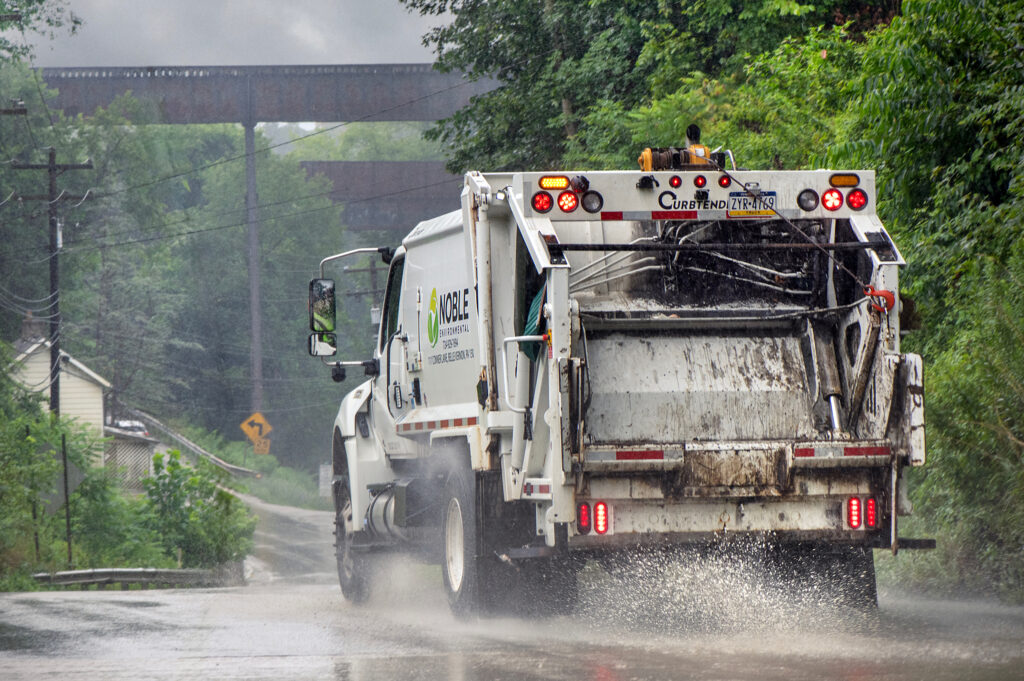
Fracking’s Forever Problem : Seventh in a series about the gas industry’s radioactive waste. When John Quigley became the secretary of the Pennsylvania Department of Environmental Protection in 2015, he knew that he would be busy trying to keep up with the consequences of the state’s rapid increase in natural gas production. But when reports landed on his desk that trucks carrying oil and gas waste were tripping radioactivity alarms at landfills, he was especially concerned. “There was obviously a problem that the state was not dealing with,” Quigley said. “Which was the threat to not only public health, but to the folks driving the trucks and people handling the waste in the oil and gas industry. They were unnecessarily put at risk.” Ten years after the alarms first unsettled Quigley, fracking in Pennsylvania has continued to grow, generating huge volumes of oil and gas waste and wastewater in the process. Seventy-two percent of the solid waste ends up in landfills within state borders, and a truck carrying it sets off a radioactivity alarm every day on average, an Inside Climate News analysis found. Radioactive elements such as radium, uranium and thorium in rocks deep underground come to the surface as a byproduct of oil and gas drilling. Experts have long worried about the potential health and environmental impacts of this waste. Radium exposure is linked to an increased risk for cancer, anemia and cataracts. New research from the University of Pittsburgh suggests that the wastewater created by fracking the Marcellus formation, the ancient gas deposit beneath Pennsylvania, is far more radioactive than previously understood. And there is also evidence that some of it is getting into the environment: Researchers have found radioactive sediment downstream from some landfills’ and wastewater treatment plants’ outfalls. But the state has barely shifted its approach to regulating the waste. “Nothing material has been done,” said Quigley, who left in 2016. “Nothing has really changed.” In 2023, radioactivity alarms were triggered more than 550 times at Pennsylvania landfills because of oil and gas waste, according to an analysis of landfills’ annual operations reports conducted by Inside Climate News. The vast majority of this waste was disposed of on-site; landfills rejected the waste only 11 times. Radium-226 was the most common isotope cited as the reason for the alarm. DEP issued a new guidance document for solid waste facilities and well operators that handle radioactive materials in 2022, with some of the changes specifically aimed at the fracking industry. Landfills have been required to submit a Radiation Protection Action Plan to the state since 2001 , covering protocols for worker safety, monitoring and detection and records and reporting, and DEP may require sites to test regularly for the long-lasting radium-226 and radium-228 if they have received large volumes of radioactive oil and gas waste. But DEP has fallen behind on many other aspects of regulating this waste. In 2021, then-Gov. Tom Wolf said the state would require regular radium testing of landfills’ leachate, a liquid byproduct...
Preview: ~500 words
Continue reading at Murmel
Read Full Article