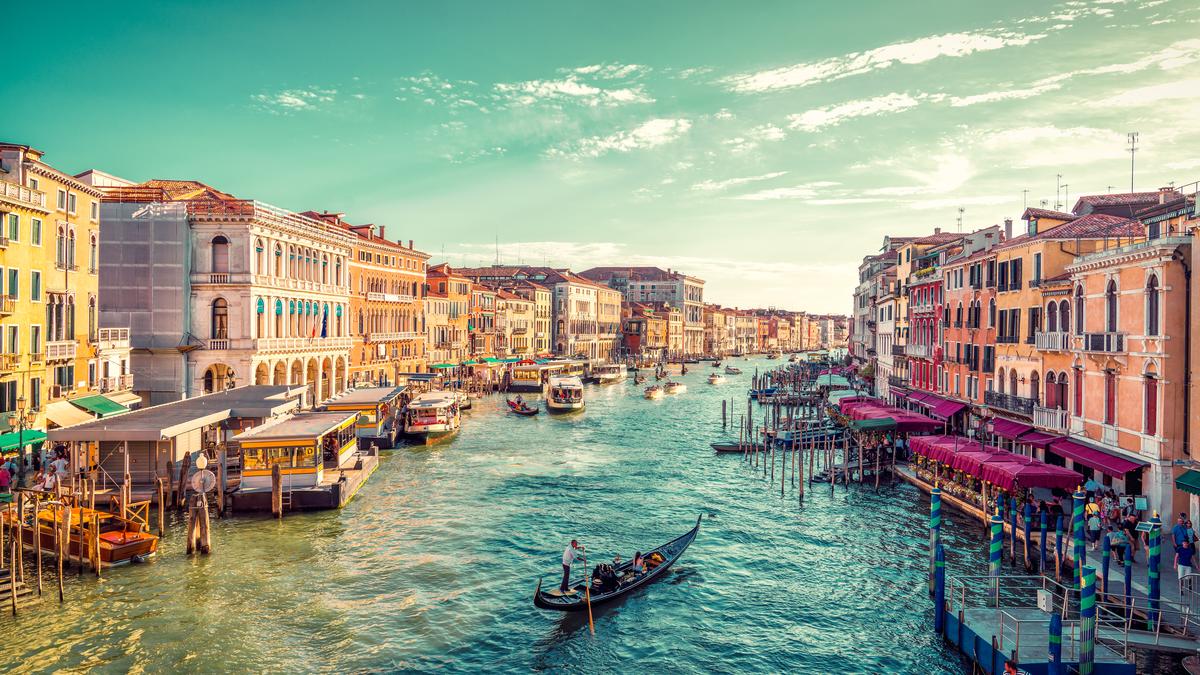
Dancing with shadows in Venice
Dancing with shadows in Venice Premium The city embodies the quintessence of literary nostalgia, a storied landscape haunted by the spectral presence of writers who have long since departed Published - December 28, 2025 02:45 am IST Shelley Walia READ LATER SEE ALL Remove Venice’s enduring enchantment may be attributed to its capacity to inspire subjective interpretation and personal narrative. | Photo Credit: Getty Images F ollowing an odyssey of navigation and negotiation, we finally procured a place of repose, whereupon the initial fatigue gave way to an effervescent sense of exhilaration. As we immersed ourselves in the midst of Venice’s art festival, the city’s labyrinthine topography was transformed into a vibrant tableau of creative expression. It was then that Venice’s ineffable charm asserted itself, its seductive power transcending the mundane. The Adriatic shimmered in the distance, breathing salt and history, while La Parata, with its waterborne pageantry, offered the spectacle of a city that long ago decided to live both on land and sea. And as we stood on the Bridge of Sighs, its baroque archway, whisperings of prisoners gazing their last at the lagoon, recalled for me the Bridge of Sighs in Oxford, spanning the New College Lane. Two bridges, continents apart, yet bound together in my memory, one an emblem of scholarship, the other of longing and exile. To me, Venice is always both eternal and fleeting. Its stones speak of endurance, yet its waters remind us that all is flux. Moreover, the city embodies the quintessence of literary nostalgia, a storied landscape haunted by the spectral presence of writers who have long since departed, yet remain indelibly etched in the city’s collective memory. At Harry’s Bar, a venerable institution that has borne witness to the city’s most intimate moments, Ernest Hemingway once sat, sipping whiskey and pouring his fiery thoughts onto paper. His words, “It is good to have an end to journey toward; but it is the journey that matters, in the end,” resonate deeply within the city’s labyrinthine alleys, where the very fabric of existence seems to be woven from threads of experience and remembrance. In Across the River and into the Trees, Hemingway’s lyrical meditation on love, mortality, and the human condition, Venice stands out as a city where “the light was as old as the city itself”, a phrase that haunts me still, particularly as dusk descends over the lagoon, distilling the essence of the eternal and the ephemeral. A smile comes on my face as I visualise Byron, restless as always, swimming across the Grand Canal that filled his verses with Venetian excess: “Oh Venice! Venice! when thy marble walls/ Are level with the waters, there shall be/ A cry of nations o’er thy sunken halls.” And at the back of my mind, I see Thomas Mann relishing the city’s languid beauty with its seeds of mortality so explicitly depicted in Death in Venice. It was Joseph Brodsky, who, in his Watermark, found in the city’s winter fog the perfect metaphor...
Preview: ~500 words
Continue reading at Thehindu
Read Full Article