Ukraine’s best hope may lie elsewhere as Russia inches forward on the battlefield
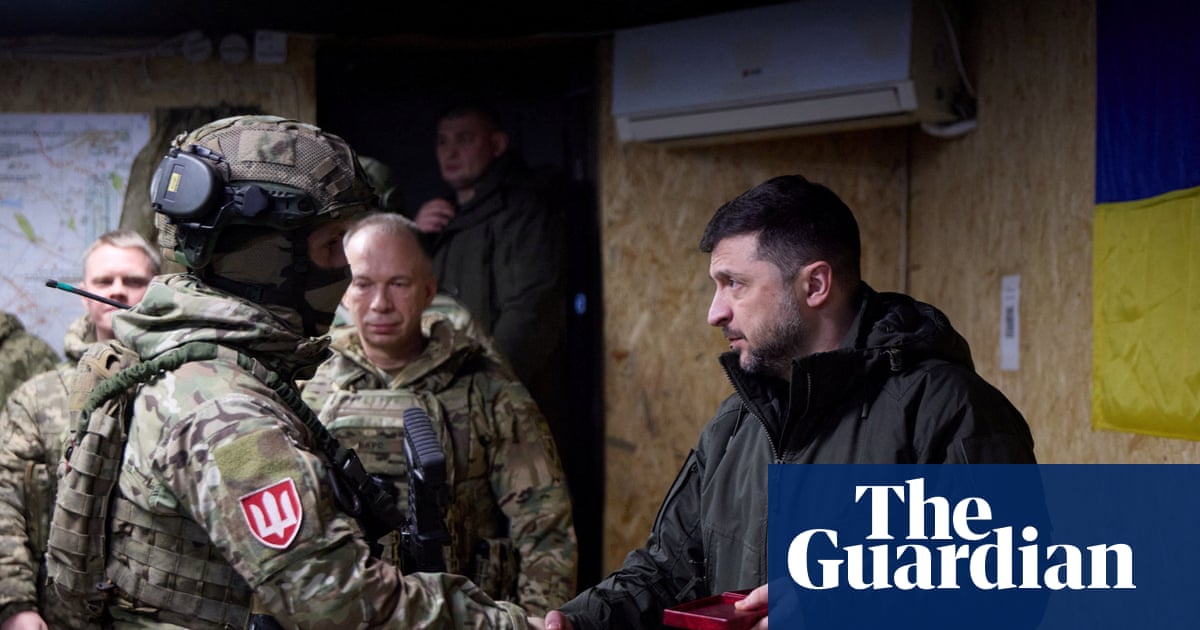
A depleted - but far from defeated Ukraine - looks to 2026 with few good military options, even though a critical €90bn (£79bn) loan from the EU has been agreed. The financing will help Kyiv to continue defending at its current intensity until late 2027, but it will not lead to a transformation of its battlefield prospects. Volodymyr Zelenskyy visits Ukrainian troops in the frontline town of Kupiansk on 12 December.Photograph: Ukrainian Presidential Press Service/Reuters The aftermath on 16 December of a night-time bomb attack on a residential area in Kramatorsk in Donetsk province.Photograph: Anadolu/Getty Images Bohdan Krotevych, photographed in Kyiv in April 2025, has called for a more dynamic mode of defence from Ukraine’s military.Photograph: Julia Kochetova/The Guardian A still from footage of the Dashan tanker, purportedly part of the Russian shadow fleet, being hit by a Ukraine strike in the Black Sea on 10 December.Photograph: Shared by security service official/Reuters On land, the pattern of the last two years should, in the first instance, continue. Russia has held the initiative since 2024, but only gaining territory incrementally, largely because it constantly throws people into the “meat grinder” of the frontline. During 2025, Russian advances amounted to 176 sq miles a month to the end of November, but at an estimated cost of 382,000 killed and wounded . The White House has argued, in the latest run of peace negotiations, that Ukraine is fated to lose the remaining 22% of Donetsk province, including the fortress cities of Kramatorsk and Sloviansk. At the current rate of Russian advance that would take at least a year (and arguably more given the predominately urban environment) and another 400,000 or more Russians killed, disabled, or hurt - a cost Kyiv is willing to try to inflict. Nevertheless, there remain questions about Ukraine’s strategy and medium-term frontline resilience amid a slight improvement in Russian tactics. Three times in the past six months, Ukraine’s front has given way, east of Dobropillia in Donetsk in August, north of Kupiansk in Kharkiv province late summer, early autumn, and again east of Huliaipole in Zaporizhzhia in November. Each time exhausted defenders could not stave off an influx of Russian infiltrators, sneaking past Ukraine’s drone defence in tiny groups. In Kupiansk, the Russians used underground gas pipelines in their attacks. However, the Dobropillia incursion was snuffed out after two months; in Kupiansk, the pipelines were cut or their exits appear to have been and in December, the Russians pushed back. Meanwhile, the losses in Zaporizhzhia province were not dramatic (about 6 miles), although they were a reminder that Ukraine’s drone-led defence - easily able to inflict casualties up to 10 miles behind the frontline - cannot make up for where frontline infantry numbers are short, or troops are tired. East of Huliaipole, the 109th Territorial Brigade had held the area for three years. Russian advances in Ukraine map The economist Janis Kluge estimates that Russia is still signing up roughly 30,000 military recruits a month, enough to replenish current...
Preview: ~500 words
Continue reading at Theguardian
Read Full Article