Gandikota canyon: The neglected wonder in our backyard
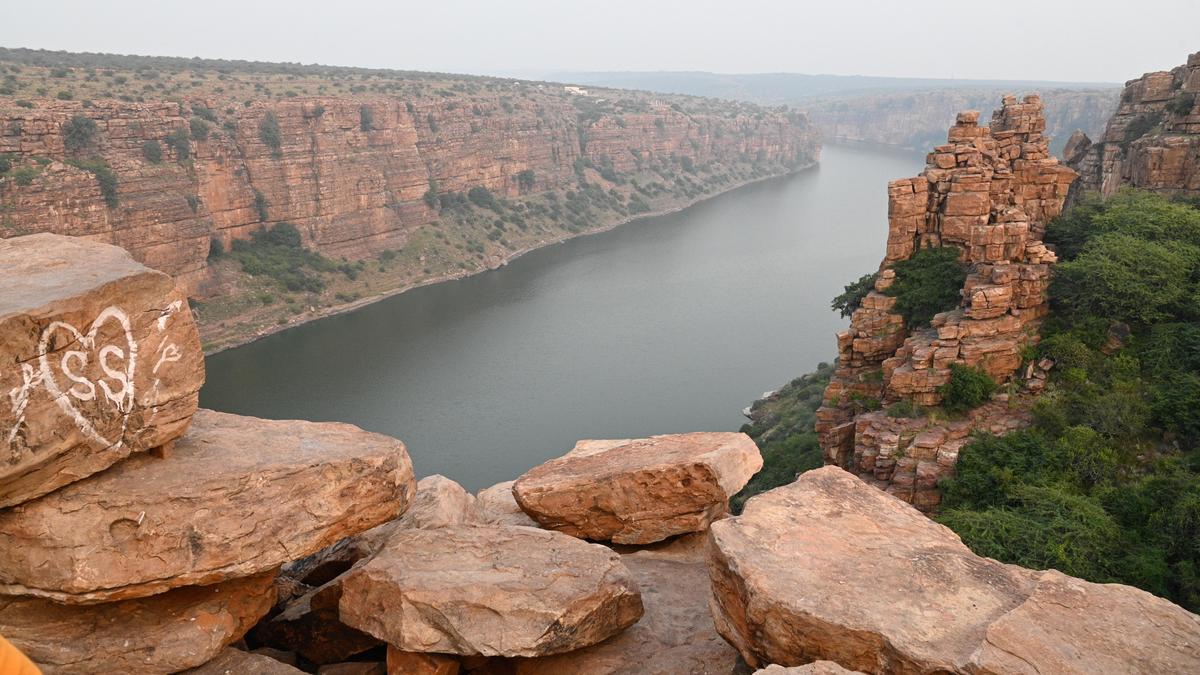
Gandikota canyon: The neglected wonder in our backyard Premium Any place having the right combination of a jaw-dropping beauty, a slice of ancient history and an ambience for leisure tourism should become a tourist hotspot. Despite having all three, however, Gandikota appears to be miles away from reaching that stage, thanks decades of neglect Published - December 27, 2025 10:14 am IST - Kadapa A.D. Rangarajan READ LATER SEE ALL Remove A view of the Gandikota canyon in Kadapa. | Photo Credit: K.V. Poornachandra Kumar “Gorgeous!” shouted 12-year-old Nithin from Yelahanka in Bengaluru as he feasted on the majesty of the Gandikota canyon in Kadapa district. Hewed out by the mighty Penna river over aeons, the massive gorge stretched on for as far as his eyes could reach. Nithin’s reaction, however, is not much different from what Gandikota draws from any tourist. The geological wonder is India’s answer to the Grand Canyon in the U.S. The steep red sandstone cliffs, hemming in the river as it flowed its serpentine course, make both sunrise and sunset a sight to behold. Similarly, historical structures like a fort, a temple and a mosque cast another layer of attraction, especially for those into art, architecture and archaeology. Kadapa’s history Kadapa is steeped in history: of rulers, dynasties, empires and human civilisation itself. It speaks through archaeological evidence such as inscriptions and ancient coins as well as philosophy, literature, music and dance. The use of several historical surnames by the residents of Kadapa today hints at the unbroken historical relevance of the region. The Madhavaraya temple within the Gandikota fort premises | Photo Credit: K.V. Poornachandra Kumar The district’s cultural heritage, however, is grossly underrated, so much so that rare inscriptions, dilapidated step wells, ramshackle forts continue to be discovered in the district’s hinterland. Mackenzie Kaifiyat (an Arabic term for narration or explanation), a compilation of manuscripts by the first Surveyor-General of India Colonel Colin Mackenzie (1754-1821), throws light on the rich and eventful history of the district. These details were collected by people appointed by him during 1780-1820 to understand local dialects, cultures and socio-economic conditions of the time. The Kaifiyats of Cuddapah district were published by noted scholar the late Janumaddi Hanumath Sastry, whose centenary year is currently under way. Pemmasani Nayaks Gandikota Fort, an imposing 12th century edifice, has withstood the test of time. It was built by the Pemmasani Nayaks, feudatories of the Kakatiya dynasty, using red granite. “Strategic gateways that appear out of nowhere make it hard for enemies to breach the fort. Moreover, the Penna river and the gorge to the north and west act as natural barriers,” observes historian and writer Tavva Obul Reddy, whose book on Gandikota is considered a traveller’s guide. The fort changed several hands over centuries, withstanding attacks and witnessing the rise and fall of numerous dynasties. Between 14th and 17th centuries, the region flourished under the Vijayanagara empire, when it became a key military outpost. The 17th century saw the fort changing hands...
Preview: ~500 words
Continue reading at Thehindu
Read Full Article