House moves to protect children from online predators as Australia clamps down on social media
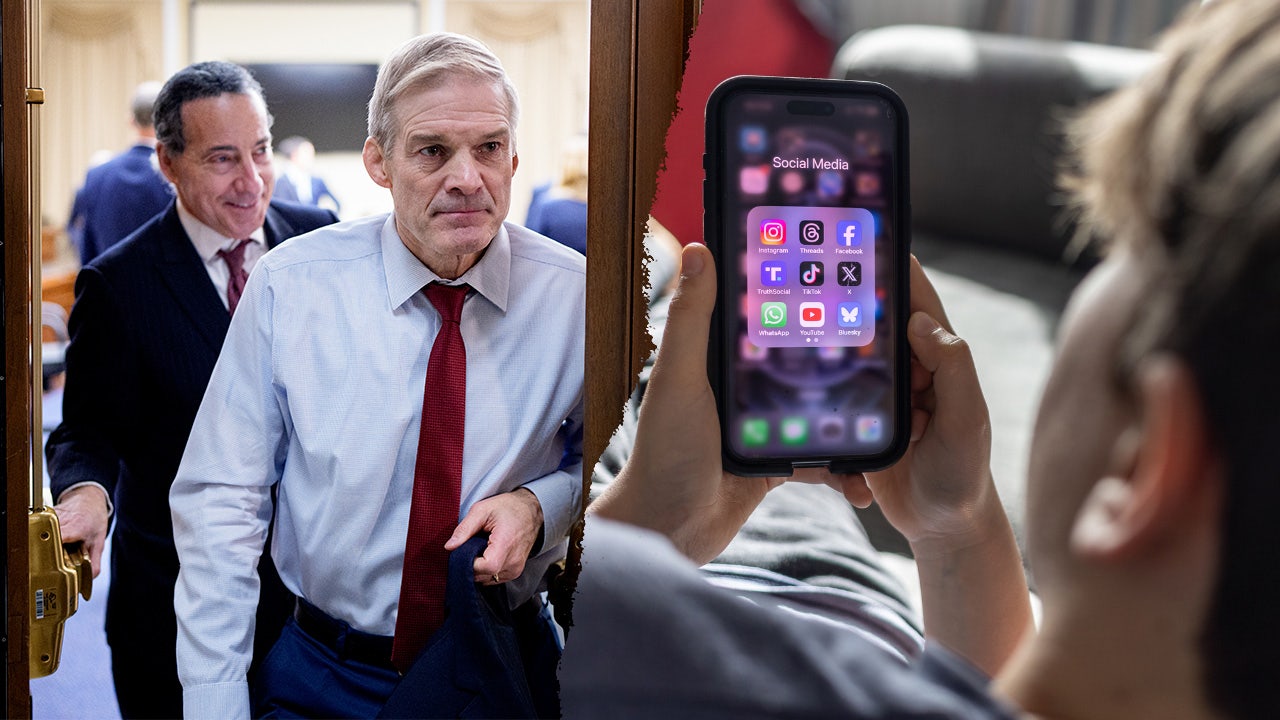
Poll: 80% of voters urge caution on AI, want stronger security safeguards Interim executive director at Georgetown’s Center for Security and Emerging Technology discusses growing concerns over A.I. on ‘Fox Report.’ House lawmakers last week advanced a pair of bipartisan-backed bills designed to strengthen protections for children facing sextortion, blackmail and self-harm coercion. Two separate bills introduced by Rep. Laurel Lee, R-Fla., and Rep. Andy Biggs, R-Ariz., aim to expand existing federal laws and equip prosecutors to investigate online abuse as the United States trails efforts in other countries to limit children’s exposure online. "Congress has a responsibility to ensure that our laws keep pace with evolving forms of exploitation and that our law enforcement has the tools it needs to protect victims and hold predators accountable," Lee said. AUSTRALIAN POLITICIAN CALLS COUNTRY ‘GUINEA PIG’ FOR CENSORSHIP AMID WORLD-FIRST SOCIAL MEDIA BAN Rep. Laurel Lee delivers remarks in committee. (Bill Clark/CQ-Roll Call, Inc via Getty Images) Her bill would criminalize the act of knowingly coercing child sex abuse material to produce or transmit sexually explicit material - a threat that’s been growing in recent years, according to the National Center for Missing and Exploited Children (NCMEC). Between 2021 and 2023, NCMEC reports an increase of over 300% in online enticement reports. In the same period, FBI and Homeland Security investigations revealed 13,000 instances of online blackmail schemes involving minor-related sexual exploitation schemes and at least 20 suicides. "This legislation ensures that predators who use these threats against children as a weapon can be charged appropriately and sentenced accordingly. No child should ever be placed in a position where they feel trapped, ashamed or hopeless because of an online predator’s threat," Lee said. Similarly, Biggs' bill, the Coercion and Sexual Abuse Free Environment Act, would expand criminal categories for convincing minors to engage in violent acts against themselves or others. He noted that whole groups of online predators, such as the 764 Network, aim to convince kids to perform the most violent acts possible - even on child-centric gaming platforms like Roblox and Twitch. "The conduct of [these] groups does not always fit neatly into existing criminal statutes, potentially jeopardizing prosecutions. My legislation criminalizes compelling or enticing a minor to engage in self-harm, resulting in death, engaging in animal crushing or acts of self-mutilation or self-branding," Biggs said. The two bills, which passed out of the House Judiciary Committee last Thursday, come as Australia recently banned social media use for its teenagers under the age of 16. The ban applies to YouTube, X, Facebook, Instagram, TikTok, Snapchat, Reddit, Twitch, Threads and Kick. Companies that fail to take steps to prevent usage for kids under the 16-year-old threshold could face up to $50 million in fines. GRAHAM LEADS BIPARTISAN DEMAND FOR TECH REFORM VOTE TO 'BRING SOCIAL MEDIA COMPANIES TO HEEL' Rep. Jamie Raskin, left, pictured coming out of a committee hearing room with Rep. Jim Jordan, and an image of a child looking at social media apps on their phone. (Andrew...
Preview: ~500 words
Continue reading at Foxnews
Read Full Article