This 8,000-year-old art shows math before numbers existed
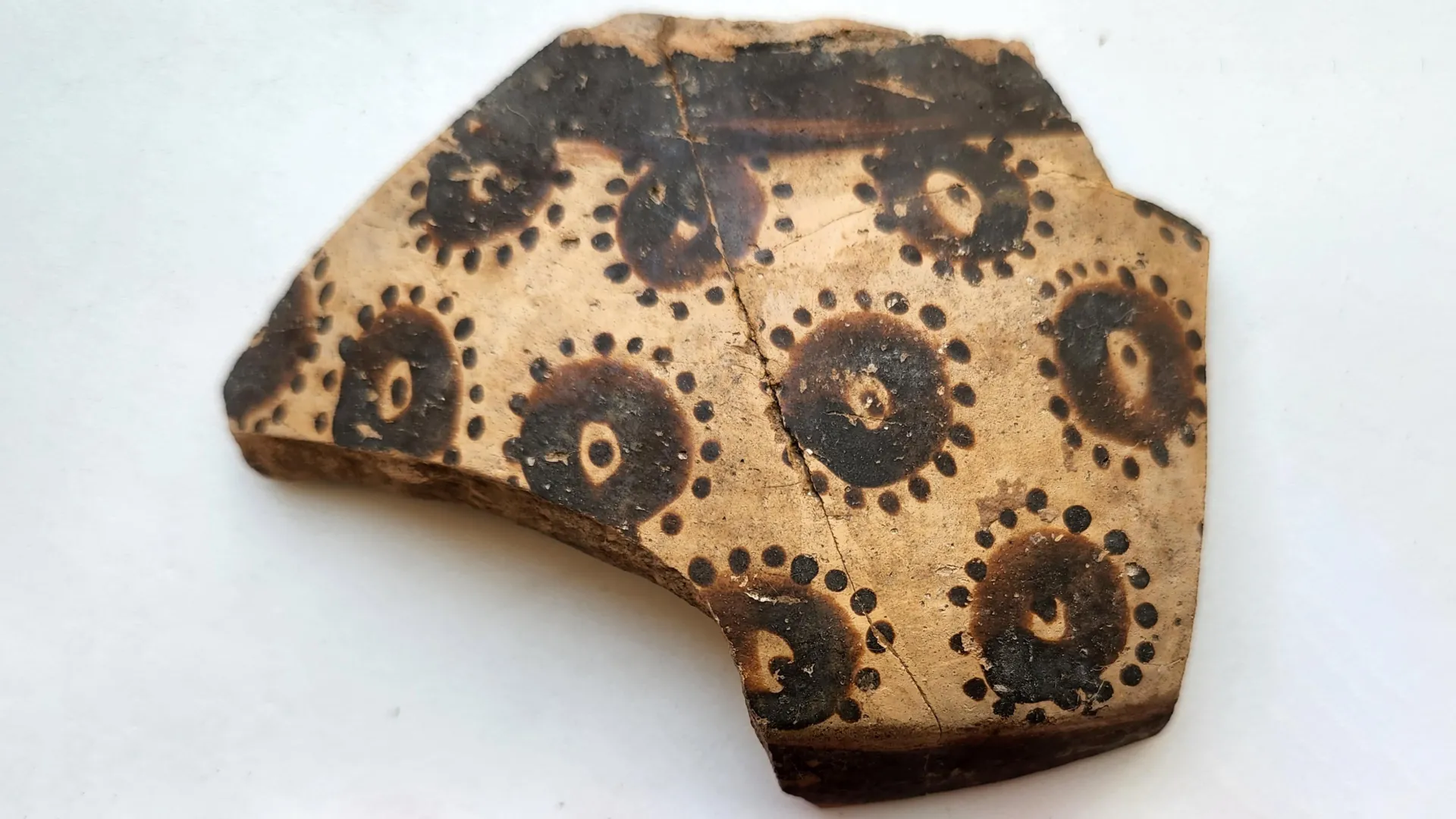
This 8,000-year-old art shows math before numbers existed Date: December 16, 2025 Source: The Hebrew University of Jerusalem Summary: Over 8,000 years ago, early farming communities in northern Mesopotamia were already thinking mathematically-long before numbers were written down. By closely studying Halafian pottery, researchers uncovered floral and plant designs arranged with precise symmetry and numerical patterns, revealing a surprisingly advanced sense of geometry. Share: A study published in the Journal of World Prehistory suggests that some of the earliest known images of plants created by humans served a deeper purpose than decoration. According to the researchers, these ancient designs also reveal early mathematical thinking. By closely examining prehistoric pottery, Prof. Yosef Garfinkel and Sarah Krulwich of the Hebrew University traced the oldest consistent use of plant imagery in human art to more than 8,000 years ago. The pottery comes from the Halafian culture of northern Mesopotamia (c. 6200-5500 BCE). Their findings show that early farming communities carefully painted flowers, shrubs, branches, and trees, arranging them in ways that reflect deliberate geometric structure and numerical order. Botanical Imagery Enters Prehistoric Art In earlier periods, prehistoric artists mainly depicted people and animals. Halafian pottery marks a turning point, introducing plants as a recurring and thoughtfully designed subject in visual culture. The researchers examined artifacts from 29 archaeological sites and recorded hundreds of plant motifs. Some were drawn in a realistic style, while others were more abstract, but all showed intentional design rather than random ornamentation. "These vessels represent the first moment in history when people chose to portray the botanical world as a subject worthy of artistic attention," the authors note. "It reflects a cognitive shift tied to village life and a growing awareness of symmetry and aesthetics." Hidden Numerical Patterns in Floral Designs One of the most notable discoveries involves the way flowers were arranged on the pottery. Many bowls display floral patterns with petal numbers that follow clear numerical sequences, including 4, 8, 16, 32, and even groupings of 64 flowers. The researchers argue that these patterns were planned rather than accidental and indicate an advanced understanding of how to divide space evenly. This type of reasoning appears thousands of years before the first written numerical systems. "The ability to divide space evenly, reflected in these floral motifs, likely had practical roots in daily life, such as sharing harvests or allocating communal fields," Garfinkel explains. This research contributes to the growing field of ethnomathematics, which explores how mathematical ideas are expressed through cultural practices and artistic traditions. A Broad Range of Plant Motifs The pottery designs reflect a wide variety of plant forms, including: Flowers with carefully balanced petals Seedlings and shrubs depicted with clear botanical features Branches arranged in repeating, rhythmic patterns Large trees sometimes shown alongside animals or architectural elements Interestingly, none of the images portray edible plants. This absence suggests the designs were not meant to document agriculture or ritual practices. Instead, the authors suggest the emphasis on flowers may relate to their association with positive emotional...
Preview: ~500 words
Continue reading at Murmel
Read Full Article