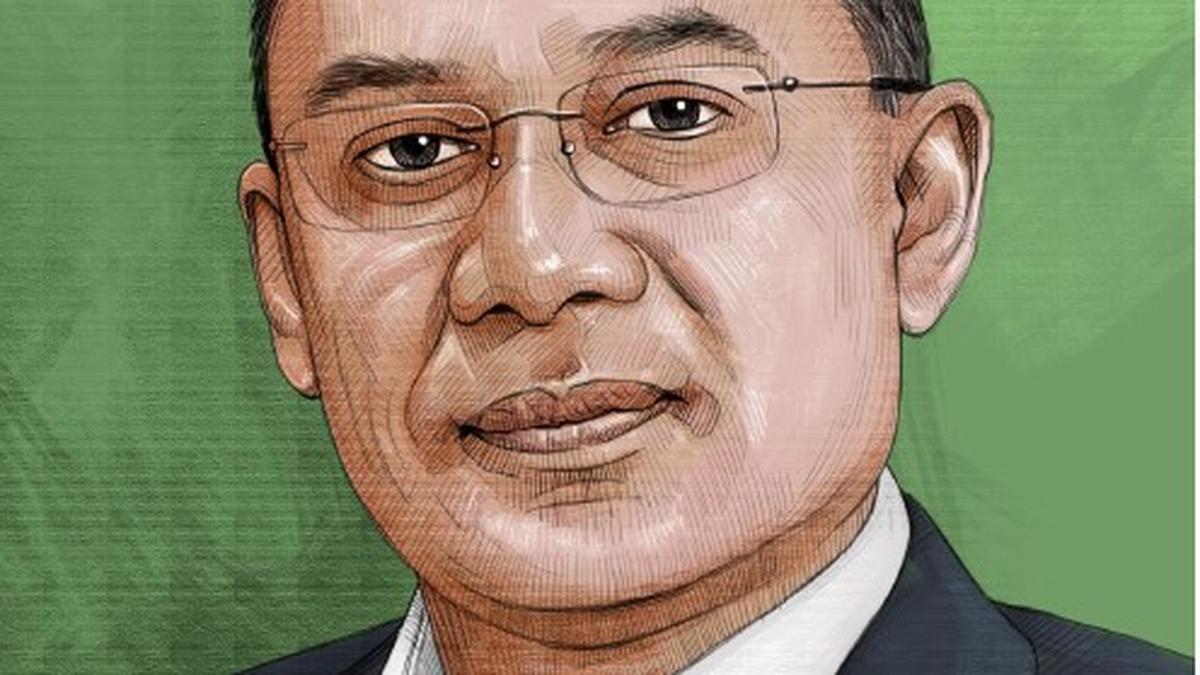
Tarique Rahman: The ‘prince’ who came in from the cold
Stepping out of the wood-panelled VVIP arrival lounge of the Hazrat Shahjalal International Airport on December 25, Tarique Rahman, the acting chairman of the Bangladesh Nationalist Party (BNP), walked to a small grassy patch beside the car park, took off his shoes, and stepped onto the ground. It was a gesture signalling that he had reconnected with the land of his birth and finally secured the political launch that was denied to him when Bangladesh spiralled into political uncertainty in late 2006, preventing him from contesting his first parliamentary election. In his speech after returning from London, Mr. Rahman struck an inclusive tone, calling for inter-communal and inter-ethnic harmony in Bangladesh, and, with an eye on his political enemies, set about dismantling some of the allegations levelled against the BNP by its opponents. From 2009 to 2024, Sheikh Hasina had repeatedly described the BNP and Mr. Rahman’s mother, Khaleda Zia, as pro-Pakistan. In his speech at the July 36 Expressway, Mr. Rahman invoked the BNP’s links to the 1971 Liberation War and the political developments of November 7, 1971 that brought his father, the late Gen. Ziaur Rahman, to de facto power. In doing so, Mr. Rahman signalled that, much like Ms. Hasina’s reliance on the legacy of her father, he too would build his political narrative around the legend of his father. Gen. Ziaur Rahman began his career as a soldier in the Pakistan Army and fought against India in the 1965 war, and later defected from the Pakistani military to declare the independence of East Pakistan hours after the Pakistan military launched Operation Searchlight on March 25, 1971. Through his speech and subsequent messages, Mr. Rahman has signalled that this time, he had come ready with an alternative vision for Bangladesh - one in which the previous regime’s iconography would be challenged by the icons of the BNP. The massive crowds that greeted him on December 25 and 26 might have given him a grand welcome, but Mr. Rahman was quickly reminded of the perils of Bangladeshi politics. Jamaat-e-Islami chief Shafiqur Rahman said his party, the country’s largest Islamist party, would “keep an eye” on Mr. Rahman. The remark was particularly significant because by emphasising inclusion, Mr. Rahman had conveyed that this time, unlike his last stint that ended in 2007, he intended to pursue a different trajectory. Political trajectory The political journey of Mr. Rahman was shaped by the traumatic memories of his childhood. On May 29, 1981, when he was in his teens, his father left for the port city of Chittagong for an unscheduled visit. A day later, he was shot and killed in an attempted coup that lasted only three days. After the assassination of Gen. Zia, the BNP was energetically led by Khaleda Zia, who often wore white and joined hands with her arch enemy, Sheikh Hasina, to challenge the military dictator, Hossein Mohammed Ershad. Ms. Zia went on to become Bangladesh’s first woman Prime Minister in 1991. Mr. Rahman started his formal...
Preview: ~500 words
Continue reading at Thehindu
Read Full Article