Carbon capture was spruiked as a way of limiting our emissions - but has Australia been greenwashed?
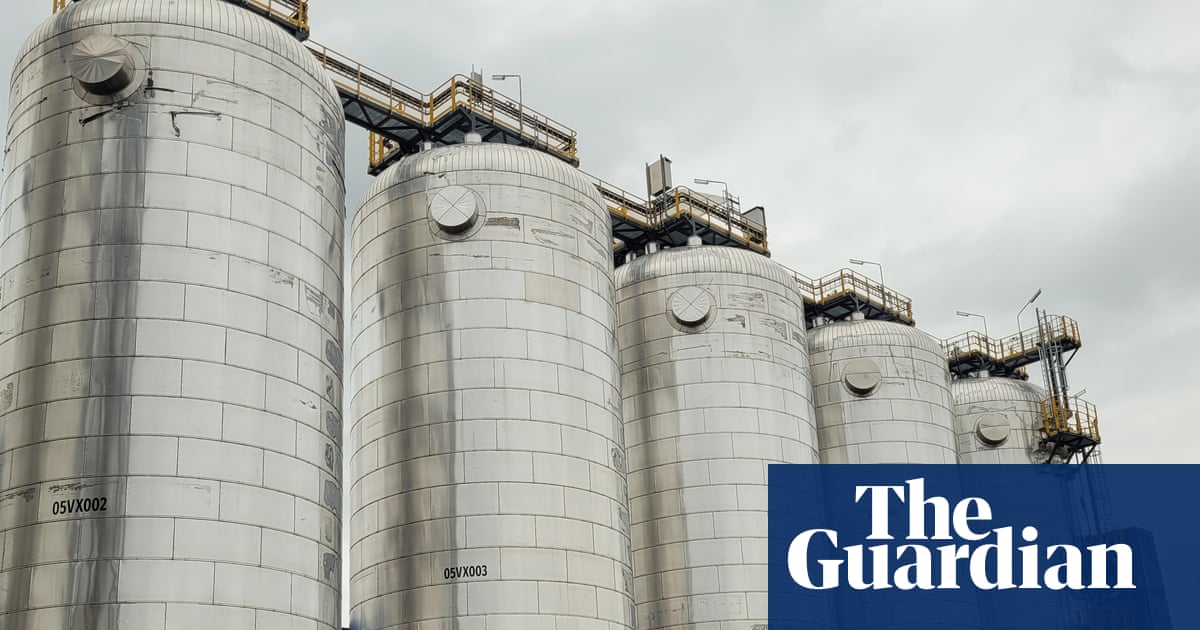
The US energy company Chevron describes it as the world’s largest industrial carbon dioxide injection project of its kind. But it has a problem. It still isn’t working as promised and the results are getting worse. The $3bn Gorgon carbon capture and storage (CCS) development, on Barrow Island off Western Australia’s Pilbara coast, was supposed to start operating in 2016, backed by $60m in federal government funding. Chevron and its partners in the project, including Shell and ExxonMobil, said it would capture up to 4m tonnes of carbon dioxide (CO2) from an underwater gas field each year and inject it in a reservoir more than 2km beneath the island. It was supposed to cut the direct greenhouse gas emissions from the Gorgon liquified natural gas (LNG) development by 40%. Nearly 10 years on, this is yet to happen. The LNG facility was completed in 2017 and recently secured a $3bn expansion . But the CCS project was repeatedly delayed due to technical problems. It didn’t start operation until August 2019. After a reasonably successful first 10 months, the amount of CO2 being injected under the island has been shrinking year-on-year. Data released by Chevron last month revealed only 1.33m tonnes was injected under Barrow Island last financial year, down from 1.59m tonnes in 2023-24, and 1.72m tonnes the year before. Critics say it is further evidence that CCS is not delivering, despite billions of dollars in funding commitments over decades, and even as industry and political leaders - including the Australian government and opposition - back it as an answer to limiting heat-trapping emissions from fossil fuels. Graph titled: CO2 injected underground at Gorgon CCS project Chevron says the problem is not with the technology itself, but the need to carefully manage the pressure levels in the geological reservoir under the island. A Chevron Australia spokesperson says the company is “progressing projects to optimise the pressure management system”, but work has stopped at two CO2 injection sites while work has been done to ensure it can be safely managed. “While we have continued to store as much carbon dioxide as we safely can during this period, carbon dioxide injection rates have decreased,” the Chevron spokesperson says. “Once project works are complete, we will continue our condition-based approach to increase injection rates over time.” Sign up: AU Breaking News email Kevin Morrison, an analyst with the Institute for Energy Economics and Financial Analysis, says whatever the cause, the development is now only half as effective as it was five years ago and is getting “worse by the year”. “The results are obviously underwhelming. It just calls into question the viability of all CCS projects at scale,” he says. Even if the problems can be fixed, Morrison says the Gorgon CCS development will bury less than 3% of the total emissions that result from the development if those released after the LNG is shipped and burned overseas are included. “It underlines that CCS should be in no way treated as a climate...
Preview: ~500 words
Continue reading at Murmel
Read Full Article