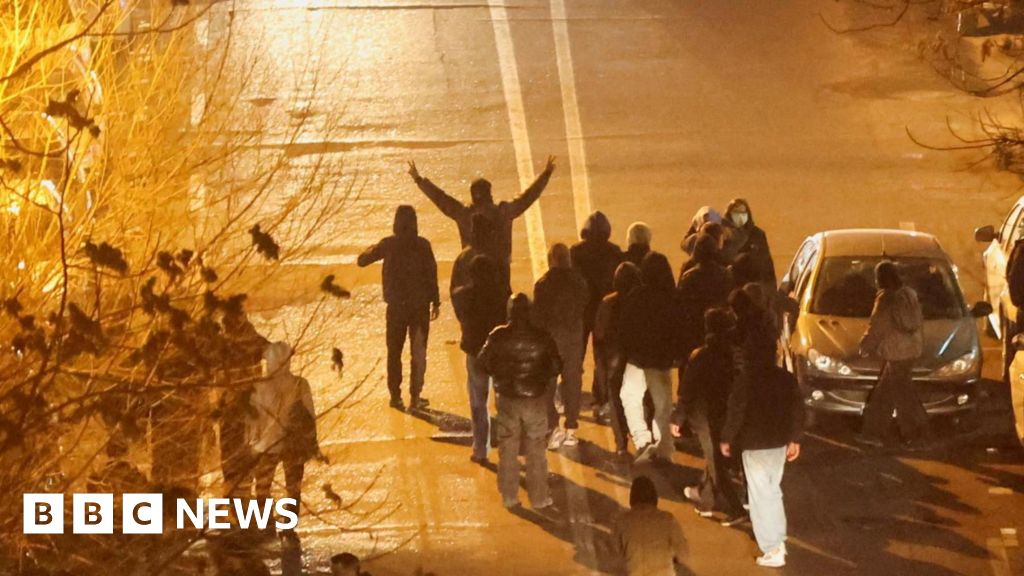
Iran authorities demanding large sums for return of protesters' bodies, BBC told
Iran authorities demanding large sums for return of protesters' bodies, BBC told Families of people killed in the protests in Iran have told the BBC that the authorities are demanding large sums of money to return their bodies for burial. Rights groups say more than 2,400 people were killed in the authorities' violent crackdown on protests Multiple sources have told BBC Persian that bodies are being held in mortuaries and hospitals and that security forces will not release them unless their relatives hand over money. At least 2,435 people have been killed during more than two weeks of protests across the country. One family in the northern city of Rasht told the BBC that security forces demanded 700 million tomans ($5,000; £3,700) to release the body of their loved one. It was being held at the Poursina Hospital mortuary, along with at least 70 other dead protesters, they said. Meanwhile in Tehran, the family of a Kurdish seasonal construction worker went to collect his body, only to be told they must pay a billion tomans ($7,000; £5,200) to receive it. The family told the BBC that they could not afford the fee and were forced to leave without their son's body. A construction worker in Iran typically earns less than $100 a month. In some cases, hospital staff have phoned the relatives of the dead to give them an advance warning to come and get the bodies before security forces can extort any funds. BBC Persian has been told about a woman - who we are not identifying for her safety - who did not know her husband was killed until she received a phone call on 9 January on his phone from hospital staff. They told her she should quickly come and collect his body before security forces arrived and demanded payment for its release. BBC Persian was told about this situation by a London-based relative, who has spoken to her. The woman then took her two children to the hospital to find her husband's body. She put it in the back of a pickup truck, and drove for seven hours to their hometown in western Iran to bury him. "I rode in the back of the pickup truck, crying over his body for seven hours while my children sat in the front seat," she told her London relative. BBC Persian has also received reports that officials at Tehran's Behesht-e Zahra mortuary are telling families that if they claim their child was a member of the Basij paramilitary force and was killed by protesters, the body will be released without charge. The family member told the BBC in a message: "We were asked to participate in a pro-government rally and portray the body as that of a martyr. We did not agree to this." In another case in Tehran, a source told BBC Persian that several families broke into a mortuary to retrieve bodies out of fear they would be taken away by the authorities. "Several families, fearing that...
Preview: ~500 words
Continue reading at Co
Read Full Article