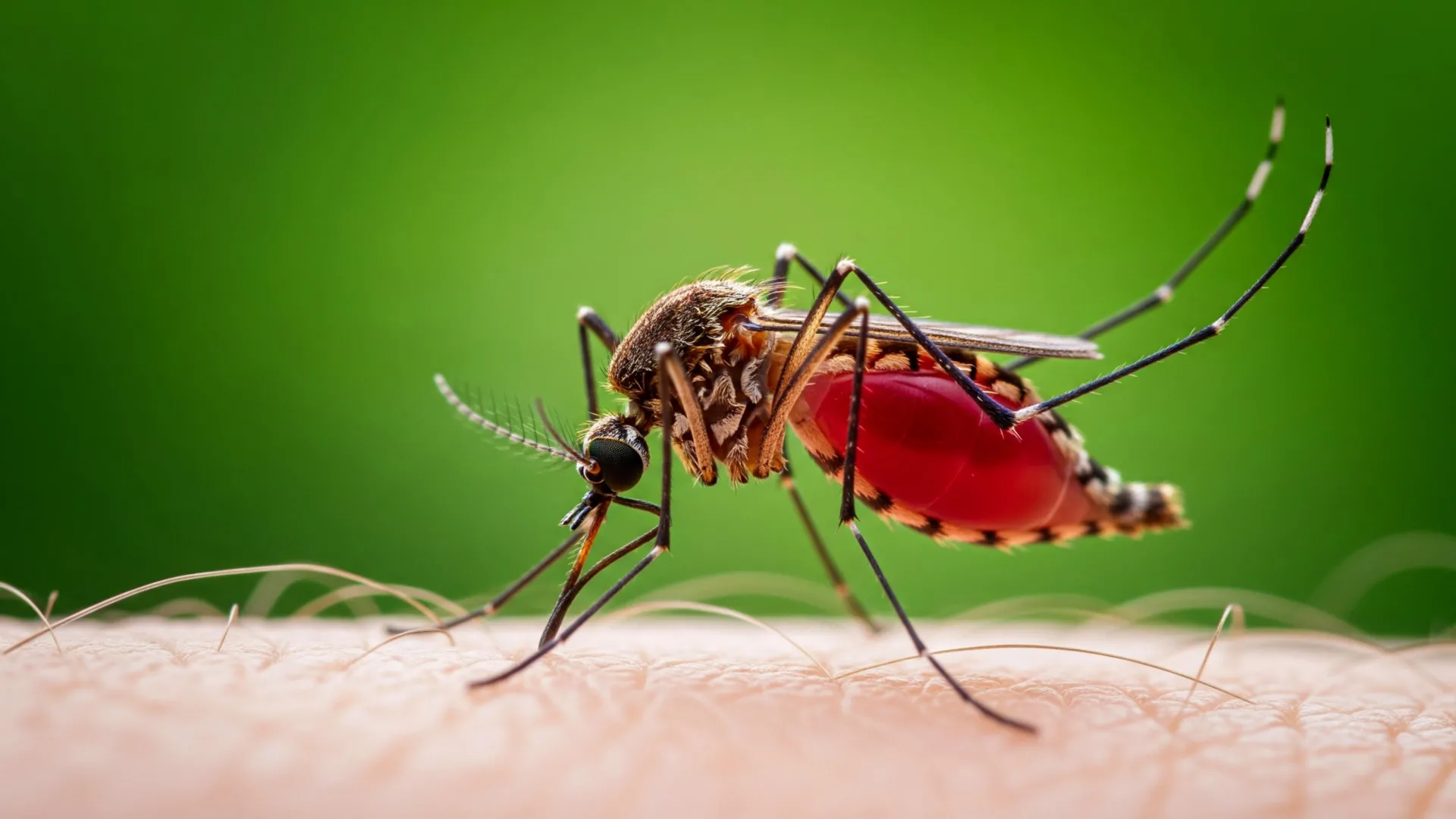
Forest loss is driving mosquitoes’ thirst for human blood
Forest loss is driving mosquitoes’ thirst for human blood When forests disappear, mosquitoes don’t-they adapt, and increasingly, they bite us. Date: January 15, 2026 Source: Frontiers Summary: In the rapidly disappearing Atlantic Forest, mosquitoes are adapting to a human-dominated landscape. Scientists found that many species now prefer feeding on people rather than the forest’s diverse wildlife. This behavior dramatically raises the risk of spreading dangerous viruses such as dengue and Zika. The findings reveal how deforestation can quietly reshape disease dynamics. Share: Running along Brazil's coastline, the Atlantic Forest supports an extraordinary range of life, including hundreds of species of birds, amphibians, reptiles, mammals, and fishes. Much of that richness has been lost. Human development has reduced the forest to roughly one third of its original size. As people move deeper into once intact habitats, wildlife is pushed out, and mosquitoes that once fed on many different animals appear to be shifting their attention toward humans, according to a study published in Frontiers in Ecology and Evolution . "Here we show that the mosquito species we captured in remnants of the Atlantic Forest have a clear preference for feeding on humans," said senior author Dr. Jeronimo Alencar, a biologist at the Oswaldo Cruz Institute in Rio de Janeiro. "This is crucial because, in a environment like the Atlantic Forest with a great diversity of potential vertebrate hosts, a preference for humans significantly enhances the risk of pathogen transmission," added co-author Dr. Sergio Machado, a microbiology and immunology researcher at the Federal University of Rio de Janeiro. Tracking what mosquitoes are biting To understand what mosquitoes were feeding on, the research team set light traps at the Sítio Recanto Preservar and the Guapiacu River Ecological Reserve (two natural reserves in the state of Rio de Janeiro). Female mosquitoes that had recently taken a blood meal were separated and studied in the lab. Scientists extracted DNA from the blood inside the mosquitoes and sequenced a specific gene that works like a biological barcode. Each vertebrate species has its own version of this genetic marker. By matching the barcodes to reference databases, the team could identify the animals that had been bitten. Humans emerge as a dominant blood source The traps collected 1,714 mosquitoes from 52 different species. Among them, 145 females were found to be carrying blood. Researchers were able to identify the blood meals of 24 individuals. Those meals came from 18 humans, one amphibian, six birds, one canid, and one mouse. Some mosquitoes had fed on more than one host. One mosquito identified as Cq. Venezuelensis had taken blood from both an amphibian and a human. Mosquitoes from the species Cq. Fasciolata showed mixed meals as well, including combinations of rodent and bird, and bird and human. The researchers believe several factors may explain this pattern. "Mosquito behavior is complex," Alencar said. "Although some mosquito species may have innate preferences, host availability and proximity are extremely influential factors." How deforestation increases disease risk As deforestation continues and human settlements expand...
Preview: ~500 words
Continue reading at Sciencedaily
Read Full Article