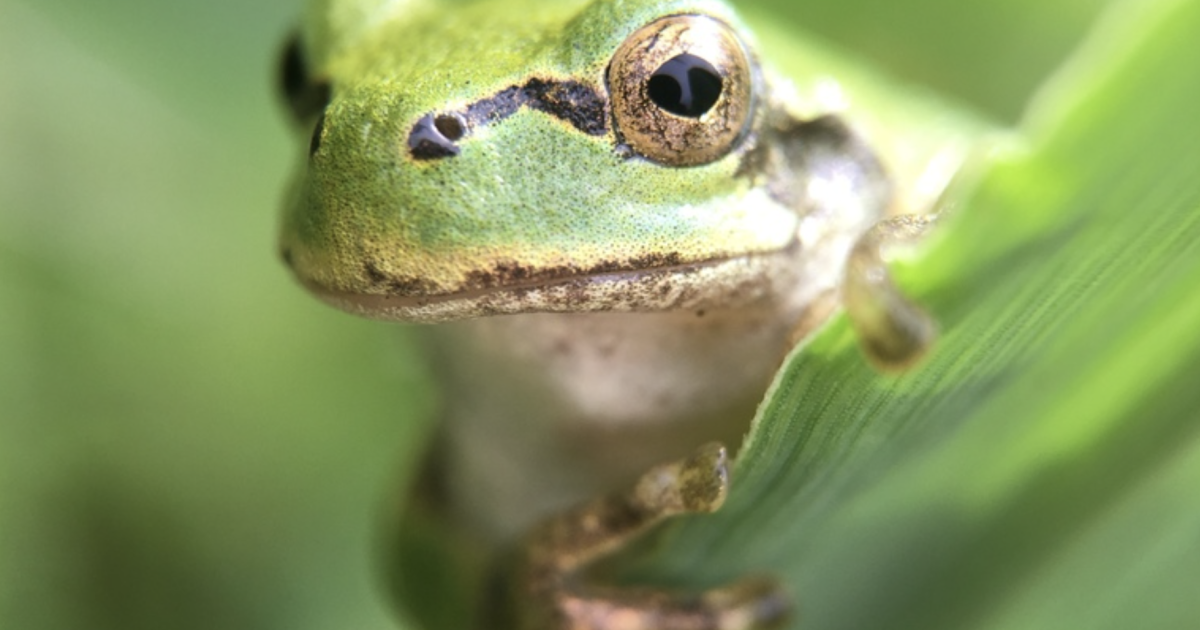
Frog gut bacterium eliminates cancer tumors in mice with a single dose
A bacterium from the intestines of Japanese tree frogs has "exhibited remarkably potent" tumor-killing abilities when administered intravenously, outperforming current standard therapies and paving the way for an entirely new approach to treating cancer. Researchers at the Japan Advanced Institute of Science and Technology (JAIST) had taken a keen interest in amphibian and reptile gut microbes for several reasons - spontaneous tumors are very rare in these wild animal types, and when they do appear they're generally linked to pollutants or lab conditions. In other words, direct external environmental factors. In addition to this, these animals have long lifespans relative to size, and naturally endure extreme cellular stress - think metamorphosis, regeneration - and live in pathogen-rich habitats, which would normally be considered things to elevate cancer risk, not lower it. The researchers suspected that part of their apparent protection from cancer might come from microbes, not just the cells themselves. The team isolated 45 bacterial strains from the tree frogs, Japanese fire belly newts ( Cynops pyrrhogaster ) and Japanese grass lizards ( Takydromus tachydromoides ), and intensive screening narrowed the list down to nine microbes that demonstrated anti-tumor effects - with the tree frogs' Ewingella americana exhibiting the strongest response. " Ewingella americana exhibited remarkably potent cytotoxic activity with selective tumor-targeting ability characteristic of facultative anaerobic bacteria," the researchers noted. "Mechanistic investigations revealed that E. americana functions through a dual-action mechanism: direct tumor cell killing and robust activation of host immunity, leading to enhanced T cell, neutrophil, and B cell-mediated tumor attack. Treatment with E. americana significantly outperformed standard therapies, including anti-PD-L1 antibody and doxorubicin, in tumor regression studies." The team administered a single shot of E. americana intravenously to mice with colorectal cancer , and it completely eliminated tumors in every treated animal. What's more, the response wasn’t just rapid but appeared to provide ongoing protection. When the mice were later re-exposed to cancer cells, none developed new tumors, suggesting the treatment had triggered long-lasting immune memory. The scientists soon found out why this one bacterium was so successful in completely clearing out tumors. E. americana has a two-pronged mechanism to topple cancer cells - first, it has a natural affinity for the low-oxygen environment inside solid tumors, so within just 24 hours it had increased its numbers by around 3,000-fold, but it also didn't drift over to impact any other healthy organs or tissue. Then it's able to directly kill the growth thanks to toxins it secretes inside the tumor. At the same time, the bacterial invasion triggered a natural immune response, and the tumors soon became flooded with immune cells - particularly neutrophils, and T and B cells - alongside increases in inflammatory signaling molecules. The combined effect was widespread tumor cell death driven both by direct bacterial action from the foreign gut bug and by the host’s own immune system. "These findings suggest that gut microbiomes of lower vertebrates harbor numerous uncharacterized bacterial species with exceptional therapeutic potential," the team wrote. "Our study establishes...
Preview: ~500 words
Continue reading at Murmel
Read Full Article