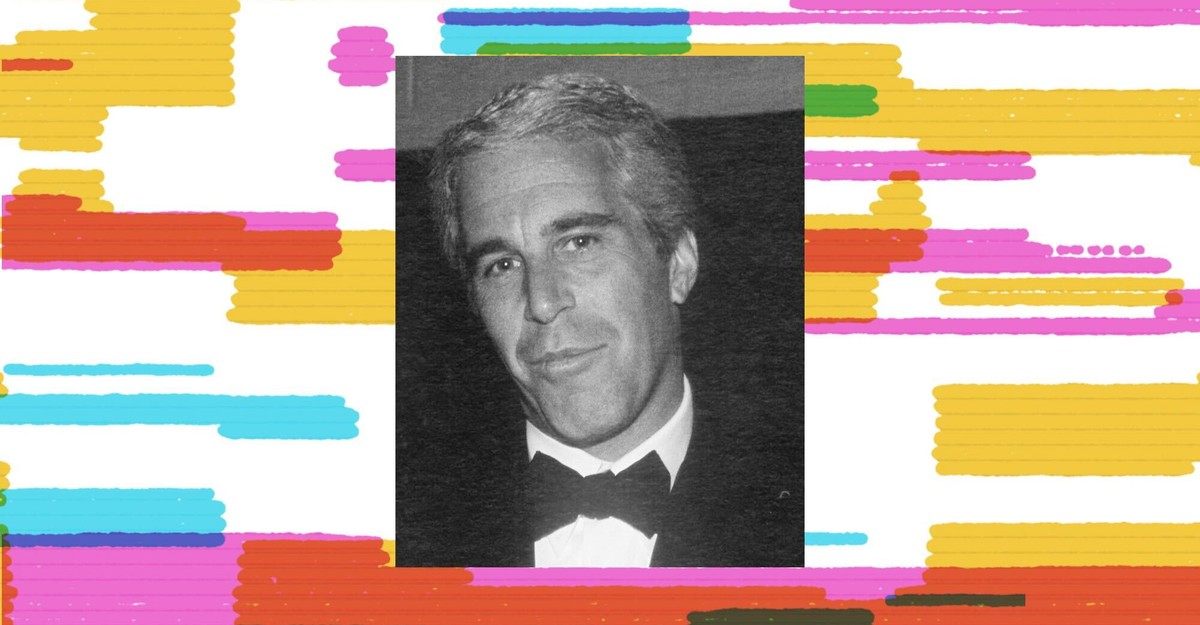
What Is Actually in the Epstein Files?
Listen − 1.0 x + 0:00 1:11:36 Subscribe here: Apple Podcasts | Spotify | YouTube Late on the Friday before Christmas, just hours before a deadline mandated by Congress, the Department of Justice released part of the trove of documents known colloquially as the Epstein files. The contents are, at different times, unnerving, enraging, banal, and heavily redacted. At The Atlantic , we’ve been up, poring over the documents to contextualize what they mean. In this special Galaxy Brain episode, Charlie Warzel is joined by Adrienne LaFrance, The Atlantic ’s executive editor, and Isaac Stanley-Becker, a staff writer, to talk about the document dump. They share their findings, address the political fallout, and explore what, if anything, we can learn from what’s been released. The following is a transcript of the episode: [ Music ] Charlie Warzel: I’m Charlie Warzel, and this is Galaxy Brain . Yesterday, conspiracy theorists, politicians, investigative reporters, concerned bystanders—they all got what they’ve long been asking for, at least, partially: The Department of Justice, as mandated by Congress, has released the Epstein files, which is a massive multimedia tranche of documents. They include files, more than 3,000 photos of Epstein’s homes in New York City and in the Virgin Islands, images of his house filled with art and photographs of nude and half-clothed women. There are photos of Epstein’s jet-setting lifestyle, a number of which depict Epstein and his associate Ghislaine Maxwell with former President Bill Clinton. In a statement on X yesterday, a spokesperson for Clinton said, “There are two types of people here. The first group knew nothing and cut Epstein off before his crimes came to light. The second group continued relationships with him after. We’re in the first.” This information that has been released has been held by different sections of federal law enforcement, and for the last month, according to CNN, lawyers at the Department of Justice’s National Security Division have been poring over these files. They’ve been trying to comply with dueling directives to either release the information for public maximum transparency and to protect the executive and legal privacy of victims and those who haven’t been accused of any wrongdoing. The redaction process has been described by insiders as chaotic, and these files are heavily redacted. Now that it’s here, though, in the public, everyone from vigilante investigators to journalists like myself can pore over this information in an attempt to better understand the life and crimes of Epstein, who in 2019 was charged with operating a sex-trafficking ring that targeted young women and underage girls. Prosecutors say he was aided by Ghislaine Maxwell, his longtime associate who’s currently serving a prison term. Epstein died in 2019 in his jail cell of reported suicide, and that incident ignited speculation about the particulars of his sex ring and rumors of a reported client list. It’s worth backing up, though, to briefly explain the timeline of how we all got here. All the way back in February, in an interview...
Preview: ~500 words
Continue reading at Theatlantic
Read Full Article