The Pitiful Childishness of Donald Trump
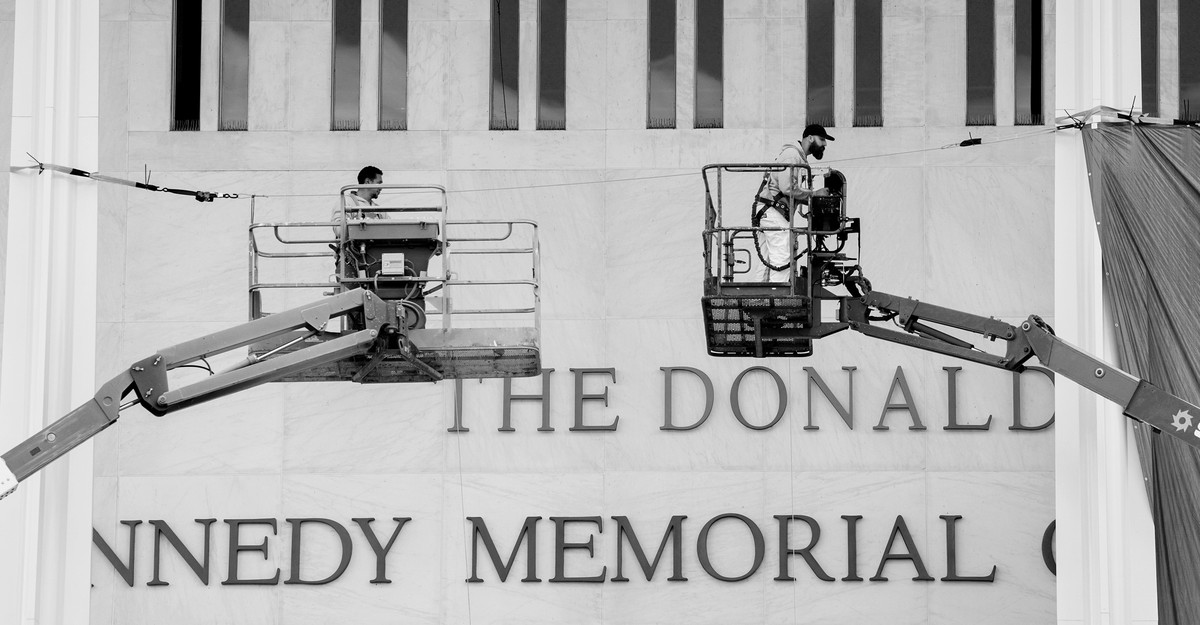
The Board of Trustees—or, if one prefers, the Board of Toadies—at the John F. Kennedy Center for the Performing Arts has renamed it the Trump-Kennedy Center. The 47th president of the United States approves. Donald Trump’s appetite for flattery appears as insatiable as the supply of bootlickers among his followers appears inexhaustible. He also blessed engraving his name on the U.S. Institute of Peace building and delivered a cartographic decree that the Gulf of Mexico would henceforth be called the Gulf of America. Meanwhile, his secretary of defense, in between haranguing generals about physical fitness and ordering the U.S. Navy to engage in the killing of criminals without trial, has renamed the Department of Defense “the Department of War” (illegally, as it happens). Pete Hegseth has also gone about renaming bases that were once named after Confederate generals (traitors, the lot of them, and for the most part incompetent military leaders) but, last year, renamed after real heroes. The Hegsethian names are the same as the originals (Bragg, Hood, Lee) but supposedly refer to different people. It is all offensive and in some cases skirts the will, such as it is, of a feeble and craven Congress. It is also puerile. The names will come back. In 10 years’ time, the maps will say “the Gulf of Mexico,” and the odds are good that a Democratic administration will yet again rename the Department of Defense and the forts. Trump’s name will be chiseled out of the walls, as will his embarrassing japes at his predecessors in his “President’s Walk of Fame” at the White House. So why do Trump and his minions do things that are childish in and of themselves, and that anyone with political judgment knows will be undone when their opponents eventually return to power? “Names are powerful,” the exceptional magician Eugene Burger used to say, which is why some mentalists begin their acts by memorizing the names of everyone in the audience. The Confederate names on forts built during the early 20th century were designed to consolidate the myth of the Lost Cause, conferring nobility on what was, in fact, a sordid struggle for chattel slavery—the worst cause for which men ever fought, as Ulysses S. Grant later noted. And in some measure they succeeded. Names can be tributes too, sometimes of a paradoxical kind. Native Americans were cheated, occasionally massacred, displaced, and defeated by Americans moving West. But in 1973 Jeep named its premier vehicle the Cherokee, hoping to capture ruggedness and pride in the name, even giving the first truck to the then-head of the Eastern Band of Cherokee Indians. The U.S. Army’s most lethal helicopter is the Apache, the Navy’s primary long-range missile is the Tomahawk, and a century ago William Tecumseh Sherman, one of the most formidable of Civil War generals, bore as his middle name that of one of the greatest Indian warriors Americans ever encountered. One may debate whether such namings are appropriate—in 2021 the leaders of the Oklahoma-based Cherokee...
Preview: ~500 words
Continue reading at Theatlantic
Read Full Article