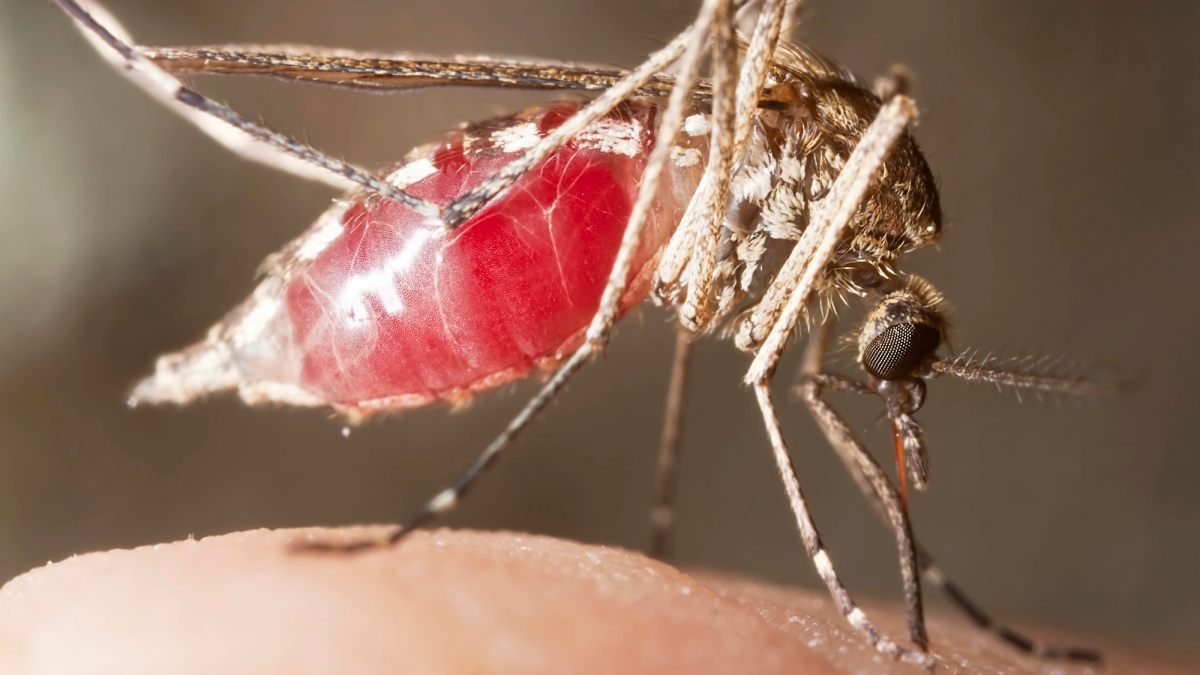
Without forests, mosquitoes turn to human blood
If you’re someone who mosquitoes just adore , we feel your pain. Unfortunately, new data indicates the number of mosquito species that feed on humans is increasing-and it’s likely to get worse. Dr. Sérgio Lisboa Machado , a microbiologist from the Universidade Federal do Rio de Janeiro in Brazil, is the co-author of a study published today in the journal Frontiers in Ecology and Evolution on a potential link between deforestation and mosquitoes’ increasing preference for human blood. Whose blood is it anyway? In the study, Machado and his colleague Dr. Jeronimo Alencar examined the feeding habits of several mosquito species in the Atlantic Forest , a moist broadleaf forest that stretches along the eastern coast of South America. According to Machado, the project began as an attempt to figure out which local animals these mosquitoes were feeding on. “When we started our research, our main goal was to find the preferred blood source that some species of female mosquitoes use for reproduction,” Machado tells Popular Science The process of identifying the blood in the creatures’ stomachs was time-consuming. The first step was identifying which of the region’s roughly 40 mosquito species were biting. This involved careful scrutiny of the creatures with a stereoscope. “The identification itself is not complicated,” Machado says, “but there is a shortage of entomologists to perform it.” This fact, along with the need to transport the mosquitoes back to Rio de Janeiro for analysis, meant by the time the samples were analyzed, the DNA and RNA inside of them had started to break down. Even with these difficulties, the analysis provided Machado with a pretty good idea of which mammal species the mosquitoes in question preferred for dinner. In several cases, this blood was human . “This was something we didn’t expect,” Machado says. “Since we were in a forest reserve, we expected to find DNA from vertebrates in the local fauna.” Related Mosquito Stories Shifting tastes So why so much human blood ? The researchers hypothesize that the Atlantic Forest’s changing environment has led these species to develop a taste for human blood. “We believe it’s a matter of opportunity given the lack of a preferred food source,” Machado says. “It seems that if mosquitoes can’t find their preferred blood source, they seek out whatever is available.” As biodiversity declines and animal species go extinct , more mosquito food sources are disappearing. However, unlike many of the animals on which they feed, mosquitoes are adaptable creatures. There’s almost always a ready-made alternative, including humans. While this might be good news for the mosquitoes, it risks being terrible news for humans. As an increasing number of mosquito species develop a taste for humans, so too does the risk that species which have not been particularly problematic in the past could act as new vectors for blood-borne diseases . Once mosquitoes acquire a new food source, they tend to develop a preference for that particular blood-and humans are one species whose availability is most definitely not...
Preview: ~500 words
Continue reading at Popsci
Read Full Article