‘No water, no life’: Iraq’s Tigris River in danger of disappearing
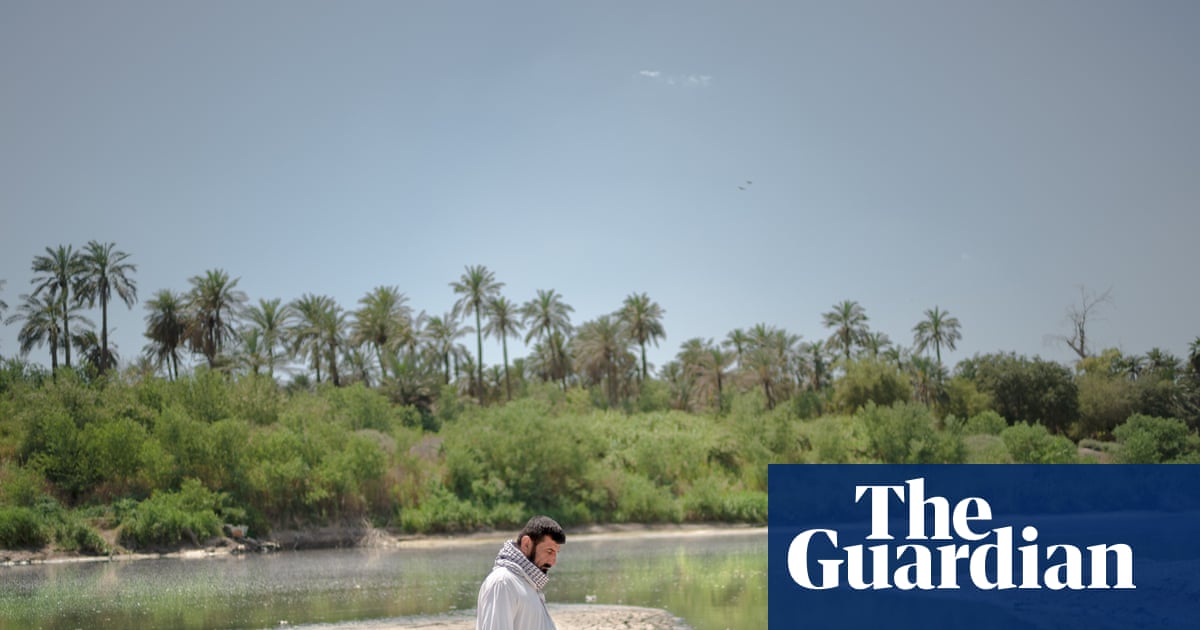
As a leader of one of the oldest gnostic religions in the world, Sheikh Nidham Kreidi al-Sabahi must use only water taken from a flowing river, even for drinking. A farmer walks on the cracked, dried earth beside the Diyala River. In recent years the water by his home has become stagnant, poisoned, and is no longer even able to be used for his animals.Photograph: Emily Garthwaite Sheikh Nidham: ‘For our religion, the importance of water is like air.’Photograph: Hannah Lynch/The Guardian An aerial view taken in September 2021 shows a dried-up riverbed in the Huwaiza marshes about 260 miles (420km) south of Baghdad, on the Iraq-Iran border.Photograph: Asaad Niazi/AFP/Getty Images Fishing boats in a depleted river in the Huwaiza marshes, near Amarah, on the Iraq-Iran border.Photograph: Asaad Niazi/AFP/Getty Images The 68-year-old has a long grey beard hanging over his simple tan robe and a white cap covering his equally long hair, which sheikhs are forbidden from cutting. He says he has never got ill from drinking water from the Tigris River and believes that as long as the water is flowing, it is clean. But the truth is that soon it may not be flowing at all. Iraq’s famed Tigris is heavily polluted and at risk of drying up. Unless urgent action is taken to save the river, life will be fundamentally altered for the ancient communities who live on its banks. “No water, no life,” says Sheikh Nidham, a Mandaean religious leader living in the southern Iraqi city of Amarah, on the banks of the river in which he has been regularly immersed since he was a month old. Mandaeans are members of one of the oldest gnostic religions in the world. Southern Iraq has been their homeland for more than a thousand years, particularly in Maysan province. Amarah, the provincial capital, is built around the Tigris. Water is central to their faith and every major life event requires ritual purification. Marriage ceremonies begin in water, and before drawing their last breath, Mandaeans should be taken to the river for a final cleansing. “For our religion, the importance of water is like air. Without water, life wouldn’t exist. At the beginning of creation, Adam was the first man on Earth. Before Adam there was water, and water was one of the elements that created Adam,” Sheikh Nidham explains. The Tigris is one of the two famous rivers that cradle Mesopotamia and once formed part of the “fertile crescent”. The river rises in south-east Turkey, and runs the length of Iraq, through its two largest cities, Mosul and Baghdad, until it joins the Euphrates; together, as the Shatt al-Arab, they finish their journey south to the Gulf. Map of Iraq and the wider region Here, on the banks of these rivers, the history of the world was changed. Large-scale agriculture was first developed, the first words were written, and the wheel was invented. Today the Tigris waters are used for irrigation, transport, industry, power generation, and drinking for the...
Preview: ~500 words
Continue reading at Murmel
Read Full Article