‘Unashamedly capitalist’ rewilders claim ‘Moneyball’ approach could make millions - but experts sceptical
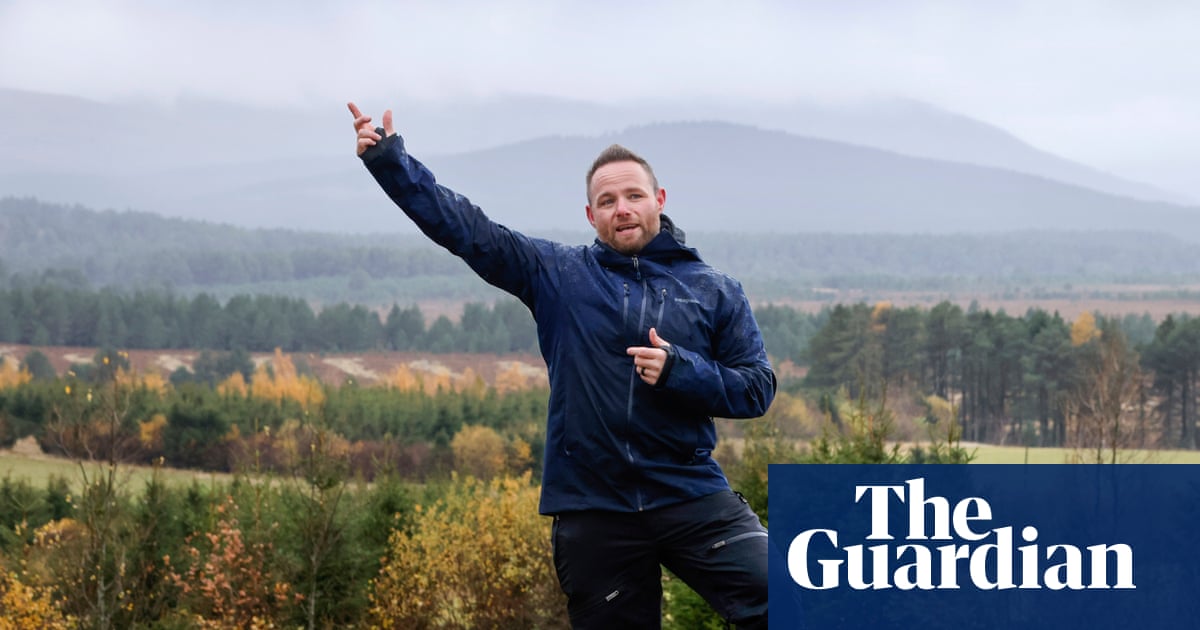
The founder of an investment firm buying large estates across Britain to restore woods and peatland has said it is “unashamedly and proudly” capitalist, and plans to make tens of millions of pounds in profit. Rich Stockdale said Oxygen Conservation was creating a market for ‘premium’ carbon credits, which would see investors paying higher prices to store carbon in woodlands or peatland.Photograph: Murdo MacLeod/The Guardian Rich Stockdale, who runs Oxygen ConservationPhotograph: Murdo MacLeod/The Guardian The Kinrara Estate which Oxygen Conservation. bought from BrewDog.Photograph: Murdo MacLeod/The Guardian A stream on the Kinrara Estate bought by Oxygen Conservation.Photograph: Murdo MacLeod/The Guardian Rich Stockdale, the chief executive of Oxygen Conservation , said his model of “regenerative capitalism” was a “force for good” because it would offer investors significant profits by planting trees, restoring peatlands, operating solar farms and holiday homes and installing new windfarms across its estates. The Exeter-based firm, which has bought 13 estates in under four years, plans to rapidly become the UK’s largest private landowner by expanding its current landholding of 50,000 acres (20,234 hectares) over the next five years to 250,000 acres. “We are applying a capitalist model, unashamedly and proudly,” Stockdale said, on a tour of Oxygen’s estate at Dorback near Grantown-on-Spey in the Cairngorms. “We think releasing, activating and motivating more capital into this space is the only way we can scale conservation for the better of climate, wildlife, people and everyone concerned.” He said Oxygen Conservation was creating a new market for “premium” carbon credits because some wealthy private and institutional investors would pay much higher prices to store carbon in new woodlands or peatland if they included high environmental and social benefit. Its goal is to sell two million tonnes of carbon credits at well above the normal market rate, to prove that “regenerative capitalism” can work, he added. Stockdale likened his firm’s approach to the Brad Pitt movie Moneyball, in which a baseball team used performance data to build a winning side. Oxygen Conservation uses Lidar laser scanning, thermal imaging to track deer and photogrammetry to build up 3D images of their estates. “We’ve taken very much a moneyball approach to the environment that’s previously been applied to sport. And that’s where you see all these threads that run through data, sport, high performance, US tech culture. We’ve brought that to the environmental world.” Campaigners and experts in natural capital who have been closely watching Oxygen Conservation’s rapid growth are sceptical about its methodology. They say it is based on significant levels of borrowing and speculative bets on the future value of its investments. Residents near Comrie in the Scottish Highlands, where Oxygen Conservation plans to build a large new 50MW windfarm, and around Dartmoor in south-west England where it bought a large hill farm, have accused the firm of ignoring local concerns and opposition. Josh Doble, the policy director at Community Land Scotland , a community-ownership advisory and campaign group, said Oxygen Conservation was the most bullish of a new generation of “mega...
Preview: ~500 words
Continue reading at Theguardian
Read Full Article