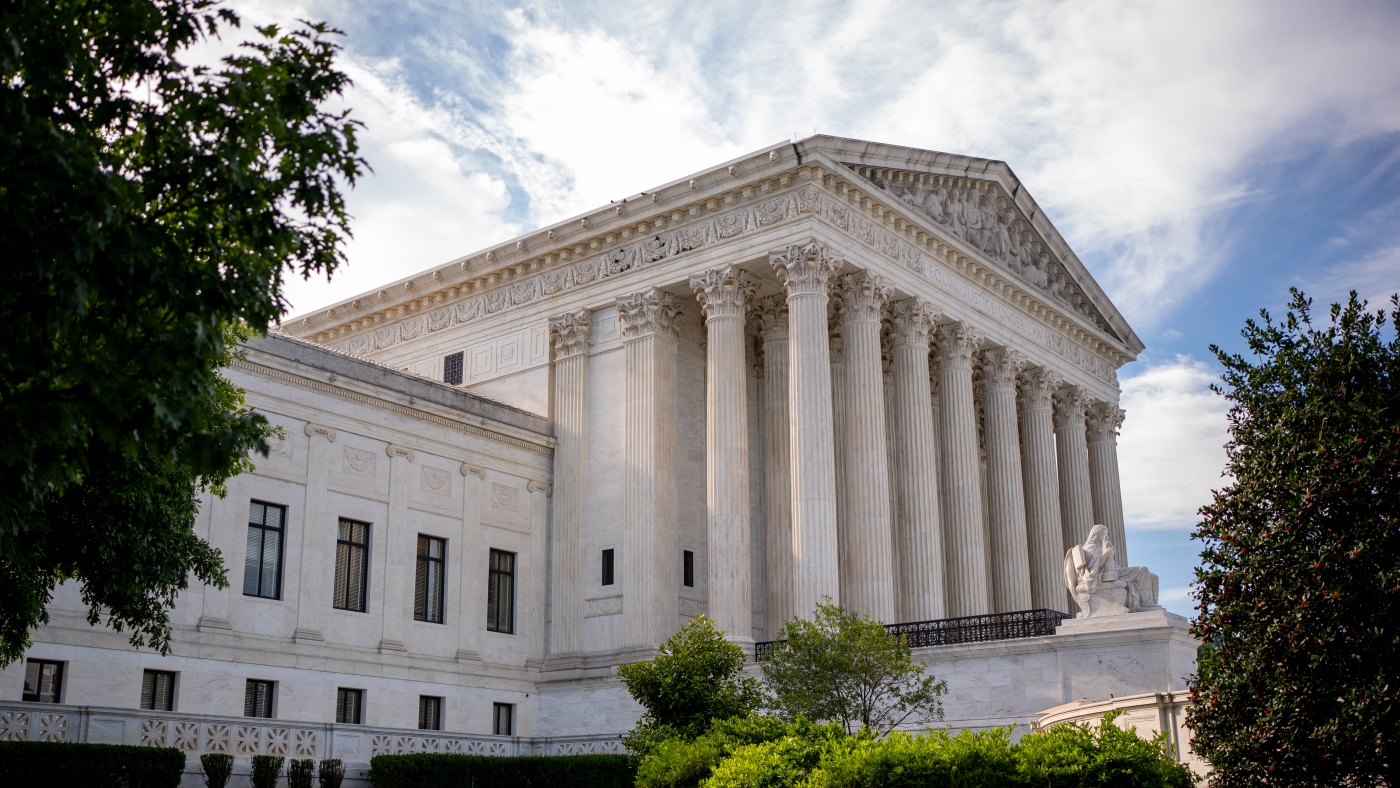
Supreme Court rules against Trump in National Guard case
Supreme Court rules against Trump in National Guard case Supreme Court rules against Trump in National Guard case Audio will be available later today. The U.S. Supreme Court Andrew Harnik/Getty Images hide caption toggle caption The U.S. Supreme Court ruled against President Trump on Tuesday, refusing to reinstate, for now, Trump's ability to send National Guard troops into Illinois over the objections of its governor. The administration argued in its appeal in October that it needed to federalize the National Guard to stop what Trump has said is unremitting violence against Immigration and Customs Enforcement agents at detention facilities in the Chicago area. But two lower courts ruled against Trump's claim that the protests in the Chicago area constituted a "rebellion or danger of rebellion" against the United States government that the president has the right to put down. The court's action is one of only a handful of such "emergency docket" cases in which the conservative court has ruled against Trump since he began his second term as president almost a year ago. Many legal experts thought this emergency decision would take days or weeks, not months, as ended up being the case. It's unclear why it took so long. "At this preliminary stage, the Government has failed to identify a source of authority that would allow the military to execute the laws in Illinois," the majority wrote in its brief opinion. The court wrote that the president failed to explain why the situation in Illinois warranted an exception to the Posse Comitatus Act that limits the military's ability to execute laws on U.S. soil. It's the first time the highest court has weighed in on the controversial deployments. While the decision does not set precedent, it brings some clarity about the president's power to deploy federal military resources. In preliminarily rejecting the Trump administration's arguments, the court majority accepted the fact-finding and views of both the trial court judge in the case, and the views of a three-judge appeals court panel composed of one Trump appointee, one George W. Bush appointee, and an Obama-appointed judge. Presumably, the case could return to the court after the court of appeals hears full arguments in the case and renders a decision months from now. But for all practical purposes, the president for now at least, cannot send in National Guard troops in Illinois without the governor's permission. Illinois Attorney General Kwame Raoul praised Tuesday's ruling. "The extremely limited circumstances under which the federal government can call up the militia over a state's objection do not exist in Illinois, and I am pleased that the streets of Illinois will remain free of armed National Guard members as our litigation continues in the courts," Raoul said in a statement. The White House did not immediately respond to a request for comment from NPR. Justice Brett Kavanaugh wrote his own concurring opinion. Dissenting from Monday's unsigned opinion were Justices Samuel Alito and Clarence Thomas, who wrote that the court stepped beyond the bounds of...
Preview: ~500 words
Continue reading at Npr
Read Full Article