Largest Acquisition In Nvidia History: Jensen Pays $20BN For AI Chip Startup In Bid For Google's TPU Tech
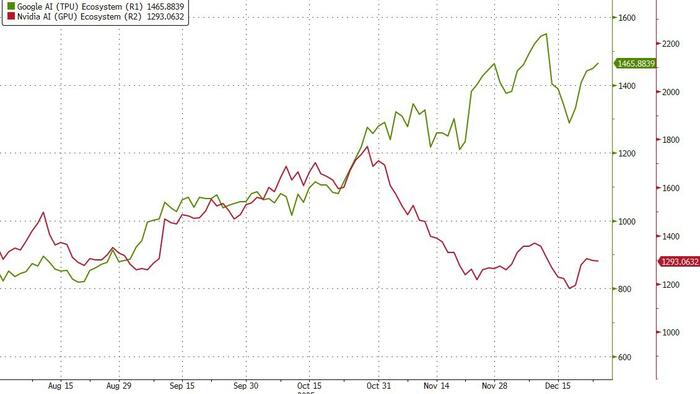
Largest Acquisition In Nvidia History: Jensen Pays $20BN For AI Chip Startup In Bid For Google's TPU Tech Jonathan Ross, chief executive officer of Groq Just before the market close on Friday, Nvidia unveiled its largest ever acquisition (which however was structured as a licensing deal to avoid anti-trust concerns) when it agreed to buy Groq - pardon license all of Grok's assets and acquire its entire executive team - a designer of high-performance artificial intelligence accelerator chips, for $20 billion in cash. In reality what the deal is really about is Grok's TPU expertise, and specifically the knowledge inside CEO Jonathan Ross' head, who helped launch Google's TPU, the search giant's custom Application-Specific Integrated Circuit. The news was first reported by CNBC, citing Alex Davis, CEO of Disruptive, which led the startup’s latest financing round in September. Davis, whose firm has invested more than half a billion dollars in Groq since the company was founded in 2016, said the deal came together quickly (that part is true: the deal likely came together in the days following the recent dramatic ascent of Google's Gemini and TPU architecture, not to mention stock price, as explained below). Groq raised $750 million at a valuation of about $6.9 billion in September. Investors in the round included Blackrock and Neuberger Berman, as well as Samsung, Cisco, Altimeter and 1789 Capital (where Donald Trump Jr. is a partner). Groq said at the time it would use the funds to expand its data center capacity. Instead, the participating funds are about to 3x their money in 3 months, an unprecedented venture return, thanks to Nvidia's massive cash hoard. Groq said in a blog post on Wednesday that it’s “entered into a non-exclusive licensing agreement with Nvidia for Groq’s inference technology,” without disclosing a price. Clearly, however, this is much more than just a licensing agreement since Groq founder and CEO Jonathan Ross along with Sunny Madra, the company’s president, and other senior leaders “will join Nvidia to help advance and scale the licensed technology,” the post said. As Bloomberg explains, sharing a slightly different perspective on how the deal is structured or rather wants to be structured, the world’s largest publicly traded company paid for the right to use Groq’s technology and will integrate its chip design into future products. Some of the startup’s executives are leaving to join Nvidia to help with that effort, the companies said. Groq will continue as an independent company with a new chief executive, existing finance chief Simon Edwards as CEO, it said Wednesday in a post on its website, which of course it will only pretend to be for regulatory and anti-trust reasons: Nvidia will have stripped all the good stuff, i.e., the TPU IP. It’s data center business, which offers outsourced computing, will continue, the company said in the post. Davis told CNBC that Nvidia is getting all of Groq’s assets, though its nascent Groq cloud business is not part of the transaction. Groq said “GroqCloud will continue...
Preview: ~500 words
Continue reading at Zerohedge
Read Full Article