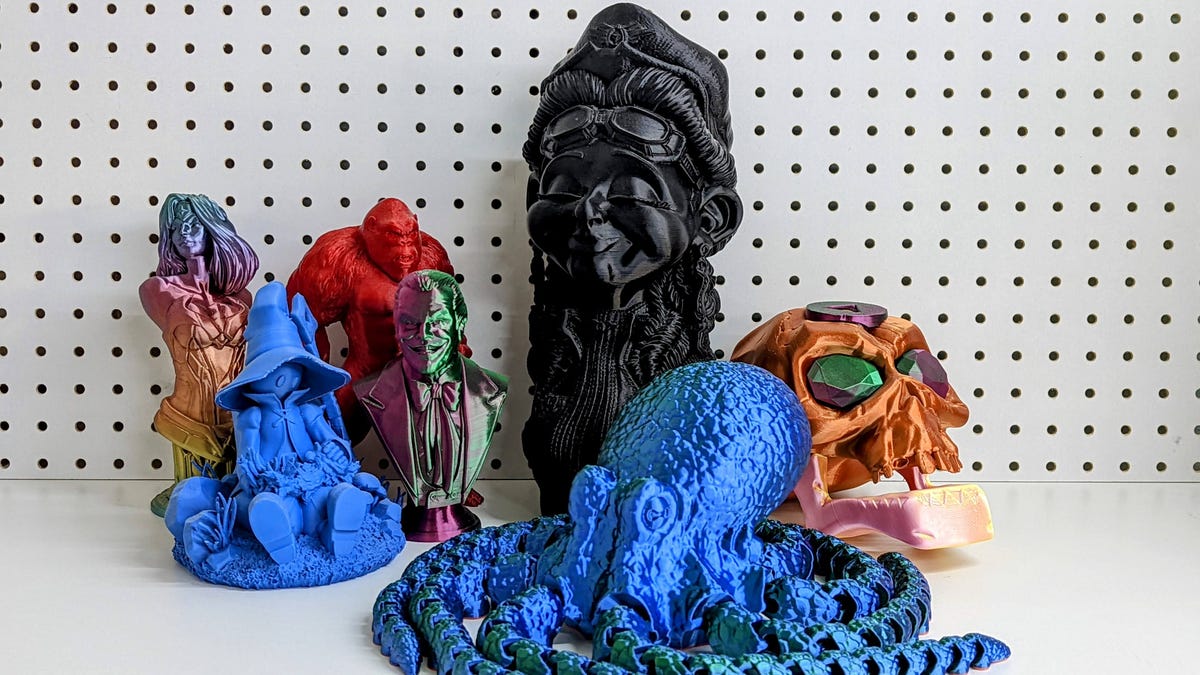
Best 3D Printing Filament and Which to Buy in 2025
A 3D printer can be very useful, and there are many reasons to own one. At the same time, you need to invest some time to find the right filament for you to get the best results. The wrong filament will mean clogs, stringy printing and will ultimately cost you time and money. Filament is the material used for FDM 3D printing , and there are a ton of options available to you. A good quality filament will have fewer issues with heat and chemical resistance, which means better print quality. So, which filament should you choose? CNET's experts have done the work so you can be sure you're using the best filament for the job. Our Picks 3D PRINTER DEALS OF THE WEEK $199 (save $50) $379 (save $120) $465 (save $185) $320 (save $101) $699 (save $200) What is the best 3D printing filament? Almost everyone who uses a 3D printer uses PLA for most of their prints. You might use other materials for certain things, but day-to-day printing is likely done with PLA. The best PLA for most use cases is Overture PLA . It's easy to source, prints very well and has a massive variety of colors and uses. I've put together this primer on different types of filament, including the best PLA filament, as well as choices of the best filaments from my favorite brands. This will be updated regularly and has some great choices to help you start. I use around 15 kilograms (33 pounds) of filament each week -- and have for the last four years -- so I know I'm offering you the best options around. It's important to choose both the right type of material and the right brand of that type, be it PLA, ABS or something more exotic. Here are the best of each of the five main filament types. Read more: Best 3D Printers PLA is the easiest material to use to make awesome things. Polylactic acid, or PLA Polylactic acid, or PLA, is the most common 3D printing filament, and it's the easiest to use. Unlike most plastics, it's made from corn starches so it's nontoxic and, in theory, compostable, though it takes an industrial composter to do it. PLA uses a fairly low heat -- between 190 and 215 degrees Celsius (374 and 419 degrees Fahrenheit) -- to melt the plastic for extrusion, so it is the safest of the filaments. Almost every FDM 3D printer in the world can print PLA. PLA pros No awful smell Easy to use for a beginner Almost universally available Nontoxic Usable on any FDM printer Cheap PLA cons Can require a lot of sanding May warp in the sun or high-temp environments Can be brittle Pros Consistent length and color across rolls make buying in bulk a breeze Massive variety of style and color makes it easy to find what you want Cardboard spools are easy to recycle Cons The edge of the cardboard is untreated, so it can...
Preview: ~500 words
Continue reading at Cnet
Read Full Article