Five big global health wins in 2025 that will save millions of lives
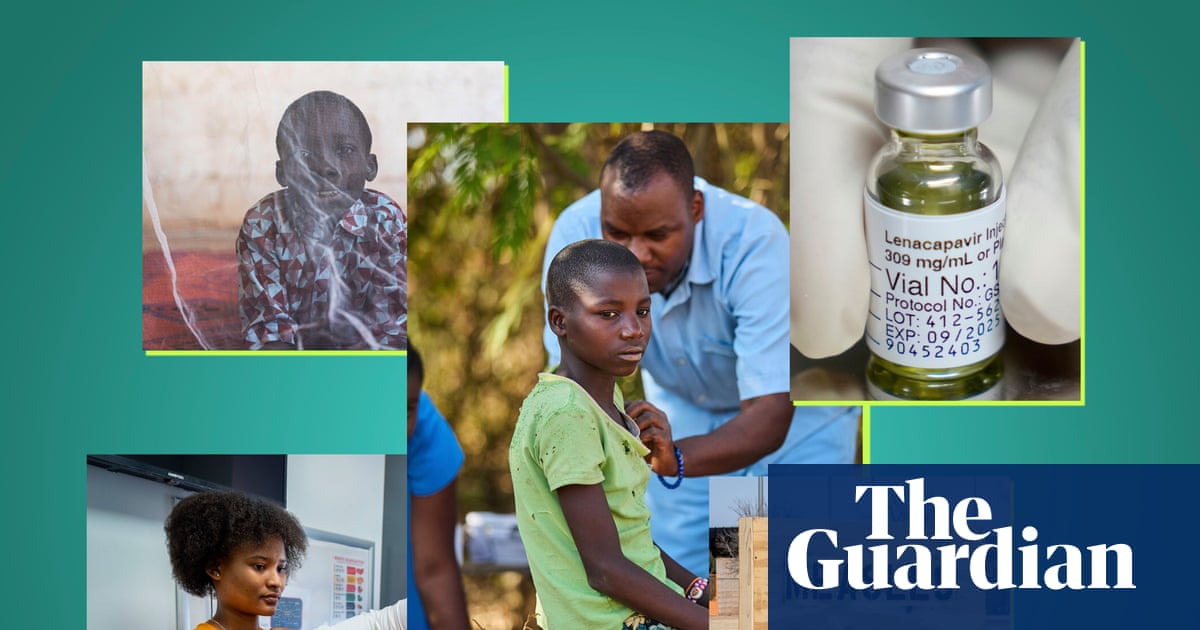
With humanitarian funding slashed by the US and other countries, including the UK, this year’s global health headlines have made grim reading. But good things have still been happening in vaccine research and the development of new and improved treatments for some of the most intractable illnesses. clockwise Malaria net, vaccination for cervical cancer prevention, Lenacapavir, Measles testing, a TB survivorComposite: Alamy/Getty Images/WHO HPV vaccines are administered in Chikowa village in Malawi. It is hoped that the vaccination of 86 million girls will save 1.4 million lives.Photograph: Francisco María Galeazzi/WHO Nets are a traditional way to keep mosquitoes at bay. A new treatment should be effective against the drug-resistant parasites they can carry.Photograph: Riccardo Lennart Niels Mayer/Alamy A baby has the measles, mumps and rubella vaccination at Beau Vallon health centre in Victoria, Seychelles’ capital.Photograph: WHO The manufacturer of lenacapavir, Gilead, will provide the drug at no profit for up to two million people over the next two years.Photograph: Nardus Engelbrecht/AP A TB trial participant at Setshaba research centre in Soshanguve, South Africa.Photograph: Jonathan Torgovnik/TB Alliance Millions of girls protected against cervical cancer A target to protect 86 million girls against cervical cancer by the end of 2025 was achieved ahead of schedule, boosting hopes among experts that cervical cancer can be eliminated within the next century . Gavi, the vaccine alliance, launched its human papillomavirus (HPV) vaccination programme in 2014, when vaccine coverage in Africa was just 4%. By the end of 2022, it was only 15% - but scientists had discovered that a single dose could give comparable protection to the two doses originally used. That would make it simpler to deliver vaccination programmes, and stretch supplies twice as far. In 2023, Gavi announced its ambitious target to protect 86 million girls by 2025 and a concerted push saw coverage in Africa rise. By the end of 2024 it was at 44% - higher than Europe’s 38%. In November, Dr Sania Nishtar, Gavi’s chief executive, credited “countries, partners, civil society and communities” for reaching the 86m target early, and “driving major global progress towards eliminating one of the deadliest diseases affecting women”. Cervical cancer remains widespread and deadly in poorer parts of the world - 85% of new cases are in sub-Saharan Africa - and a woman dies from the disease every two minutes. But a jab against the virus can avert 17.4 deaths for every 1,000 children vaccinated, according to Gavi, meaning the 86m vaccinations will prevent an estimated 1.4m cervical cancer deaths. First new type of malaria treatment in decades After successful clinical trials, the first new type of malaria treatment in decades is to seek regulatory approval. GanLum, from pharma company Novartis, outperformed the standard treatment by demonstrating a cure rate of 99.2% compared with 96.7%. Crucially, it should also be effective against malaria parasites that have developed resistance to artemisinin, a component of the current standard treatment. Drug resistance to artemisinin is a growing concern. In the 1990s, resistance to chloroquine , then the...
Preview: ~500 words
Continue reading at Theguardian
Read Full Article