The Huge Problem Waymo Didn’t See Coming
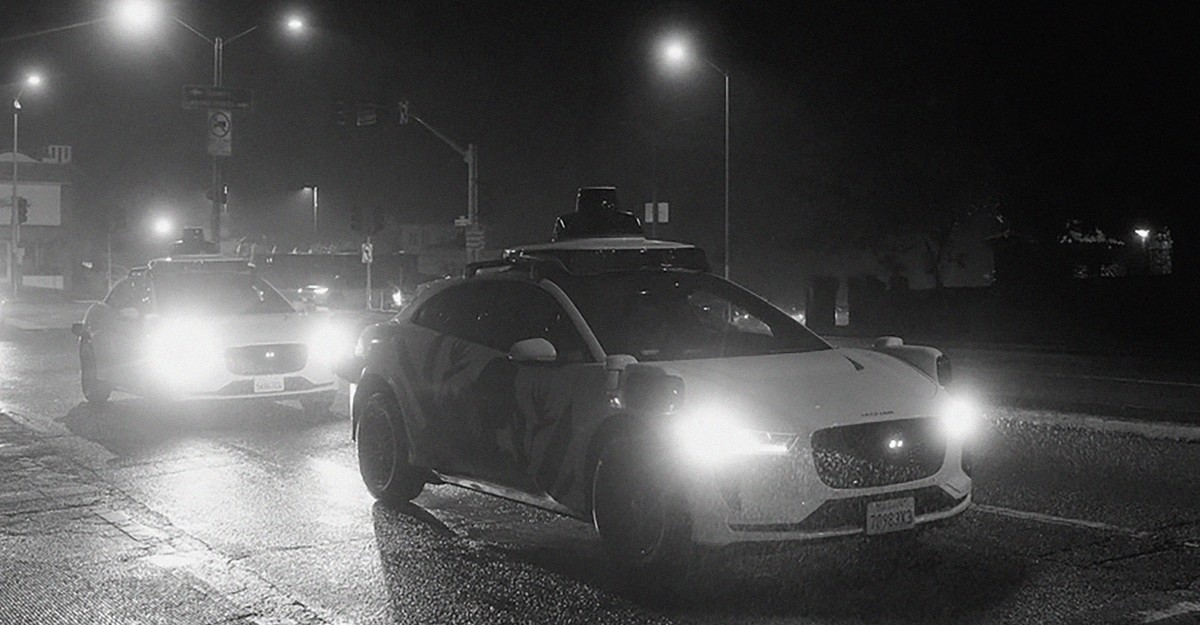
The Huge Problem Waymo Didn’t See Coming A blackout in San Francisco revealed a new way for robotaxis to go wrong. Jeff Chiu / AP Waymo’s self-driving robotaxis can successfully nail a tricky left turn, weave through lanes to drop you off at the airport, and safely pass a U-Haul that’s idling in the middle of the street. But during a blackout, they apparently turn into four-wheel bricks. On Saturday, when a major power outage in San Francisco knocked out traffic signals, many Waymo vehicles didn’t pull over to the side of the road or seek out a parking space. Nor did they treat intersections as four-way stops, as a human would have. Instead, they just ... sat there with their hazard lights on , like a student driver freezing up before their big parallel-parking test. Several Waymo vehicles got stuck in the middle of a busy intersection, causing a traffic jam. Another robotaxi blocked a city bus. The company suspended its service for several hours. Waymo vehicles should be able to call up a human agent for a remote response if they get confused or are unable to operate. But connectivity issues during the blackout may have prevented this safeguard from working. The company is diagnosing the problem, a Waymo spokesperson told me in a statement: “While the failure of the utility infrastructure was significant, we are committed to ensuring our technology adjusts to traffic flow during such events.” The spokesperson added that the driverless cars should have been able to navigate intersections without working traffic lights, but “the sheer scale of the outage led to instances where vehicles remained stationary longer than usual to confirm the state of the affected intersections.” This isn’t the first time things have gone awry with Waymo in San Francisco. One of the company’s robotaxis got stuck in a co nstruction site . Another fatally struck a beloved bodega cat , and there has been at least one incident in which multiple Waymo vehicles got into a standoff where no car se emed sure how to proceed . But without a doubt, last weekend’s incident is Waymo’s biggest crisis yet. The company hopes to bring its fleet of fully autonomous Jaguar SUVs into many more city streets in the coming years. The cars-powered by lidar, cameras, and other sensors-are remarkably safe, logging fewer crashes over more than 125 million miles than the average human driver on the same roads. And although Waymo has been involved in two known fatal crashes , both were found to have been caused by human drivers in other cars. Waymo has parlayed this safety record into an enormous expansion. You can already ride in a Waymo in the Bay Area, Phoenix, Los Angeles, Atlanta, and Austin, and the company’s cars are set to hit the streets in many more places: London, New York City, and Washington, D.C., are next, provided that local politicians and regulators are fully on board. But the blackout is a stark reminder that even...
Preview: ~500 words
Continue reading at Theatlantic
Read Full Article