A child is born: Italians celebrate village’s first baby in 30 years
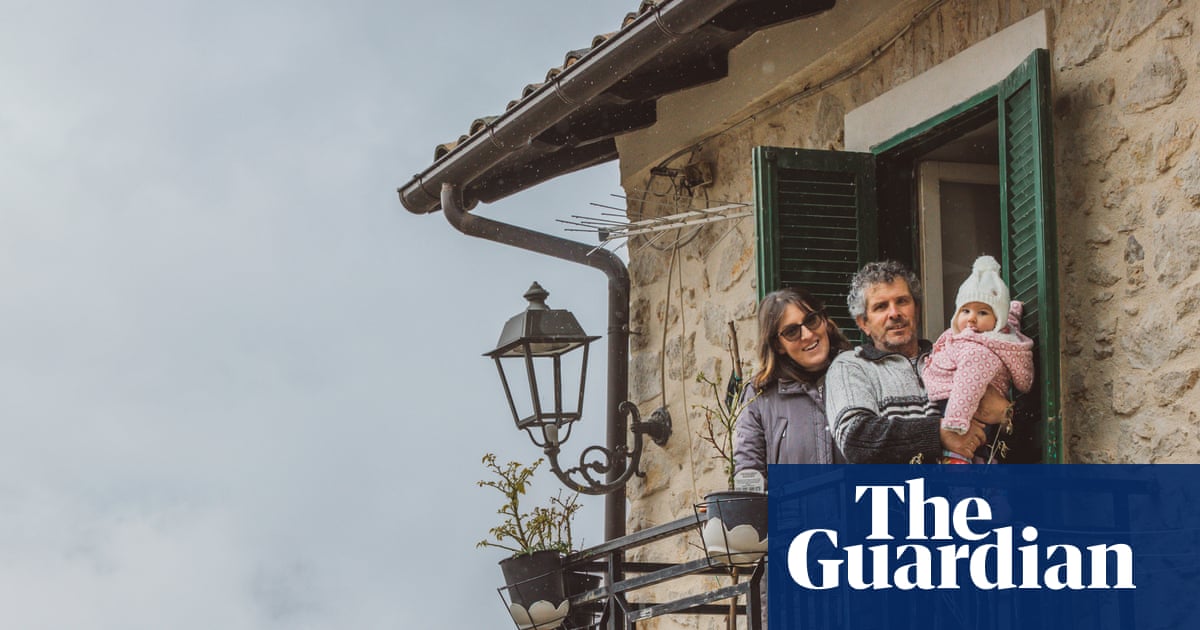
In Pagliara dei Marsi, an ancient rural village on the slopes of Mount Girifalco in Italy’s Abruzzo region, cats vastly outnumber people. Cinzia Trabucco and Paolo Bussi with their nine-month-old daughter, Lara Bussi Trabucco.Photograph: Roberto Salomone/The Guardian Paolo and Cinzia received a one-off payment of €1,000, courtesy of the policies of Giorgia Meloni, on top of monthly child support.Photograph: Roberto Salomone/The Guardian Pagliara dei Marsi, a village in the vertiginous west of Abruzzo, is undergoing drastic depopulation.Photograph: Roberto Salomone/The Guardian Cinzia, who wanted to start a family far from a city, has bumped her village population up to about 20 by having Lara.Photograph: Roberto Salomone/The Guardian The region of Abruzzo, in which Pagliara dei Marsi lies, underwent a 10.2% drop in births in the first seven months of this year.Photograph: Roberto Salomone/The Guardian Lara’s entry to the world came amid a historic low number of annual births in Italy.Photograph: Roberto Salomone/The Guardian Berta Gambina, a midwife, has worked at the maternity ward in nearby Sulmona for 39 years.Photograph: Roberto Salomone/The Guardian They weave through the narrow streets, wander in and out of homes, and stretch out on walls overlooking the mountains. Their purrs are a consistent hum in the quiet that has come with decades of population decline. But less so since March, when rapturous celebrations marked a rare occurrence: the birth of a child. Lara Bussi Trabucco is the first baby to have been born in Pagliara dei Marsi in almost 30 years, bringing the village’s population to roughly 20. Her christening in the church opposite her home was attended by the entire community - including the cats - and such is the novelty of having a baby in the village, she is now the main tourist attraction. “People who didn’t even know Pagliara dei Marsi existed have come, only because they had heard about Lara,” said her mother, Cinzia Trabucco. “At just nine months old, she’s famous.” Lara’s arrival is a symbol of hope, but also a sobering reminder of Italy’s worsening demographic crisis. In 2024, births in the country reached a historic low of 369,944, continuing a 16-year negative trend, according to figures from Istat , the national statistics agency. The fertility rate also fell to a record low, with an average 1.18 children born to women of child-bearing age in 2024 - one of the lowest in the EU. Reasons for the decline are myriad, from job insecurity and the huge wave of youth emigration to inadequate support for working mothers and, as in other countries, the rise in male infertility . Furthermore, an increasing number of people are simply choosing to not have children. Istat’s preliminary data for the first seven months of 2025 points to a further decrease, and of Italy’s 20 administrative regions, nowhere has it been more acute than in the already sparsely populated Abruzzo, which between January and July had a 10.2% drop in the number of births compared with the same period in 2024. Pagliara dei Marsi is tiny, but...
Preview: ~500 words
Continue reading at Theguardian
Read Full Article