Hawaii's Big Island cat lovers are furious about a feeding ban to protect an endangered goose species: 'They’re both living creatures' | Fortune
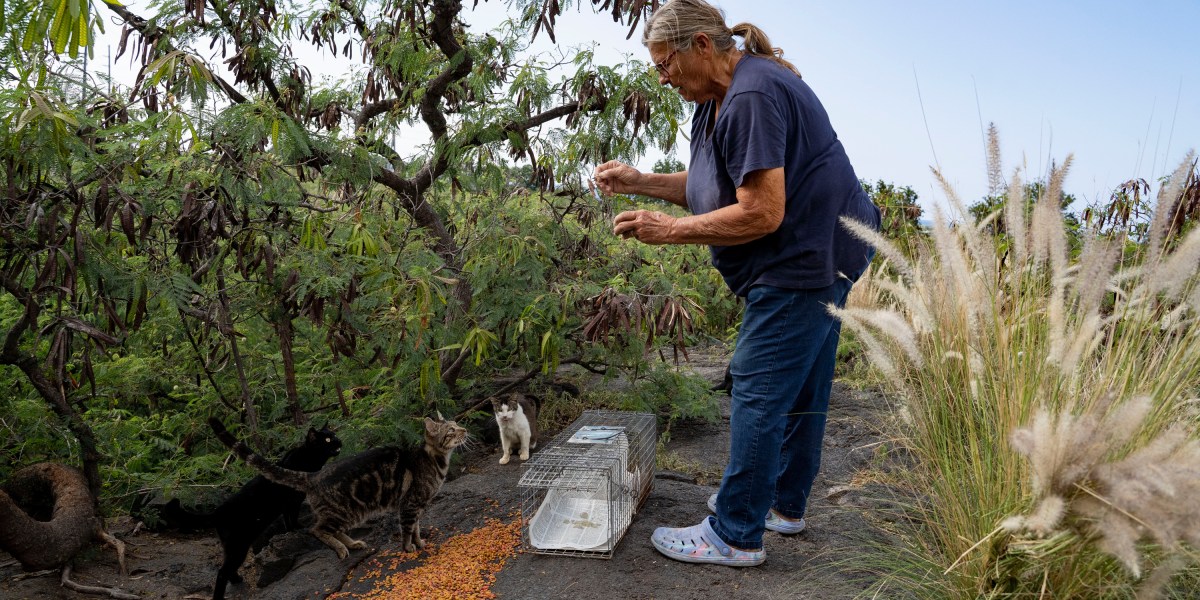
Throngs of feral cats emerge from the shade of parked trucks and bushes as soon as the familiar Subaru Forester pulls into a dump on Hawaii’s Big Island. They run after the vehicle to a certain meal - a gravy train that might not be around much longer. A Hawaii County law set to take effect at the start of the new year bans feeding feral animals on county property. It’s an effort to protect native species , such as an endangered goose called the nene, from a super predator introduced to the islands by Europeans in the 18th century. But the measure doesn’t sit well with many cat lovers, including the driver of the Subaru, Liz Swan, who has been feeding feral felines on the Big Island for 33 years. “I don’t believe the cats should be exterminated at the expense of the nene,” Swan said. “They’re both living creatures.” It’s unclear how many feral cats - abandoned pets and their descendants - live on the Big Island. Estimates range well into the tens of thousands, with pockets of dense colonies supported by people. Opponents of the ban say it will hamper their efforts to contain the population by trapping and neutering the animals - and that hungry cats will then have to hunt for food. A variety of threats About 200 cats live at the Kealakehe Transfer Station and Recycling Center, not far from the bustling tourist district of Kona. Swan shows up every late afternoon with water and kibble, and says she’s never seen a nene anywhere near the dump. Despite living amid trash, the cats there generally appear robust, most of them missing the tip of an ear, indicating they’ve been spayed or neutered. The cats threaten the native species directly - by killing them - and indirectly, biologists say. Food left out for the cats can attract native animals, bringing them into closer contact with humans. Cat feces can also spread a parasite that causes toxoplasmosis, a disease that has killed endangered Hawaiian monk seals and native birds. Last year, a male nene - pronounced “neh-neh” - was struck and killed by a car as it crossed a road in Hilo, on the eastern side of the island, to reach a cat feeding station. The goose’s surviving mate, which also had a gosling die of toxoplasmosis in 2024, has recently taken on another partner and is nesting in a Hilo park, the state Department of Land and Natural Resources announced this month. The county’s feeding ban will help protect them, the department said. A Hawaiian biologist’s view State wildlife biologist Raymond McGuire recently checked for nene nesting sites among the barren black-rock fields near a shopping center at the Waikoloa resort. It’s not their traditional habitat, but he has seen the geese fly in to grab food - risking getting hit by cars - and last year some nested there. As he approached, a pair of feline eyes peered out of a crack in the...
Preview: ~500 words
Continue reading at Fortune
Read Full Article