U.S. naval moves against Venezuela | Explained
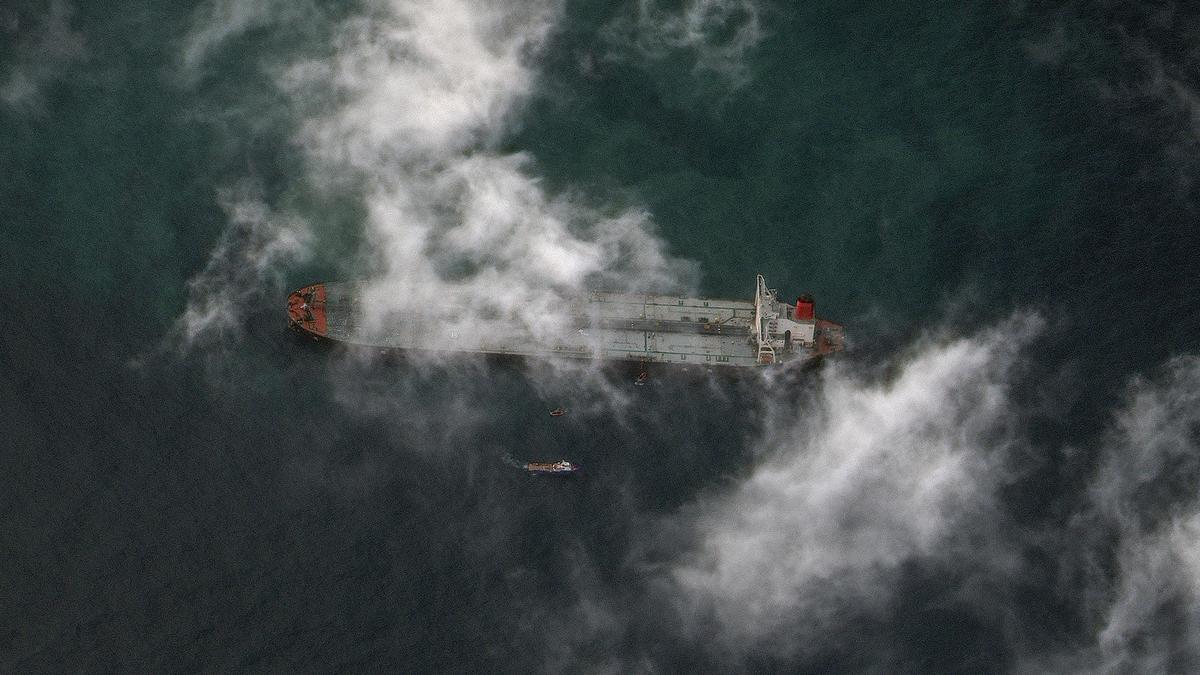
The story so far: U.S. President Donald Trump has announced a “total and complete blockade of all sanctioned oil tankers going into and out of Venezuela.” What were the three merchant ships that faced action? During the week of December 8, the U.S. seized the oil tanker “ Skipper ” off the coast of Venezuela, carrying nearly two million barrels of crude oil. The U.S. government has indicated it shipped oil at subsidised rates to Cuba, which has been helping the government of Venezuelan President Nicolás Maduro. Last weekend, the U.S. Coast Guard stopped and boarded Centuries , a Panamanian-flagged tanker carrying Venezuelan oil. The Venezuelan Navy had escorted the ship to the limit of Venezuela’s Exclusive Economic Zone, after which the U.S. Coast Guard stopped it. During the same day, the Coast Guard attempted to intercept Bella 1 , a tanker enroute to pick up crude oil in Venezuela. The U.S. had previously sanctioned the ship for trading Iranian oil. What are U.S. sanctions? As a global body, the United Nations can impose international sanctions that are binding and legally enforceable. These can be military, economic, or a combination of both. On the other hand, U.S. sanctions can be said to be a type of unilateral, inexpensive economic warfare to achieve foreign policy objectives. Physical enforcement of sanctions is costly and often not effective. A physical blockade of ports and ships after the First Gulf War under the Oil for Food Programme for Iraq cost billions of dollars and did not deter Saddam Hussein from trading oil outside the framework. Since the Second Gulf War, however, the U.S. has sought to use its leverage in the global financial system to enforce sanctions. The U.S. has direct leverage over the dollar, which is the currency of practically all global financial transactions and certainly all oil. The petrodollar is a tool the U.S. wields to enforce its writ. The U.S. has direct control over its companies and prohibits them from doing business with nations it has sanctioned. Banks and companies headquartered outside the U.S. also comply with these sanctions to continue using the global financial system, which has the U.S. as the hub, and do business in the large U.S. market. Non-U.S. banks such as HSBC were, for instance, wary of re-entering Iran even after the Barack Obama administration asked them to do so following the nuclear deal. Companies that had cut ties with Iran were fearful since U.S. companies were still forbidden from doing business with Iran. In 2014, BNP Paribas agreed to pay $9 billion in fines for sanctions violations. To curb North Korea’s nuclear build-up and other activities, the U.S. threatened to keep a small bank in Macau, Banco Delta Asia, through which North Korea was doing business, out of the U.S. system. This was enough to make the bank pull back, which had its intended effect. Many global financial transactions that do not involve the U.S. still need to be routed through American intermediaries of the primary...
Preview: ~500 words
Continue reading at Thehindu
Read Full Article