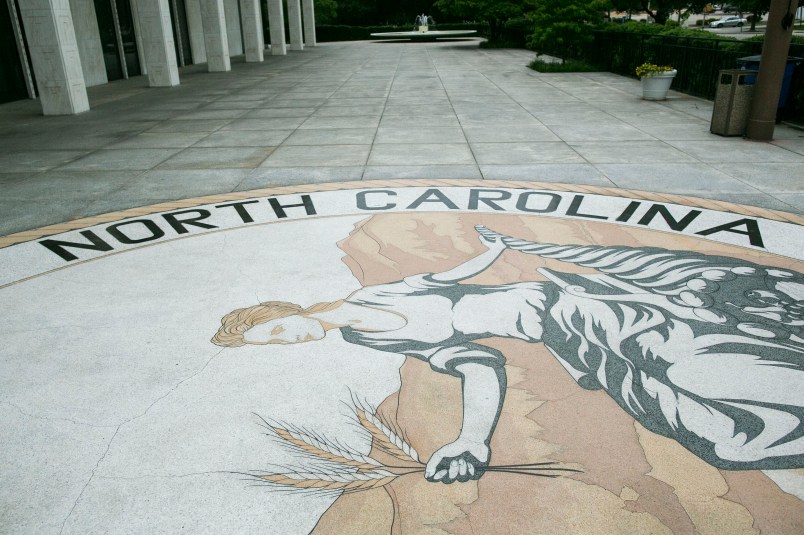
Inside the North Carolina GOP’s Decade-Long Push to Seize Power From the State’s Democratic Governors
This post first appeared at ProPublica, a nonprofit newsroom that investigates abuses of power. In November 2024, Democrat Josh Stein scored an emphatic victory in the race to become North Carolina’s governor, drubbing his Republican opponent by almost 15 percentage points . His honeymoon didn’t last long, however. Two weeks after his win, the North Carolina legislature’s Republican supermajority fast-tracked a bill that would transform the balance of power in the state. Its authors portrayed the 131-page proposal , released publicly only an hour before debate began, as a disaster relief measure for victims of Hurricane Helene. But much of it stripped powers from the state’s governor, taking away authority over everything from the highway patrol to the utilities commission. Most importantly, the bill eliminated the governor’s control over appointments to the state elections board, which sets voting rules and settles disputes in the swing state’s often close elections. Ignoring protesters who labeled the bill a “legislative coup,” Republicans in the General Assembly easily outvoted Democrats, then overrode the outgoing Democratic governor’s veto. The maneuver culminated a nearly decade-long effort by Republican legislators, who have pushed through law after law shrinking the powers of North Carolina’s chief executive - always a Democrat during that time frame - as well as the portfolios of other executive branch officials who are Democrats. Over that period, lawmakers have attempted to transfer control or partial control of at least 29 boards, entities or important executive powers. In most cases, they succeeded. As a result, Republicans now hold increased sway not only over North Carolina’s election board, but also over its schools, building codes, environmental regulations, coastal development, wildlife management, utilities, cabinet appointments and more. All had previously been under control of the governor. “This is not what people voted for,” said Derek Clinger, a senior counsel at the State Democracy Research Initiative, an institute at the University of Wisconsin Law School, who has studied the events in North Carolina. Stein, as well as all of North Carolina’s living former governors - Republicans and Democrats alike - have blasted the legislature’s erosion of gubernatorial authority as a violation of the state’s constitutionally enshrined separation of powers . “You should not be able to make the laws and then control who enforces them - just ask any fourth grader about the three branches of government,” Stein said in a statement to ProPublica. Lawmakers’ actions “throw the will of the voters into the trash can,” he added. Initially, governors had some success using separation-of-powers arguments in lawsuits filed to challenge efforts to strip their powers. Even majority-Republican courts ruled in their favor, declaring laws that shifted authority directly from the governor to the legislature were unconstitutional. More recently, though, legislators have found a loophole, writing laws that move traditional gubernatorial powers to elected executive branch officials who are Republicans. Since 2023, when the GOP won majorities on the state’s appellate courts, judges have increasingly rejected lawsuits aimed at blocking such legislation. The North Carolina GOP’s effort to...
Preview: ~500 words
Continue reading at Talkingpointsmemo
Read Full Article