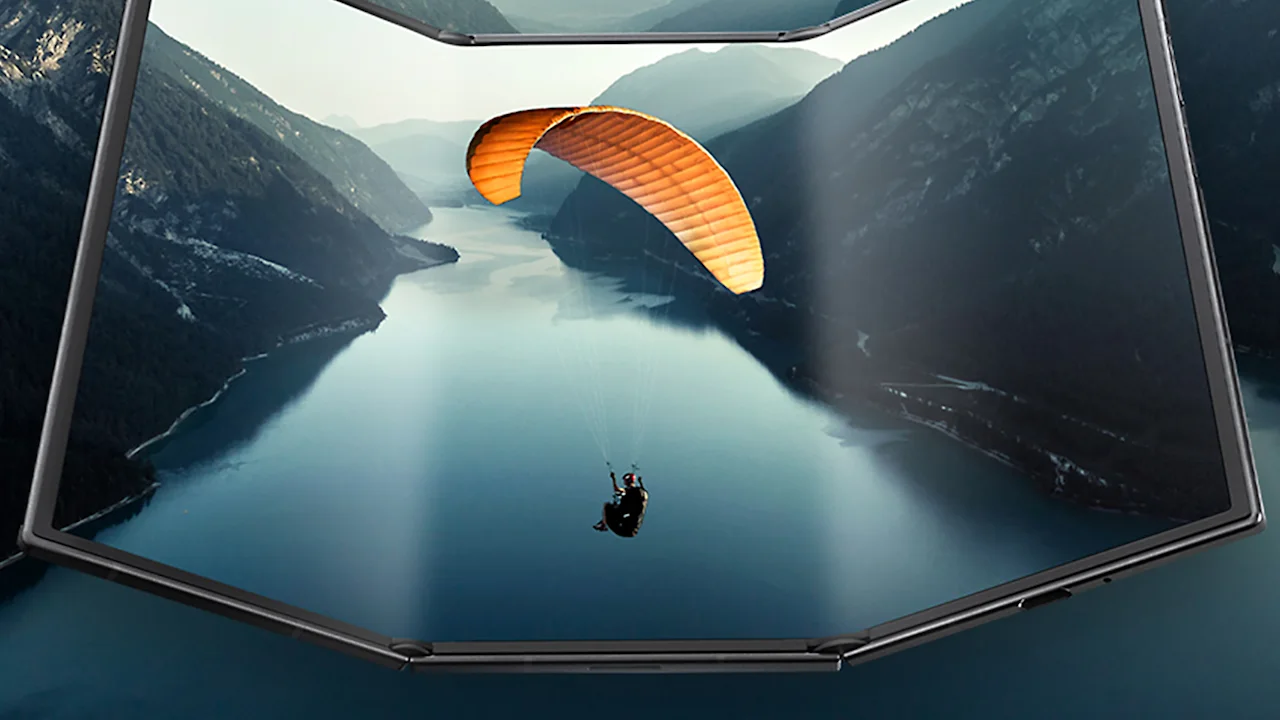
Samsung’s Galaxy Z TriFold is a phone, a tablet, and a realistic test of how much device you really need
Foldable phones have spent years trying to justify themselves. Some were too fragile, others too bulky, and most felt like solutions in search of a problem. The Galaxy Z TriFold is Samsung’s clearest attempt yet to answer a more reasonable question: Can one device replace the phone-tablet combo without becoming a chore to carry? Coming to the United States later this month, the TriFold folds twice, opens into a 10-inch screen, and closes back into a pocketable form. It’s an assertive design, but not a novelty play. Samsung seems very aware that this kind of device only makes sense for a specific kind of user. [Photo: Emily Price] The double fold is the trick, but the software does the real work The headline feature is the dual hinge. Closed, the TriFold behaves like a premium smartphone. Open it fully, and it becomes a genuinely usable tablet-size workspace. That space matters. You can run three apps side by side, resize them, and keep them anchored even when calls or notifications interrupt. Samsung’s task bar lets you jump back into complex layouts without rebuilding them, which is a small thing until you’ve lost your place mid-task one too many times. We had a chance to try the phone first hand at a Consumer Electronics Show (CES) preview. The first time you open the device, the folding mechanism, in particular, stands out. Fully open, you might not even notice you’re holding a phone rather than a tablet. The three separate screens blend together seamlessly. Samsung has also added guardrails. The phone will warn you if you’re folding it the wrong way when you go to put it away—which feels less like hand-holding and more like protecting an expensive mistake. Editing photos is where the bigger screen actually shows off The TriFold’s size gives Samsung’s photo tools room to breathe, especially its generative editing features. Blake Gaiser, head of smartphone product management, says the difference is immediately obvious once you start using them. “We’re really well known for what we call generative editing—being able to remove things from a photo,” Gaiser told me during a demo this week. He took a photo that included a person, and then was able to select and remove that person from the photo in seconds. “It understands everything that I want to pick out here, and I’m able to take all the pixels out of that.” He points to something that’s easy to miss on smaller screens: cleanup details. “Not only did it take the person out, but it took their shadow out as well,” he said. “So now I can look at both side by side each other, and you can see the shadow that she had there is gone.” Being able to zoom in on before-and-after images simultaneously sounds minor. But for people who actually edit photos regularly, it’s the difference between trusting the result and hoping for the best. [Photo: Emily Price] This is very much not meant for everyone The TriFold is not designed...
Preview: ~500 words
Continue reading at Fastcompany
Read Full Article