Just five DNA letters flip chromatin from fluid to solid-like state
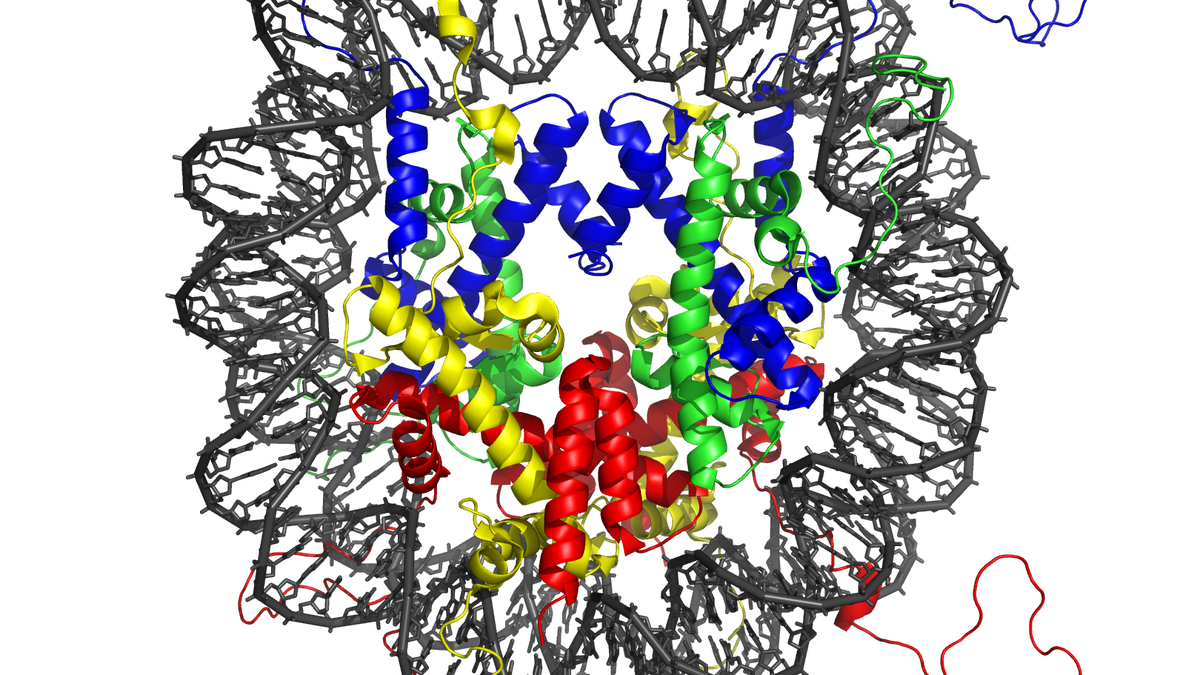
DNA inside human cells is not free-floating. Instead, it is tightly wrapped around small protein units forming a long chain, with DNA looping around each unit before moving on to the next. This DNA-protein complex is called chromatin and allows nearly 2 m of genetic material to fit inside a nucleus only a few micrometres wide. However, chromatin does more than pack DNA efficiently: its arrangement influences which genes are accessible and which remain shut down. Some regions are loosely organised, allowing the cell to read genetic instructions, while others are dense and harder to access. How cells control these physical states has been a central question in molecular biology. A new study in Science has now reported that a surprisingly small structural detail, the spacing between neighbouring DNA-protein units, can influence how chromatin behaves. That’s because DNA isn’t straight, UT Southwestern Medical Centre biochemistry professor and the study’s senior author Michael Rosen explained. It is twisted, so even small spacing changes can shift how protein beads sit along the DNA, reshaping the entire strand. These bead-like proteins, called histones, are connected by short stretches of exposed DNA. In living cells, the length of this linker DNA varies naturally across the genome, differing by only a few DNA building blocks. Because changes in orientation propagate along the chromatin fibre, Prof. Rosen added, they alter the shape of the entire molecule and how it interacts with nearby strands. These interaction differences, rather than changes in DNA sequence or protein composition, cause chromatin made from identical components to behave in very different ways. To investigate this, the researchers built chromatin in the laboratory using identical DNA and proteins, altering only the length of the linker DNA. They compared chromatin with shorter linkers to chromatin with slightly longer ones (differing by just five DNA base pairs). The team used rapid freezing and high-resolution imaging. Individual nucleosomes - the building blocks of chromatin - are large enough to be captured directly, allowing researchers to visualise most molecules inside the clusters. They tracked how the clusters formed, merged, moved, and broke apart. The results revealed a clear divide. Chromatin with shorter DNA linkers remained more open along its length, positioning its units to reach outward and interact with neighbouring strands, like loosely laid yarn that easily tangles. These clusters were densely connected and mechanically resistant, fusing slowly and proving difficult to break apart. Chromatin with longer linkers folded inward on the other hand, with units interacting more within the same strand. This reduced connections between neighbouring strands, producing clusters that were less stable, more fluid, and easier to dissolve. “Those different interaction patterns are what make one system behave like a simple liquid and the other behave more like silly putty or toothpaste,” Prof. Rosen said. National Institutes of Health biochemist Yamini Dalal said the study reinforces and unifies long-standing, disparate ideas using powerful interdisciplinary techniques. Chromatin has long been understood as a self-organising structure, she said, with nucleosome spacing strongly influencing how it folds....
Preview: ~500 words
Continue reading at Thehindu
Read Full Article