We can be heroes: the inspiring people we met around the world in 2025 - part one | Global development | The Guardian
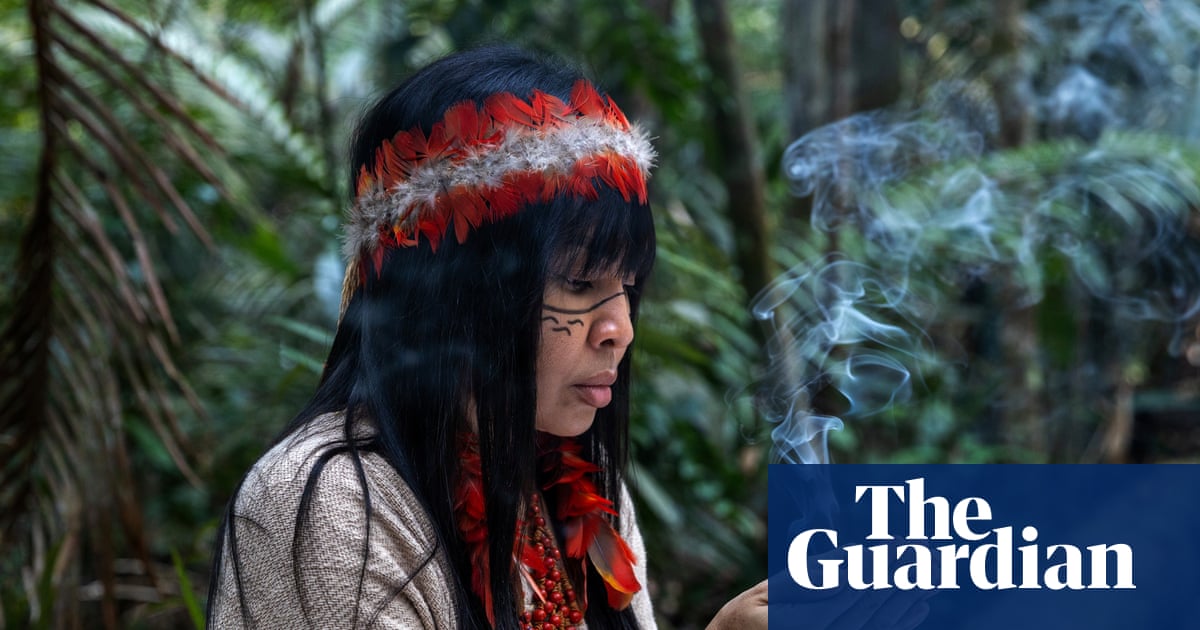
The Indigenous doctor uniting western and traditional medicine in Brazil In 2012, Adana Omágua Kambeba travelled 4,000km (2,500 miles) from her home in Manaus, in the Brazilian Amazon, to take up a coveted place to study medicine at the Federal University of Minas Gerais in south-east Brazil. She became the first among her people , the Kambeba, or Omágua, to graduate in the field, still largely dominated by white elites. According to the 2022 census, Indigenous people represented 0.1% of those who graduated in medicine in Brazil. Adana Kambeba uses the ancestral knowledge of her people alongside conventional medicine in her work. Photograph: Marizilda Cruppe/the Guardian Rezgar Beigzadeh Babamiri, a Kurdish political prisoner who was arrested and sentenced to death, with his now-exiled daughter, Zhino Yvonne Mpambara says the presidency is still associated with traditional masculinity, military credentials and strongman politics. Photograph: Courtesy of Yvonne Mpambara A still from one of Raed Jamal’s videos of him lying on the ground while bullets pass overhead Zeynure Hasan says she had never considered herself political or outspoken until her husband was arrested. Photograph: Emre Çaylak/the Guardian Alaak ‘Kuku’ Akuei, a 24-year-old former gang member who founded the Young Dream Football Academy in Sherikat. Photograph: Florence Miettaux/the Guardian HIV-positive sex workers Lebo and Amanda, who lost access to treatment when US funding cuts forced a specialist clinic serving sex workers to close. Photograph: Rachel Savage/the Guardian Even before receiving her diploma, Adana started fasting, striving to reach her next goal: to become a shaman. Her calling, she believes, is to bridge gaps between western medicine and the many healing traditions of Indigenous peoples . This message struck me when I first saw Adana, at a conference for innovation in Rio de Janeiro, in 2024. She stood out among hundreds of panellists and sponsors who were talking about business insights, new tech frontiers and standardised buzzwords. Adana, on stage with long feather earrings and rattles made of seeds, gave a powerful talk about the invisibility of Indigenous knowledge, emphasising that scientific research must not usurp Indigenous expertise. After Adana returned to Manaus, we had long video calls and exchanged voice messages over several weeks for her profile. I was struck by how she mediates conflicts that arise when doctors don’t respect the healing traditions of Indigenous people, or when Indigenous patients mistrust treatments prescribed by doctors. As an activist, she campaigns for biomedicine to open up to Indigenous knowledge, and not subjugate it. The path has not been easy. At university, Adana faced prejudice and almost had a breakdown. Then she heard a voice that strengthened her resolve: “Something inside me said, ‘This is your mission. Never doubt it.’” Júlia Dias Carneiro The exiled Iranian fighting to save her father from death row For two years, Zhino Babamiri has lived between two wars: one waged by the Islamic Republic, which sentenced her father, Rezgar Beigzadeh Babamiri to death in Iran, the other within herself. During months of sleepless nights, she weighed up whether speaking...
Preview: ~500 words
Continue reading at Theguardian
Read Full Article