The discovery of aeonophiles expands our definition of life | Aeon Essays
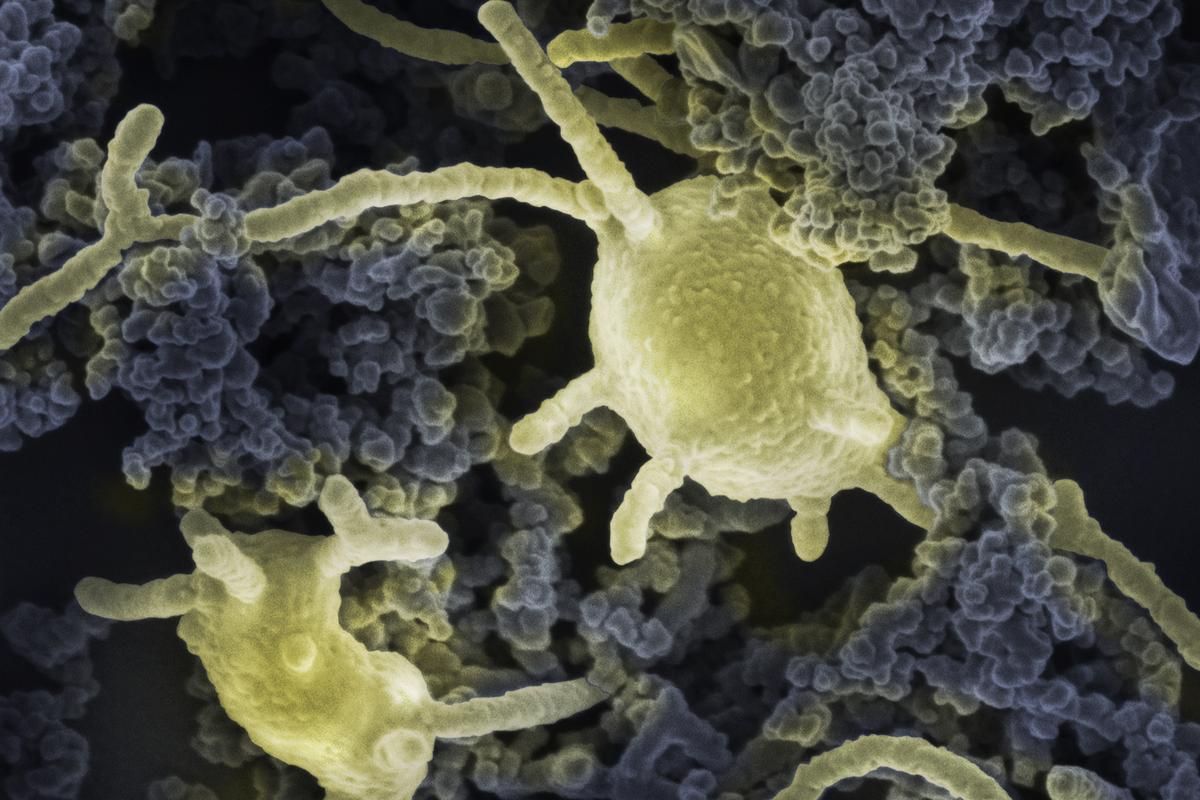
Listen to this essay The author and research team drilling in Svalbard, northern Norway. Photo by Jon Leithe The intraterrestrial Lokiarchaeum ossiferum (‘skeleton-carrying’) is a member of the Asgard phylum, so named after Norse mythology because some of the first examples were found near the hydrothermal vent field Loki’s Castle in the Arctic Ocean. Its skeleton is probably a hallmark of Asgard archaea. Courtesy Rodrigues-Oliveira et al Members of the Asgard archaea (left) were first collected from the Loki’s castle hydrothermal vent in the Arctic ocean in 2008. They include Lokiarchaeota, Thorarchaeia, Odinarchaeia and Heimdallarchaeia. Courtesy Wikipedia Candidatus Altiarchaeum hamiconexum cells within their biofilm. Cells appear fluffy due to their extracellular polymeric matrix and cell-surface appendages (‘hami’). Courtesy Probst and Moissl-Eichinger The author taking samples from a gassy deep subsurface spring. Photo by Jacopo Pasotti If you had to nominate the slowest, longest-living organisms on Earth, what would you picture? Among the vertebrates, some people might think of tortoises, whales or perhaps more obscure creatures like the Greenland shark, which can live for centuries. Others might imagine coral colonies, or perhaps an ancient tree: there are oaks in England that could be more than 1,000 years old, whereas in California, a few Bristlecone pines have been around for millennia, dating to around the formation of ancient Egypt. But how about bacteria? Microbes, at the outset, may seem unsuitable candidates for the title of longest-living organism, since we’re so used to experiencing how they grow (and die) so quickly. If I wake up with a tickle in my throat, I get a feeling of dread because I know that, by the evening, I’m going to have a full-blown case of strep throat - the bacterial cells dividing like wildfire in my body. Some bacteria, like E coli , can double every 20 minutes. They can be killed off just as quickly, when faced with antibiotics or disinfectant. However, E coli and other fast-replicating microbes don’t live in subsurface environments, where the conditions are ripe for a far more languid pace. In recent years, my fellow biologists and I have assembled evidence suggesting that the microbial world deep beneath the ground may be far slower than we think - perhaps remaining metabolically active for millions of years. I call these organisms aeonophiles - and by living as long as they do, they are rewriting the rules of biology itself. What are they doing down there? It turns out they might be waiting - waiting to return to the surface. But unlike cicadas or hibernating bears , these living things are holding on for events that might take centuries, millennia or even geological eras to arrive. The steps that led to our discovery of this strange life can be traced back to advances in DNA technology in the 1980s. For the first time, biologists could sequence the DNA from microbes directly, in any environment, without first growing these microbes in a laboratory. In 1998, Philip Hugenholtz, Norman Pace and colleagues at the University...
Preview: ~500 words
Continue reading at Murmel
Read Full Article