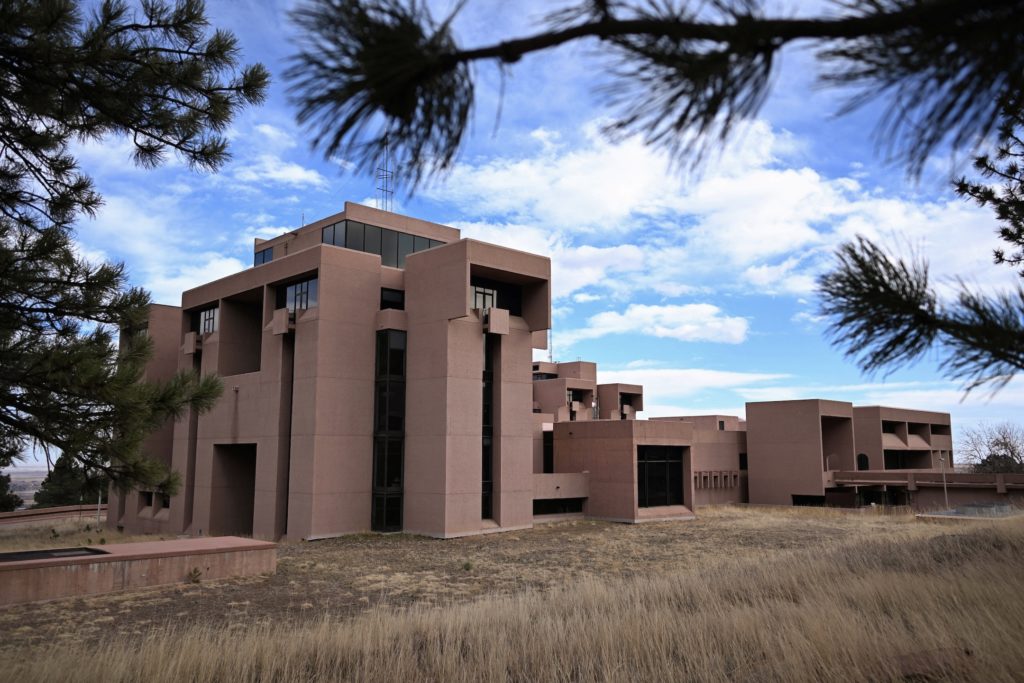
White House pushes to dismantle leading climate and weather research center | PBS News
William Brangham: The Trump administration says it plans to dismantle the National Center for Atmospheric Research in Colorado, which is the nation's premier atmospheric science center. In announcing the closing, Budget Director Russell Vought called the center -- quote -- "one of the largest sources of climate alarmism in the country." NCAR, as the center is known, was founded in 1960 and has facilitated generations of breakthroughs in climate and weather science. The announcement has drawn outcry from meteorologists and climate scientists across the country. Earlier this week, I spoke with two of them who are very familiar with the center's work. Brown University's Kim Cobb is a climate scientist and director of the Institute at Brown for Environment and Society, and Matthew Cappucci is senior meteorologist at MyRadar. Thank you both so much for being here. Kim Cobb, to you first. What is NCAR and why, as a climate scientist, is it so important and seemingly precious to this community? Kim Cobb, Brown University: Thanks for having me, William. NCAR is a really historic institution in our field. It, of course, dates back decades now. And, over that time, it has really woven itself into the fabric of both weather and climate science across the country and around the world. We're talking about unique, one-of-a-kind facilities like supercomputers, ticked-out airplanes, and most importantly, a staff of over 800 people who are at the top of their game in innovating in weather and climate science for public good, putting out data that is on every single climate scientist's computer around the country, if not around the world, and a nexus of collaboration as well that is important training grounds for the next generation of leaders. William Brangham: And, Matthew Cappucci, as a meteorologist, how important is NCAR to your profession? Matthew Cappucci, Senior Meteorologist, MyRadar: I mean, NCAR is really the birthplace of all the tools we use, both technologically. And, really, the discoveries that are made at NCAR are crucial to our understanding of how the atmosphere works. That's where we first learned about the MJO, the Madden-Julian Oscillation, one of the biggest overturning circulations in the atmosphere that governs how so many things, for example, hurricanes behave. It's where we first created a special product used by airplanes when they're landing to avoid wind shear, disruptive changing winds with height that could cause plane crashes. They invented a system there to prevent that. That's where dropsondes were invented, those little probes that are dropped out of the belly of airplanes in the middle of hurricanes to figure out how strong the hurricanes are. So, so many different tools and discoveries have come from NCAR. In addition, the modeling is incredibly important. And if we're sort of putting the brakes on that, I worry about the implications for weather forecasting. William Brangham: Kim Cobb, well, what more on that? Well, let's say NCAR is broken up. What are the impacts, both for the scientific community and for Americans who...
Preview: ~500 words
Continue reading at Hacker News
Read Full Article