‘You don’t have to do it alone’: how US cities are helping each other resist ICE | ICE (US Immigration and Customs Enforcement) | The Guardian
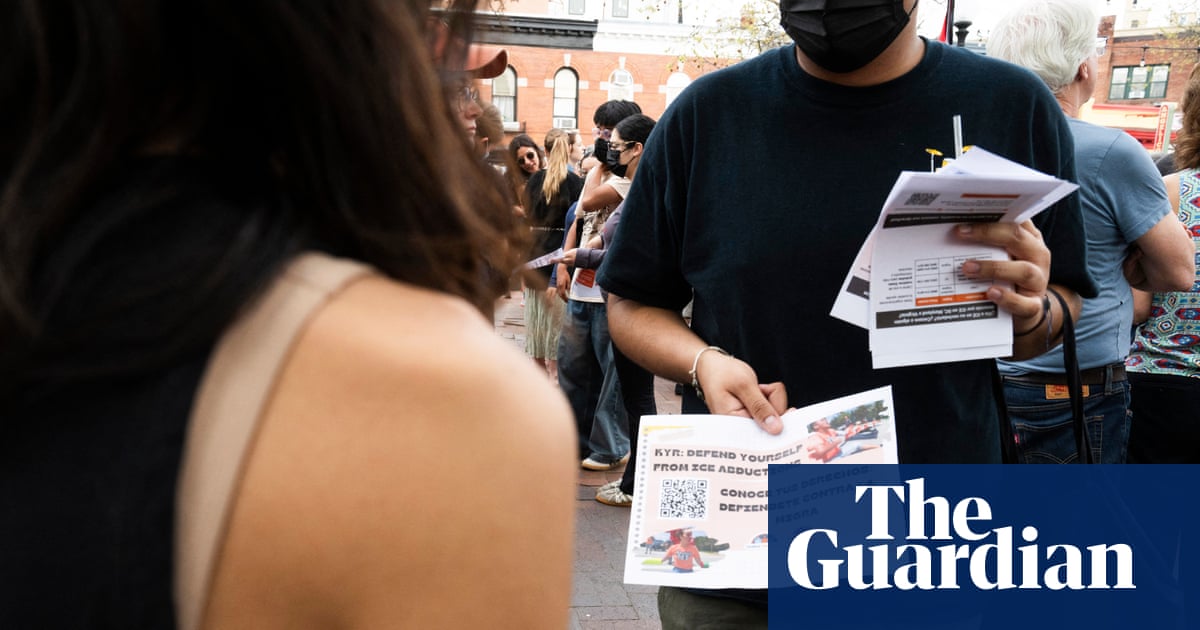
W hen Immigration and Customs Enforcement ( ICE ) set its sights on Chicago in September, Chicagoans sprang into action to protect their immigrant neighbors: teaching each other how to recognize and safely document ICE agents, setting up “know your rights” trainings, and distributing whistles en masse so people could loudly alert anyone in the vicinity when ICE was spotted. A person gives away pamphlets that inform the public of how to deal with ICE officers in Washington DC on 4 April.Photograph: Roberto Schmidt/AFP/Getty Images A person carries a whistle in Chicago’s Little Village neighborhood on 8 November.Photograph: Carlos Barría/Reuters A person holds a bag containing whistles used to alert community members to the presence of federal agents after an immigration raid in Chicago’s Little village neighborhood on 8 November.Photograph: Carlos Barría/Reuters A protester screams at federal agents during a raid on street vendors in New York City on 21 October.Photograph: Michael Nigro/Pacific Press/Shutterstock In the months since, whistles have become a popular raid alert tool in other cities across the country - New Yorkers wear them around their necks to warn neighbors, the people of New Orleans blast them outside ICE facilities and Charlotte residents used them to ward off Customs and Border Protection officials. While strongly associated with Chicago, the tactic is actually one that city organizers learned in part from groups in Los Angeles . Its spread is illustrative of the many ways cities are helping inspire and equip one another in the face of often unlawful federal activities. Rain Skau, a co-coordinator of the Fight Fascism campaign of the Democratic Socialists of America (DSA) Los Angeles, said Angelenos began to use whistles to alert neighbors about ICE presence when agents first started hitting the city in June . Despite the federal government’s claims that these raids were targeting hardened criminals, Skau described one of the first raids at a Home Depot as mostly snatching women vending food in the parking lot, stuffing them into vans as meat sizzled on the grills they left behind. A person carries a whistle in Chicago’s Little Village neighborhood on 8 November. Photograph: Carlos Barría/Reuters DSA and other grassroots groups in the city set up patrols of ordinary citizens to create a consistent presence at the Home Depots when day laborers and vendors were most likely to be out and about. (A September report by Rent Brigade found that Home Depot locations became “the most dangerous places in LA for immigrant workers”.) Volunteers passed out “know your rights” information, and when a tip came via a citywide hotline about an ICE sighting, the groups sent out patrols to document what was happening, collect belongings and get in touch with family members if someone had already been detained. By the time ICE hit the streets of Chicago in the fall, organizers in Los Angeles felt like they had some wisdom to share. Members of DSA in LA began having informal conversations with those in DSA Chicago. “One comment that someone made was,...
Preview: ~500 words
Continue reading at Murmel
Read Full Article