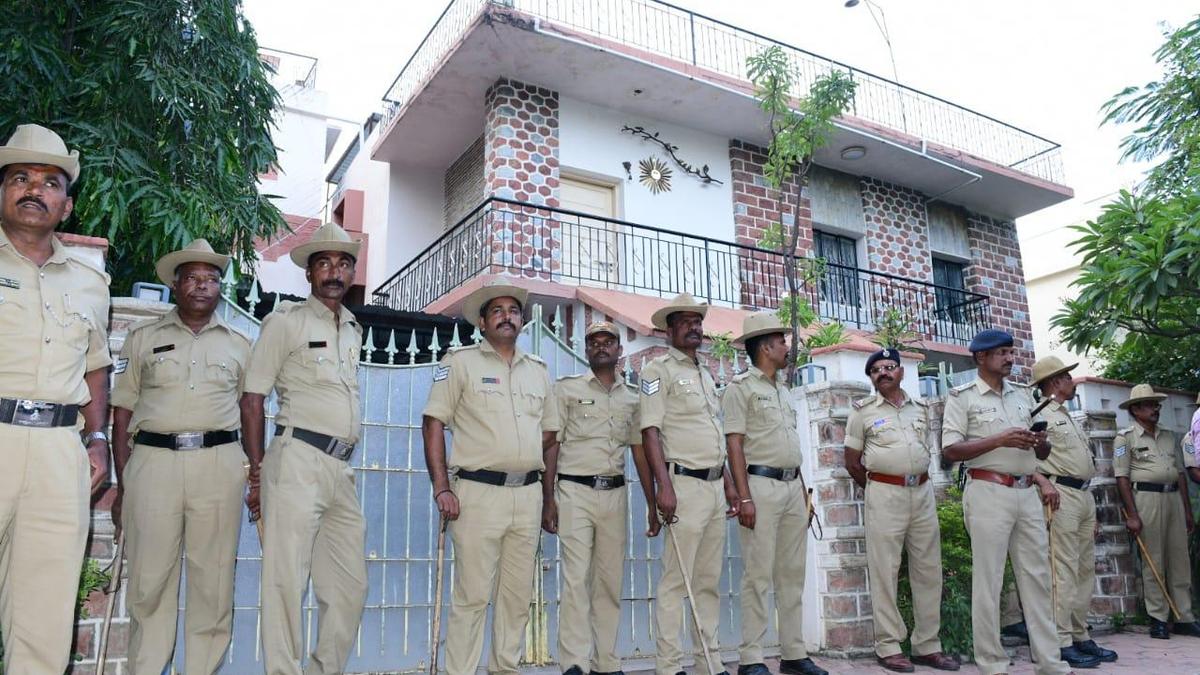
What is the Aland voter fraud case? | Explained
The story so far: The case of voter fraud in the Aland assembly constituency in Kalaburagi district in north Karnataka has emerged as one of the most well documented voter fraud cases, amidst a series of press conferences by Opposition leader Rahul Gandhi alleging widespread “vote chori” (vote fraud) in Karnataka, Maharashtra and Haryana. Why is this case different? Firstly, it was the Returning Officer (RO) of Aland constituency who lodged a complaint with the police in February 2023, alleging voter fraud, based on which an FIR was registered. The Election Commission (EC) itself alleged a malafide attempt to delete the names of 5,994 genuine voters from the electoral rolls, by providing false information. Secondly, the investigation into the FIR by a Special Investigation Team (SIT) formed by the Government of Karnataka, has led to a chargesheet being filed against former Bharatiya Janata Party (BJP) MLA Subhash Guttedar from Aland and his son Harshananda Guttedar for allegedly hiring a private firm to target voters they suspected will vote for his rival and delete their names through forged Form 7s. This is the first case where a clear link has been drawn to the BJP and “vote chori” allegations made by the Congress. How was the fraud uncovered? In 2018, veteran socialist and now Congress MLA from Aland, B. R. Patil, lost the seat to BJP’s Subhash Guttedar by a narrow margin of 697 votes. Mr. Patil was again the candidate for the seat from the Congress in the 2023 assembly polls, which he eventually won by 10,348 votes. In February 2023, a Booth Level Officer (BLO) got a Form 7 application, which, to her surprise, sought deletion of the name of her brother from the voter list saying he had “shifted out.” The application was made in the name of a woman from the same village. When they checked, the woman denied making any application. Subsequently, a review of Form 7s from that village found that 40 such forms were forged. Any voter of a specific assembly constituency can fill out a Form 7 seeking the deletion of names of other voters from the same constituency, after their death or if they have shifted out. These applications are sent to BLOs for an on-ground verification, after which they are processed. However, in most cases, BLOs blindly accept these applications without verification. In this case, the BLO’s brother, whose name was sought to be removed, tipped off Mr. Patil about the forged Form 7s in his village, saying all people whose names were sought to be deleted were Congress voters. This set off alarm bells, pushing Mr. Patil to complain to the EC and demand a thorough verification of all Form 7s. How did the investigation proceed? Mamata Kumari, Assistant Commissioner and the then RO of the Aland assembly constituency, tasked with the audit of Form 7s, in her eventual complaint to the Aland Police, said that there were 6,018 Form 7s in Aland assembly constituency between December 2022 and February...
Preview: ~500 words
Continue reading at Thehindu
Read Full Article