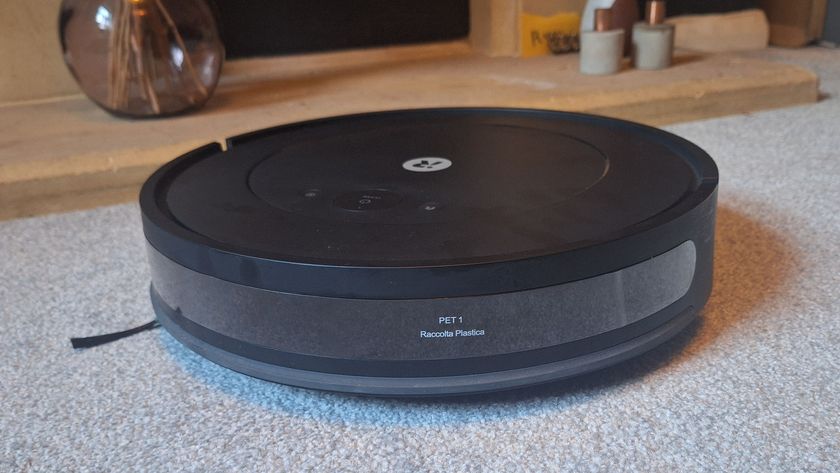
'There were many years of issues that led up to the situation we're in' - iRobot CEO reveals the reasons behind recent bankruptcy
'There were many years of issues that led to the situation we're in' - iRobot CEO on why the failed Amazon deal can't be blamed for the company's issues News (Image credit: Future) (Image credit: Future) (Image credit: Future) Ruth Hamilton published Exclusive: 'iRobot lost an opportunity because it didn't bother to listen to the consumer' iRobot's Roomba was once the biggest name in robot vacuums - so big that some still use it as a synonym for the whole product category. So what happened to the company to cause it to fall from its lofty perch to the point where it was forced to file for bankruptcy, saved from oblivion thanks to a takeover by Chinese contract manufacturer Picea ? I caught up with iRobot CEO Gary Cohen a few days after news of the takeover broke to discuss what went wrong. Cohen is a relatively new addition to the iRobot team, having been drafted in around 18 months ago to help get the company back on track, and he's adamant that the company's woes can't be placed entirely at the door of tariff chaos or failed Amazon deals , as some have suggested, although neither of those things helped the situation. An expensive approach iRobot co-founder and previous CEO Colin Angle has called the Picea takeover "profoundly disappointing" and "avoidable", blaming the collapse of a potential Amazon acquisition, which was nixed by regulators, for the position iRobot eventually found itself in (you can read his statement to TechRadar here .) Cohen, however, feels the issues began well before that acquisition was even on the horizon. My predecessor's vision of connected homes and camera-based vision technology was great, but we couldn't execute against it. Gary Cohen, iRobot CEO "The Amazon deal was a big setback for the company, but there were many years of issues that led up to the situation we're in, and it's important to highlight those without denigrating the prior team," he told me. "My predecessor was a visionary, and he was brilliant, and [...] his vision of connected homes and camera-based vision technology was great, but we couldn't execute against it. "When I joined back in May 2024 it was apparent to me, and to some of the folks that I had assigned to help me do this restructuring, that we needed to change the way we were doing business," Cohen told me. Cohen recalls how he inherited high fixed-cost contracts and "over-engineered" products. He explains that at that point all the tooling, engineering and purchasing was happening in the US, with only the final manufacture taking place overseas. It made for a very expensive process. The bold decision was made to axe the entire legacy product line and replace it , and under Cohen the company also adopted a more integrated (and cost-effective) relationship with its manufacturer - which at this point was the same Picea Robotics that now owns iRobot. Sign up for breaking news, reviews, opinion, top tech deals, and more. Under...
Preview: ~500 words
Continue reading at Techradar
Read Full Article