Ukraine war in 2025: Talks, setbacks and more war
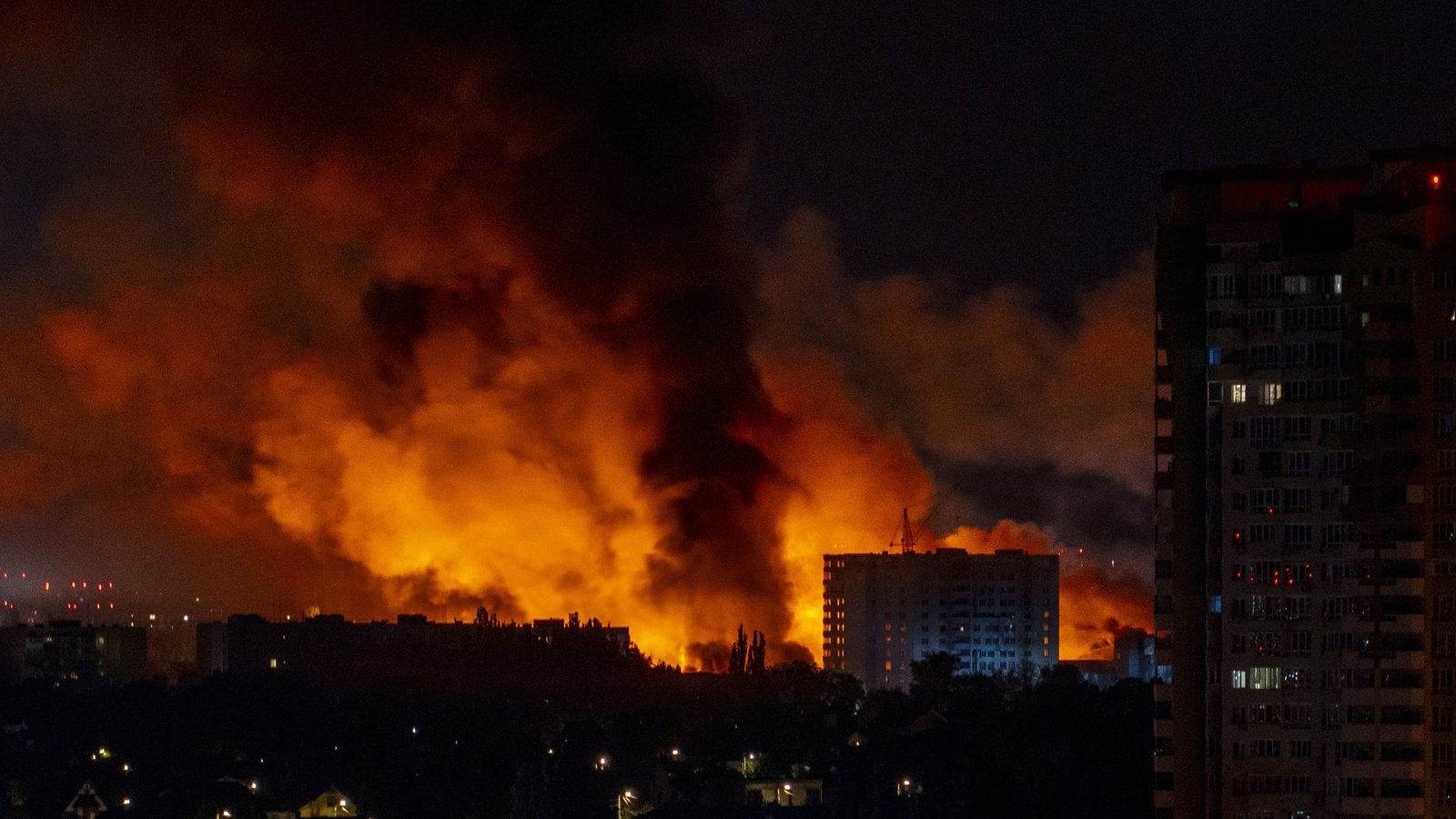
Nuashonraithe / Dé Céadaoin, 24 Noll 2025 06:03 Flames and smoke billow from buildings during mass Russian drones and missile strikes on the Ukraine's capital on 4 July Liam Nolan Le Liam Nolan Eastern Europe Reporter One step forward and two steps back. For most of this year, that has been the rhythm of the US-led initiative to end the war in Ukraine. It has been a delicate, frustrating 10-month process for the Ukrainians and Europeans, the latter trying to recalibrate the focus of US proposals, often playing catch-up with the Trump administration's plans. Throughout that time, Russia expanded the scale of its drone and missile attacks on Ukrainian cities and the country's energy grid, meaning many Ukrainians have lived through 2025 on a diet of little sleep. The country's electricity grid struggles to deliver 50% capacity at times of peak demand and more than six million Ukrainians live without power for 8 to 16 hours each day. People take shelter at a metro station during Russian air attacks in Kyiv "We don't have electricity, but we don't care. It has the opposite impact," Mykhailo Samus, a Ukrainian defence analyst, told RTÉ News. Despite "psychological pressures" at night, as Mr Samus described drone attacks, people have adapted, using generators for their heating and lighting needs. During drone and missile attacks, he descends to a basement car park and tries to get a few hours' sleep in his car. "A lot of people have explained to [US President Donald] Trump that he should push and press on [Russian President Vladimir] Putin, instead of trying to find weak points in Ukraine's position, but at least Trump tried to do it," said Mr Samus, director of Kyiv's New Geopolitics Research Network, a think tank. "My forecast is that Putin will continue this war, at least till the end of the winter." No doubt the stop-start nature of negotiations has been frustrating for American officials too. They have pushed this process along, sometimes undiplomatically, sometimes unconventionally and often with far too much deference for Russian demands. Communication between US and Russian officials has been too cosy at times, as evidenced by the leaked transcripts of phone conversations between US Special Envoy Steve Witkoff and Yuri Ushakov, a senior Russian foreign policy advisor. And throughout the 10-month process, the direction of American pressure has been decidedly placed on Ukrainian President Volodymyr Zelensky and his officials to sign a peace deal, and not Russia. Nonetheless, the US has developed a process with Russia that did not exist a year ago, though it is difficult to strictly label it as a peace process yet. US officials, namely US Secretary of State Marco Rubio, showed more flexibility towards Ukraine's concerns as the year progressed. That is due to European lobbying and more nuanced diplomacy from Ukraine after the disastrous meeting between Mr Trump and Mr Zelensky at the Oval Office last February. Volodymyr Zelensky and Donald Trump clash in the Oval Office Since then, Ukrainian officials have never...
Preview: ~500 words
Continue reading at Rte
Read Full Article