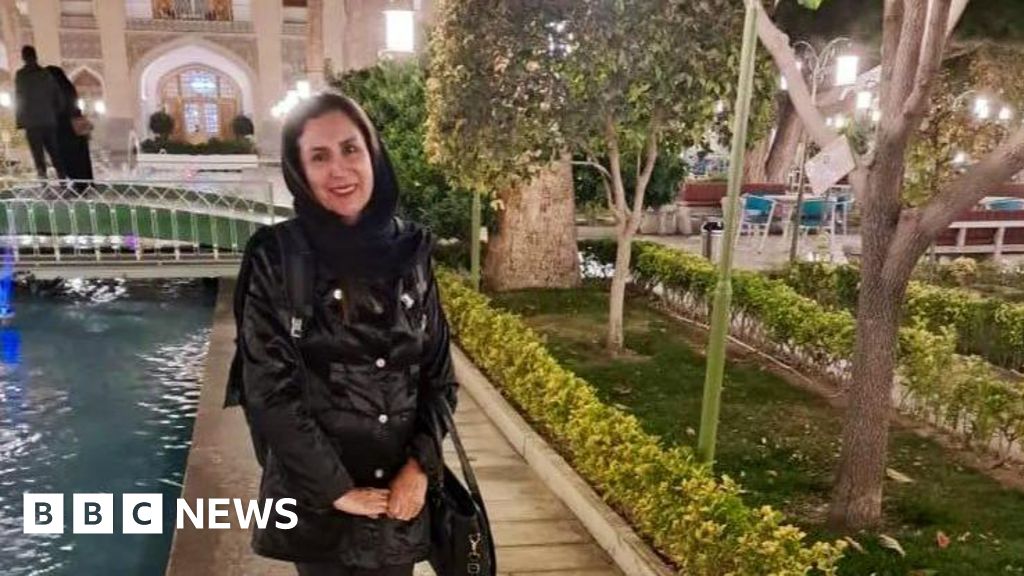
UN experts urge Iran to stop execution of woman activist
UN experts urge Iran to stop execution of woman activist UN experts and 400 prominent women have urged Iran not to execute Zahra Tabari, a 67-year-old electrical engineer and women's rights activist. Zahra Tabari was sentenced to death after a trial that lasted less than 10 minutes, her family says Ms Tabari was arrested in April and accused of collaborating with a banned opposition group, the People's Mujahideen Organisation of Iran (PMOI), according to her family. In October, she was convicted of "armed rebellion" by a Revolutionary Court in Rasht after a trial via video link that lasted less than 10 minutes. Her family said the verdict was based on extremely limited and unreliable evidence: a piece of cloth bearing the words "Woman, Resistance, Freedom", and an unpublished audio message. Iranian authorities have not yet commented on the case. At least 51 other people are known to be facing the death penalty in Iran after being convicted of national security offences including armed rebellion, as well as "enmity against God", "corruption on Earth" and espionage, according to the UN experts. The UN Human Rights Council's special rapporteurs on human rights in Iran, violence against women and arbitrary executions, as well as the five members of the working group on discrimination against women and girls, warned in a joint statement that Ms Tabari's case showed "a pattern of serious violations of international human rights law". She was arrested during a raid on her home without a judicial warrant, and was interrogated for a month while held in solitary confinement and pressured to confess to taking up arms against the state and to membership in an opposition group, according to the experts. Ms Tabari was denied access to a lawyer of her choosing and was represented by a court-appointed lawyer, they said, adding that her death sentence was issued immediately after a brief hearing. "The severe procedural violations in this case - including the unlawful deprivation of her liberty, the denial of effective legal representation, the extraordinarily brief trial, the lack of adequate time to prepare a defence, and the use of evidence that appears insufficient to support a charge of [armed rebellion] - render any resulting conviction unsafe," they said. They also noted that international law restricted the death penalty to the most serious crimes, meaning intentional killing. "To execute Tabari under these circumstances would constitute arbitrary execution," the experts added. "Criminalising women's activism for gender equality and treating such expression as evidence of armed rebellion constitutes a grave form of gender discrimination." More than 400 prominent women - including several Nobel laureates, the former presidents of Switzerland and Ecuador, and former prime ministers of Finland, Peru, Poland and Ukraine - also signed a public appeal for Ms Tabari's immediate release on Tuesday. "Iran is today the world's number one executioner of women per capita. Zahra's case lays bare this terror: in Iran, daring to hold a sign declaring women's resistance to oppression is now punishable by death," it said. The...
Preview: ~500 words
Continue reading at Co
Read Full Article