Venezuelans in Spain are caught between hope and fear after Maduro's capture
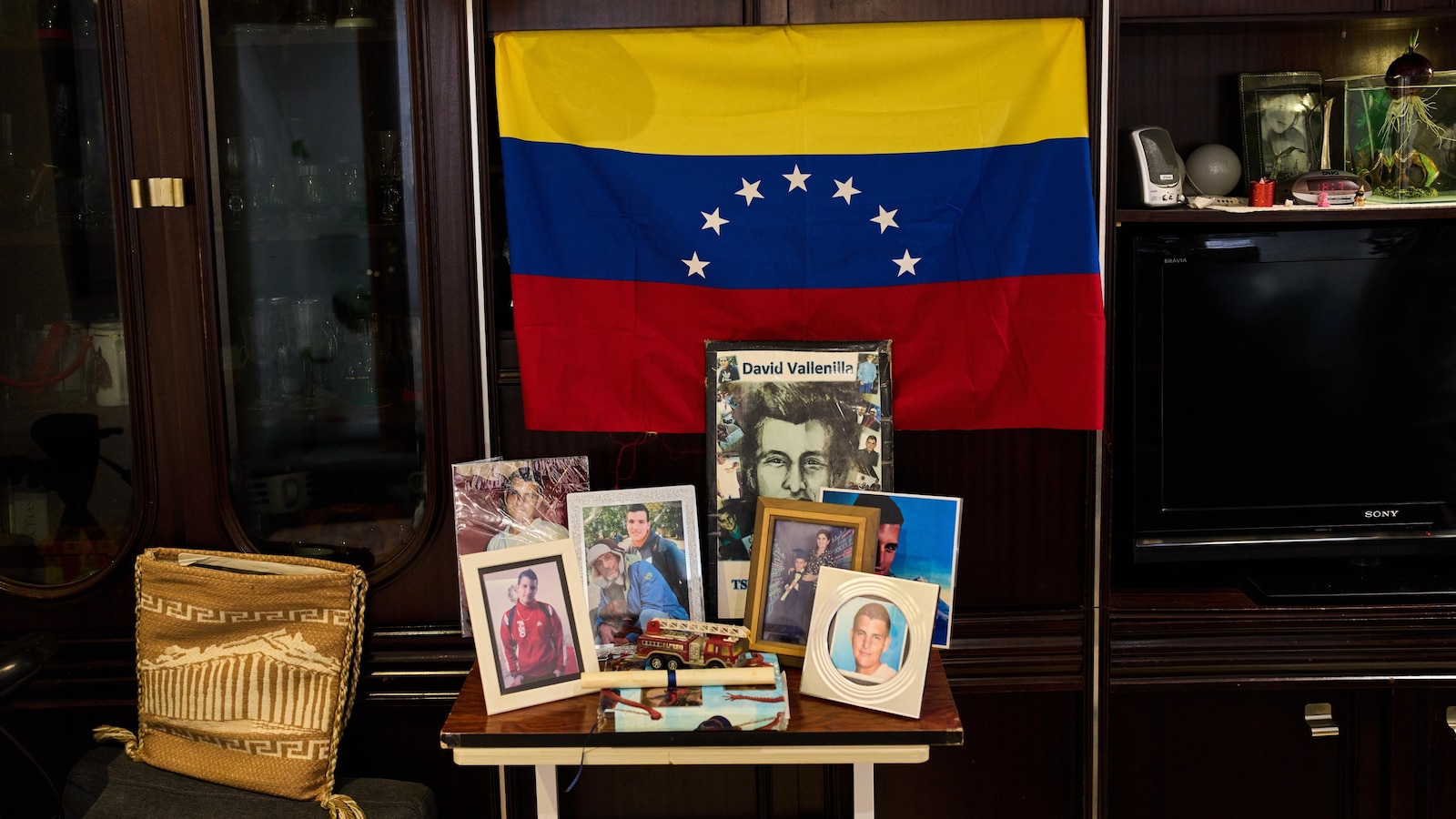
Venezuelans in Spain are caught between hope and fear after Maduro's capture Venezuelans in Spain are reacting to the news of Nicolas Maduro's capture by U.S. forces with mixed emotions MADRID -- Venezuelans living in Spain reacted to the news of Nicolás Maduro’s capture by U.S. forces with a mix of awe, joy and fear, gathering at rallies and watching the events unfold back home at breakneck speed. Some 600,000 Venezuelans live in Spain , home to the largest population anywhere outside the Americas. Many fled political persecution and violence but also the country’s collapsing economy. A majority live in the capital, Madrid, working in hospitals, restaurants, cafes, nursing homes and elsewhere. While some Venezuelan migrants have established deep roots and lives in the Iberian nation, others have just arrived. Here is what three of them had to say about the events unfolding back home. ___ David Vallenilla woke up to text messages from a cousin on Jan. 3 informing him “that they invaded Venezuela.” The 65-year-old from Caracas lives alone in a tidy apartment in the south of Madrid with two Daschunds and a handful of birds. He was in disbelief. “In that moment, I wanted certainty,” Vallenilla said, “certainty about what they were telling me.” In June 2017, Vallenilla’s son, a 22-year-old nursing student in Caracas named David José, was shot point-blank by a Venezuelan soldier after taking part in a protest near a military air base in the capital. He later died from his injuries. Video footage of the incident was widely publicized, turning his son’s death into an emblematic case of the Maduro government’s repression against protesters that year . After demanding answers for his son’s death, Vallenilla, too, started receiving threats and decided two years later to move to Spain with the help of an nongovernmental organization. On the day of Maduro’s capture, Vallenilla said his phone was flooded with messages about his son. “Many told me, ‘Now David will be resting in peace. David must be happy in heaven,’” he said. “But don't think it was easy: I spent the whole day crying.” Vallenilla is watching the events in Venezuela unfold with skepticism but also hope. He fears more violence, but says he has hope the Trump administration can effect the change that Venezuelans like his son tried to obtain through elections, popular protests and international institutions. “Nothing will bring back my son. But the fact that some justice has begun to be served for those responsible helps me see a light at the end of the tunnel. Besides, I also hope for a free Venezuela.” Journalist Carleth Morales first came to Madrid a quarter-century ago when Hugo Chávez was reelected as Venezuela's president in 2000 under a new constitution. The 54-year-old wanted to study and return home, taking a break of sorts in Madrid as she sensed a political and economic environment that was growing more and more challenging. “I left with the intention of getting more qualified, of studying, and of returning...
Preview: ~500 words
Continue reading at Go
Read Full Article