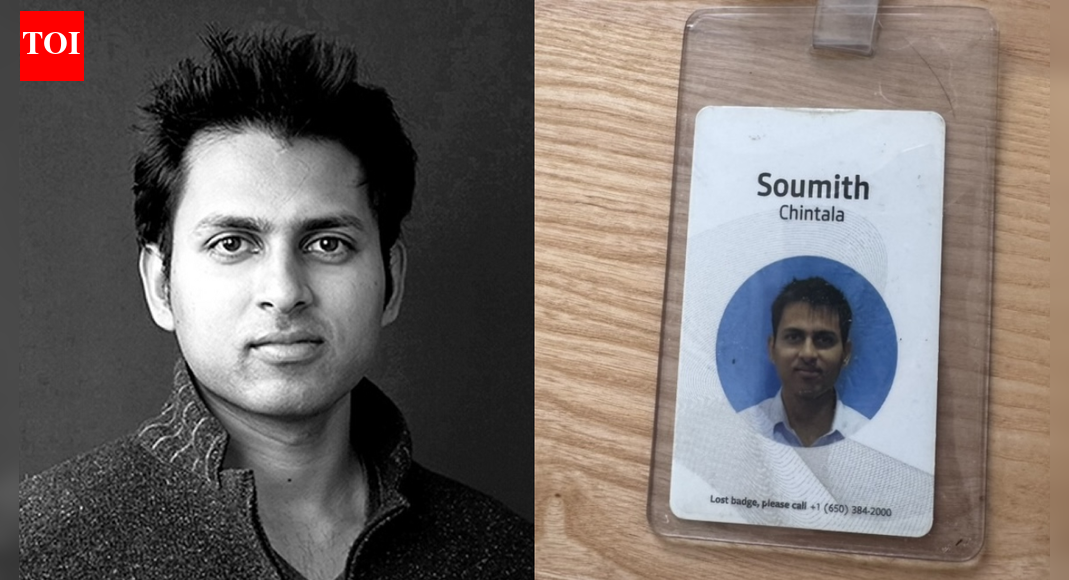
Meet Soumith Chintala: Techie rejected by 12 US universities, now CTO of a top AI company
Soumith Chintala’s journey from repeated academic and professional rejection to becoming one of the most influential figures in artificial intelligence has struck for many daydreaming techies, as he takes on a new role as chief technology officer (CTO) at Thinking Machines Lab, one of the largest artificial intelligence (AI) research companies. How to make South Indian Red Garlic Chutney at home Chintala was once rejected by dozens of universities and employers but is known today as a co-creator of PyTorch and a former vice-president at Meta. His story was shared widely on social media and viewed more than a million times, resonating with students and professionals facing setbacks, particularly in India’s highly competitive education and job markets. Early life, full of rejections Chintala was born and raised in Hyderabad. He studied at Hyderabad Public School and later enrolled at Vellore Institute of Technology (VIT), often described as a tier two engineering college. By his own account, he struggled with mathematics early on and faced major setbacks when applying for postgraduate study in the United States. Despite scoring 1420 on the GRE, he was rejected by 12 US universities in his first attempt. He travelled to the US on a J-1 visa to attend Carnegie Mellon University without a clear plan and applied again to 15 universities. Only the University of Southern California accepted him, along with a late offer from New York University in 2010. At NYU, Chintala joined a lab led by Yann LeCun, working on early deep learning research. LeCun later became a central figure in AI and played an important role in Chintala’s career. Visa hurdles After completing his master’s degree, Chintala faced another obstacle. He was turned down for nearly every job he applied for, including roles at Google and DeepMind. His only offer was as a test engineer at Amazon. With help from a PhD mentor, he later joined a small startup called MuseAmi, where he worked on mobile deep learning and helped build one of the fastest AI inference engines for smartphones between 2011 and 2012. His immigration status added further problems. Chintala was bound by a J-1 visa requirement to return home for two years, and he spent months securing waivers from USCIS and the US State Department before qualifying for an H-1B visa. He later obtained an EB-1 green card. PyTorch and rise at Meta Chintala’s career changed after he immersed himself in open-source work, particularly Torch7. His contributions led to an opportunity at Facebook AI Research in 2014, after he reconnected with LeCun. Starting as a software engineer, he helped co-create PyTorch as part of a small team. The project nearly collapsed due to internal resistance, and Chintala has spoken openly about the emotional toll of that period. The framework was eventually saved and officially launched in 2017. Over the next decade, PyTorch became one of the most widely used machine learning platforms in the world. Chintala spent 11 years in Meta and rose through the ranks from L4 engineer to...
Preview: ~500 words
Continue reading at Indiatimes
Read Full Article